
Professional applications — IT
Padua: Padova Sandbox hydrogen drones enter operational phase
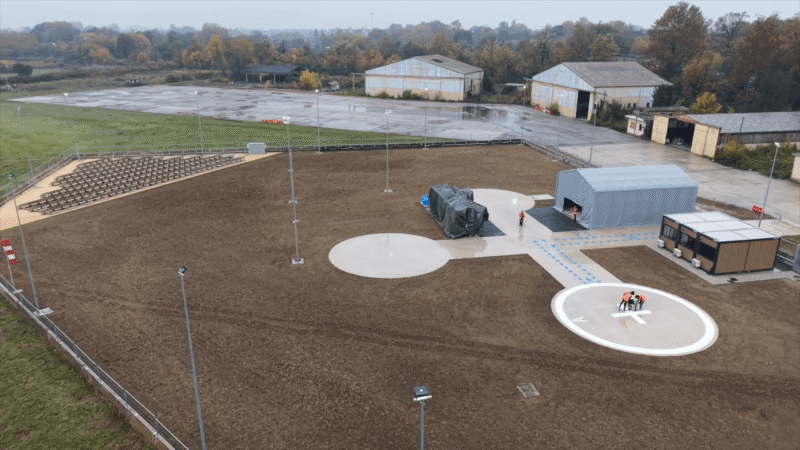
At Gino Allegri airport, the hydrogen chain runs end to end
The promoters of the Padova Sandbox project announced that they would trial a complete set-up on 16 November 2026 at Padua's Gino Allegri airport. It brings together a 50 kW photovoltaic array, an electrolyser, hydrogen storage and a cargo multicopter parked alongside.
The operational phase validates the entire sequence: solar power generation, electrolysis, production, storage and distribution of green hydrogen by a KEB (Key Energy Builder) module supplied by H2C, refuelling of the GH2 drone, then flight within the airport perimeter under the SAIL II regime, the lowest risk level provided for by European regulation.
The institutional set-up dates back to May 2024, when Enac, the Veneto Region and the SAVE group signed a cooperation agreement on advanced air mobility. The demonstration was launched in March 2025 at the same site, with Heron Air as airport operator.
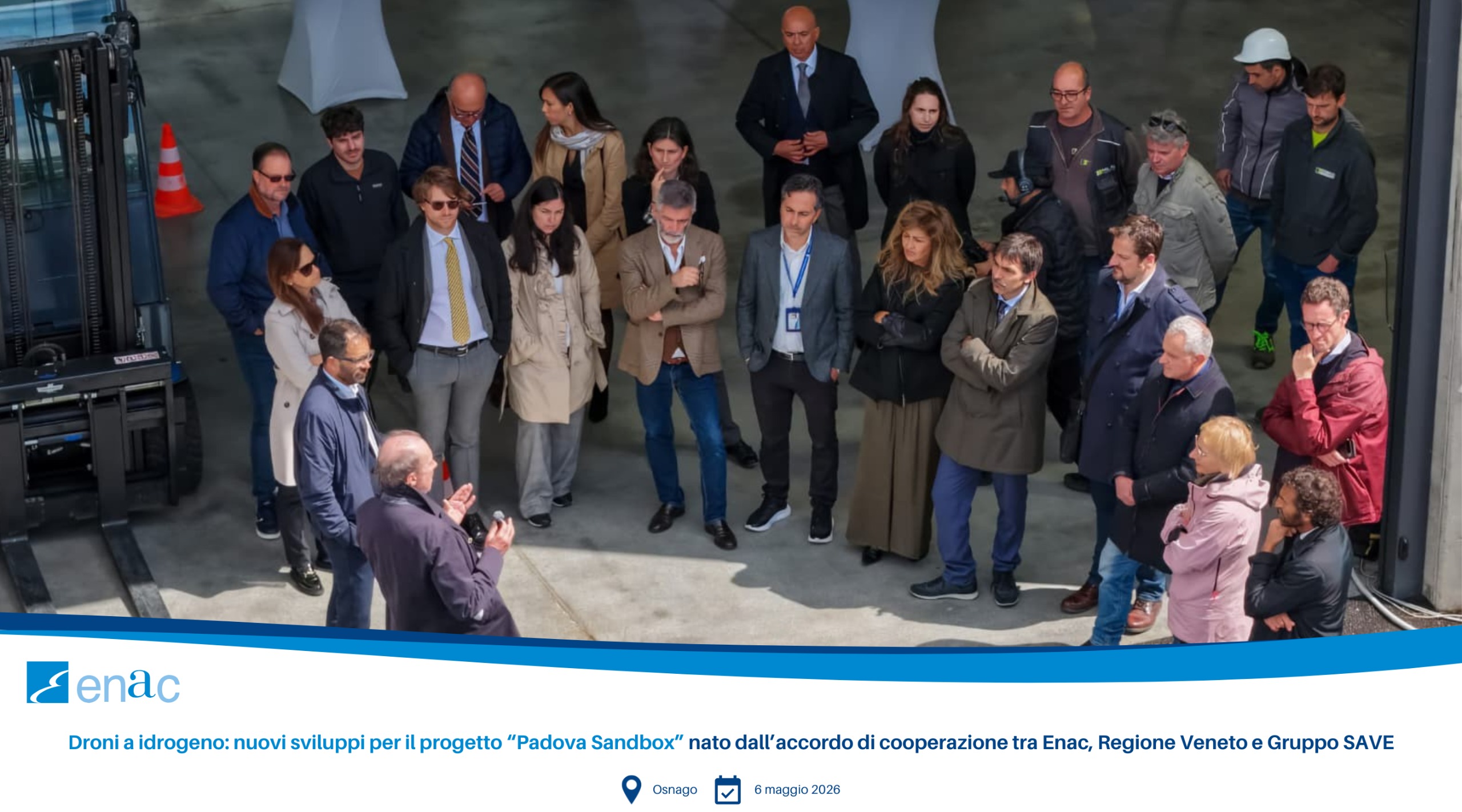
The KEB test session was held at the Milani company site in Osnago, in the province of Lecco, in the presence of an Enac team made up of engineers Catalano, Poleggi, Autunno and Terenziani and Colonel Levante.
Padua was chosen for a practical reason: the city concentrates care centres whose needs for rapid transfers of medicines and biological substances are regular.
The choice of routes, volumes and timelines was settled upstream with the healthcare organisations, before the system was dimensioned.
Two, three or ten minutes of refuelling: the specifications do not agree
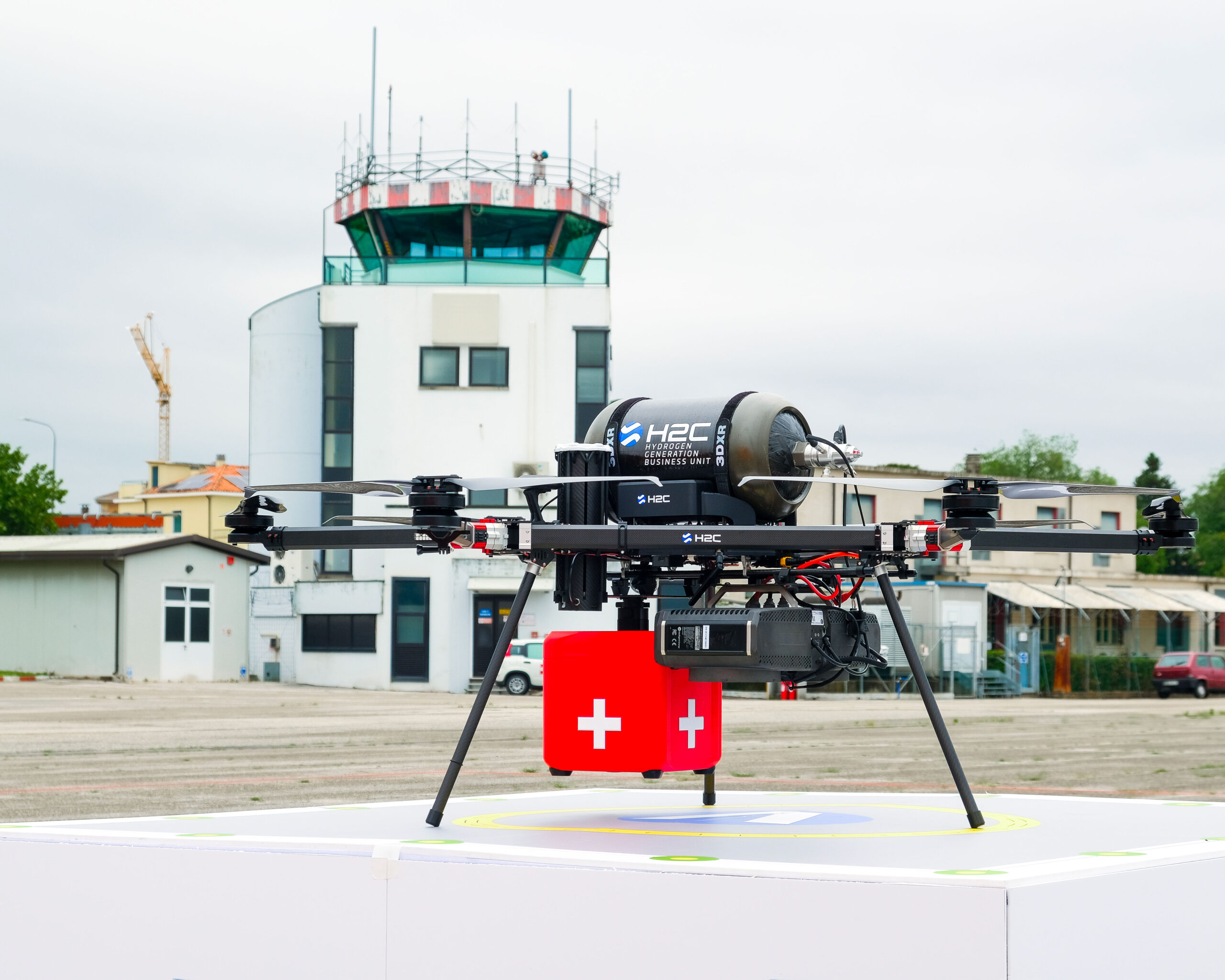
The note of 16 November 2026 announces ten minutes of refuelling, 100 km of range, 4 kg of equipment carried, consumption of 350 grams of green hydrogen at full load and a maximum speed of 55 km/h.
The March 2025 presentation gave two minutes for refuelling, 5 kg of payload and 340 grams of consumption.
A third version speaks of about three minutes and of multicopters with a total mass of less than 25 kg.
For an operator calculating a rotation, the discrepancy matters. But in all three cases, the order of magnitude remains the same: refuelling is counted in minutes, not hours, and range in tens of kilometres.
A battery imposes the opposite, with long downtime and a range that collapses with load.
The drone flies at up to 300 metres altitude, outside conventional air traffic routes, and carries medical equipment in a refrigerated container. Hydrogen is produced on site, from solar electricity generated within the perimeter: no tanker truck, no external delivery.
An inter-site link that shifts the logistics of medicines
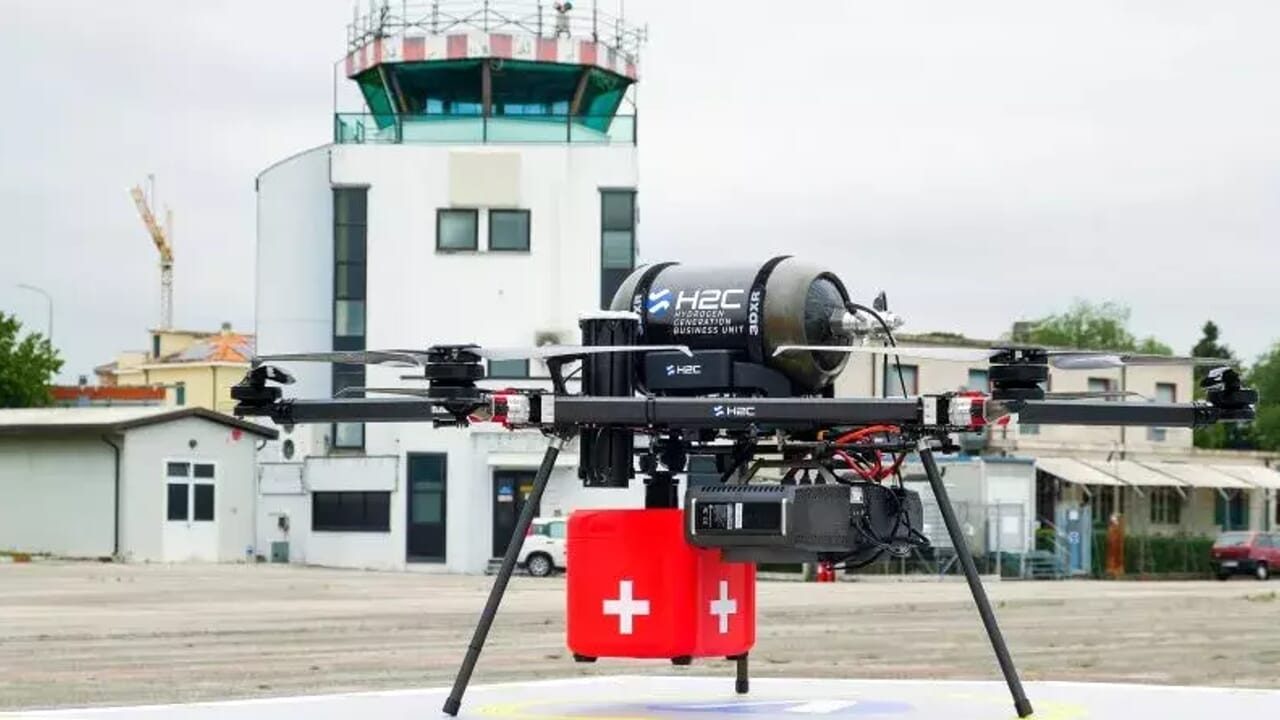
The coming months serve to test the ecosystem inside the airport. Next will come the beyond-visual-line-of-sight phase, in BVLOS, with a pilot without visual contact with the aircraft, to link different healthcare logistics hubs in Veneto.
This stage is announced for 2027, with monitoring of the in-flight transfer parameters of refrigerated equipment.
Corrado Fischer, operations director of the SAVE group, places the first flight of a green hydrogen drone outside the airport perimeter in the second half of the following year. Diego Ruzza, regional councillor for mobility and transport, frames the objective in network terms: moving from trial to a regular service to hospital hubs, for medicines, biological samples and urgent products.
Compared with road transport, the gain comes from two items. Urban congestion disappears from the equation, and the refrigerated container is no longer immobilised in a vehicle stuck between two roundabouts. Air cargo traffic is sluggish: in the first eight months of 2026, Italian airports handled 821,395 tonnes, down 0.7% year on year.
Drone healthcare services do not weigh on these volumes. They use existing airport capacity.
What can be transposed elsewhere, what remains tied to Padua
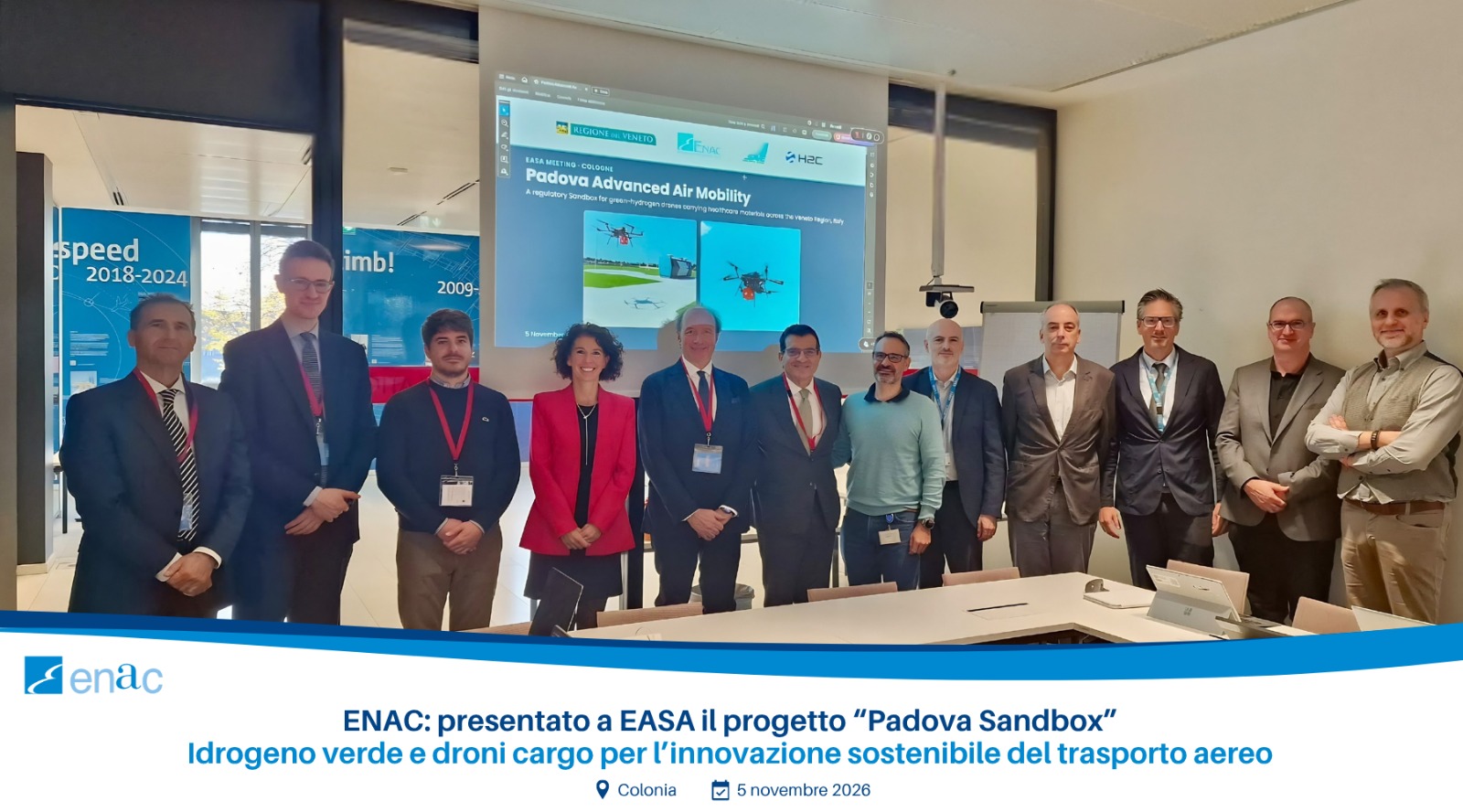
The dossier was presented to the European Union Aviation Safety Agency in Cologne by a delegation bringing together Enac, the Veneto Region, SAVE and H2C. The meeting, chaired by Marcella Miano, head of the AI Standard & Specification section and chair of working group 4 of the AZEA alliance, led to the opening of a dialogue channel with the Italian sandbox.
EASA recognised there an interest in innovation, safety and consistency with the objective of zero-emission aviation.
Carmela Tripaldi, central director of technical standards and aeronautical operability at Enac, announced the forthcoming publication of an update to the National Strategic Plan for Advanced Air Mobility.
What other operations can take up: first, the method, with healthcare needs measured before choosing the aircraft; second, the coupling of production and use on the same site, which removes dependence on a still scarce hydrogen supply chain.
What does not transpose: the regulatory sandbox framework, the tripartite Enac-Region-SAVE agreement, and the density of Veneto hospital hubs less than 100 km from one another.
Two conditions remain to be established for regular operation: authorisations for beyond-visual-line-of-sight flights beyond the airport perimeter, and the effective availability of green hydrogen in volume, on site or delivered.
← Back to home · Search · Suggest a topic · Lire en français / Read in French