
Professional applications — UK
Bentley hoists 2,030 solar panels by cargo drone in Crewe

In Crewe, 2,030 modules hoisted onto the roofs of the new paint shop
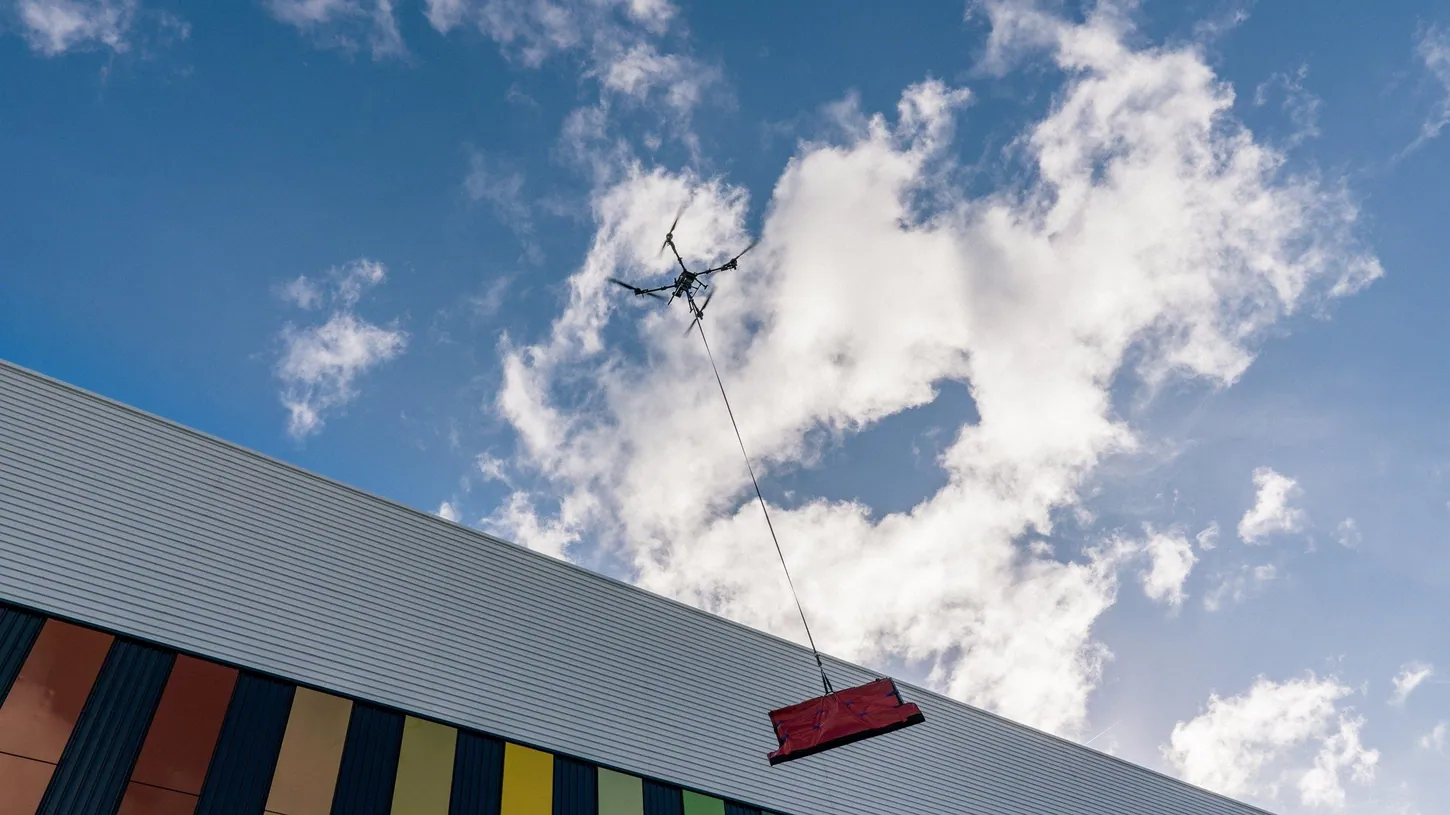
On 23 November 2026, Bentley Motors announced the installation of 2,030 photovoltaic modules on the four roofs of its new paint shop in Crewe, Cheshire. The panels are 515 W modules manufactured by JA Solar, quoted at around 30 kg each.
The total exceeds 55 tonnes, moved by XAG P150 Max cargo drones.
The installation has a capacity of 2.8 MW and brings the site's solar array to more than 35,000 panels. Bentley presents it as one of the first in the United Kingdom to use heavy drones for rooftop construction logistics.
The announcement was published on the same day as the independent verification, by LRQA, of the carbon neutrality of the manufacturer's UK operations for calendar year 2025, in accordance with standard ISO 14068-1:2023.
The ISO 14001:2015 and ISO 50001:2018 certifications were renewed.
One panel per minute from a ground loading area

The project involves three parties. Push Power, a commercial solar contractor, delivered the installation in partnership with Finlight. Aerial lifting was entrusted to AutoSpray Systems, described as a specialist operator. The XAG P150 Max transported the modules one by one, at a rate of about one panel per minute, and the complete lift took just over a week.
The construction trade magazine published an account of the project, including rates and assembly.
A dedicated carrying device handled the transfer between a ground loading area and the rooftop reception points. The installation teams collected the modules as close as possible to their final position. On an existing building, rooftop walkways are cluttered by technical equipment, skylights, the drainage network and panels already installed.
Every metre of manual carrying avoided reduces workers' exposure to repetitive movements, but shifts the constraint to load securing, flight coordination and separation between aircraft and ground personnel.
Crane and telehandler ran up against the load-bearing capacity of the roofs
The conventional method involves hoisting pallets of modules by crane or telehandler, then distributing the panels by hand across the roof. Bulk transport reduces the number of lifts but concentrates several dozen modules on a small footprint.
Depending on the position of the pallet relative to the structural supports, this temporary load may exceed what the roof can tolerate, even when the distributed load of the completed installation remains acceptable. At Crewe, structural loading restrictions complicated the use of conventional handling equipment, and delivery in small batches reduced the accumulation of materials at intermediate storage points.
Push Power reports that installation time was halved and that there was less use of diesel telehandlers to bring the modules onto the roof. Bentley Media, for its part, publishes the figures for the site's carbon trajectory: direct and indirect energy emissions (Scope 1 and 2) fell from 17,482 tonnes of CO₂ equivalent in 2018 to 1,907 tonnes in 2025, an absolute reduction of 89%, with a supporting press release.
What carries over to another site, and what remains to be quantified
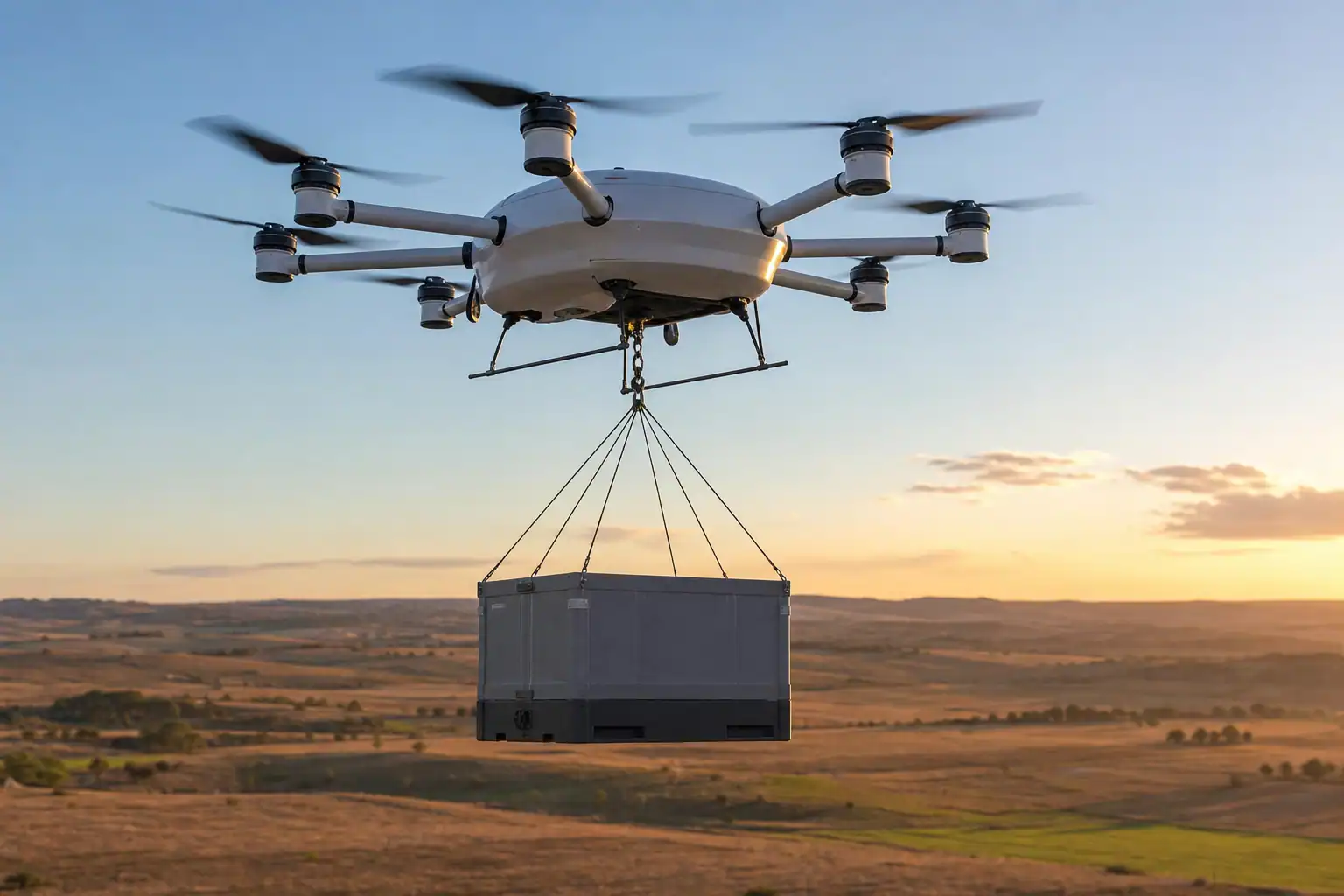
The case transfers poorly to a new-build site with a large storage area and a crane already mobilised. It does, however, speak to renovations of occupied roofs, where the permissible temporary load is the main constraint and equipment access is restricted.
The combination of a heavy-lift carrier and split delivery turns a structural problem into a series of short flights, with a single ground loading area.
Three parameters are missing to make it an option comparable to a crane in a costing exercise. The cost per kilogram transported is not published. The overflight authorisations required for this type of operation at an active industrial site are not detailed.
Flight coordination in occupied airspace is progressing elsewhere, as in Bari, where D-Flight tested its U-space over three days of port flights.
Repeatability outside the pilot site remains to be established, while the payload and endurance of cargo platforms vary widely depending on the battery configuration chosen, a point documented by a comparison of heavy platforms.
In Padua, Padova Sandbox's hydrogen drones have moved into the operational phase. Bentley, for its part, is relying on an operation already completed rather than a demonstration.
← Back to home · Search · Suggest a topic · Lire en français / Read in French