
Drones & accessories — EU
DJI ends support for eleven products, including the Inspire 2, on December 1
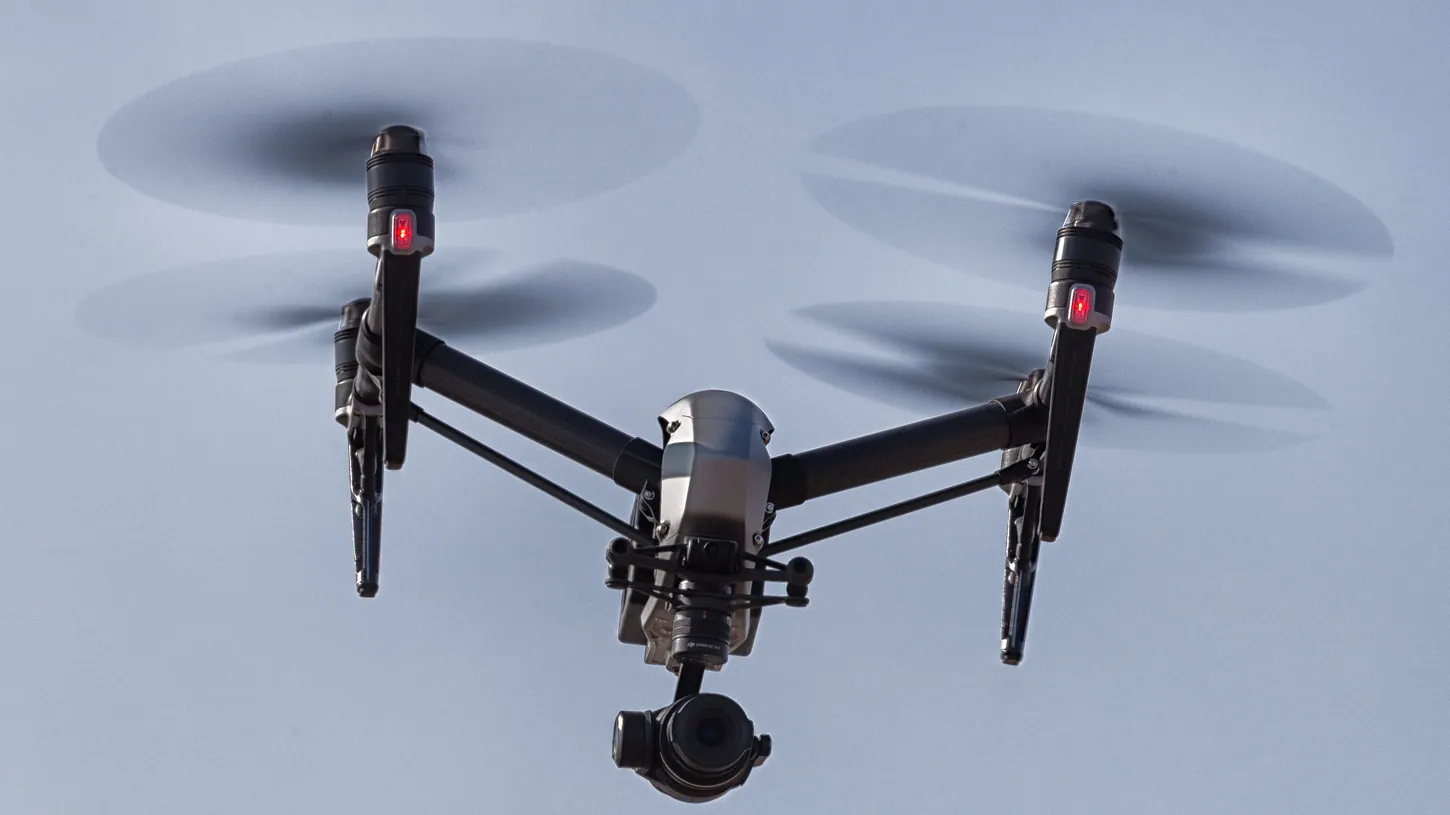
Eleven products drop out of support on 1 December
From 1 December 2026, an Inspire 2, a Zenmuse X5S or a Smart Controller that breaks down will no longer go back to the manufacturer's workshop.
DJI has added eleven entries to its end-of-service calendar: the Inspire 2, the Zenmuse X4S and X5S cameras, three CrystalSky units (7.85-inch Ultra Brightness, 7.85-inch High Brightness, 5.5-inch High Brightness), the original Smart Controller, the Tello IronMan, the Goggles, the Goggles RE and the FPV System.
The deadline cuts across three lines of business. Aerial cinematography loses the Inspire 2 and its two interchangeable cameras. The piloting station loses the Smart Controller and the three CrystalSky screens. The FPV ecosystem loses the Goggles, the Goggles RE and the FPV System, to which is added the Tello IronMan, whose production stopped in August 2019.
DJI files the decision under its lifecycle management: electronic products are said to have a fixed lifespan and the manufacturer would reassign its resources to new generations. This justification is that of a press release; it rests on no published reliability data.
The list of eleven products taken up by DroneDJ's coverage contains the same entries, with the same deadline.
What the spec sheets say, and what they leave unsaid
The Inspire 2 remains the most documented machine in the batch. DJI claimed acceleration from 0 to 50 mph in five seconds and a top speed of 58 mph, for 27 minutes of flight with the Zenmuse X4S and its dual-battery system.
CineCore allowed 6K CinemaDNG RAW and 5.2K Apple ProRes with the Zenmuse X7. Obstacle detection worked in two directions, with sensor redundancy and automatic flight modes such as Spotlight Pro.
The CrystalSky units stand out for their screens: 2048 × 1536 on both 7.85-inch models, 1920 × 1080 on the 5.5-inch version. The 7.85-inch Ultra Brightness reached 2,000 nits, the other two versions 1,000 nits.
The Zenmuse X5S used a Micro Four Thirds mount fed by Panasonic and Olympus lenses of 12, 15, 17, 25 and 45 mm and a 14-42 mm zoom.
None of these spec sheets says what matters from 1 December: the stock of spare parts DJI will keep, the price of out-of-warranty repairs and the number of units still in service in Europe.
The manufacturer does not publish these figures, and the end-of-service notification does not mention them.
The cut-off adds to a series of withdrawals already applied in 2026
The end of support comes long after the end of production. The Zenmuse X4S had not been manufactured since July 2018, the Goggles since August 2020, the FPV System since October 2020, the Smart Controller since October 2021.
The Inspire 2, the X5S and the three CrystalSky units left the production lines in January 2022. A fleet still flying with these products is therefore working with equipment discontinued four to eight years ago.
1 December is not an isolated date. The official end-of-service table sets 29 May 2026 for the Mavic 2 Enterprise Zoom and Dual and the Matrice 600 Pro, 31 August 2026 for the Mavic 2 Pro, 31 October 2026 for the Phantom 4 Pro V2, 2 November 2026 for the MG-1S Advanced, MG-1P, MG-1P RTK, AGRAS T16, AGRAS T20 and the Osmo Action.
A second deadline falls on 31 December 2026 for the Phantom 4 RTK, the Phantom 4 RTK SE, the Mavic 2 Enterprise Advanced, the Phantom 4 Multispectral and the RoboMaster S1, EP and EP Core, as detailed in the service suspension table.
An operator mixing Inspire 2 and Phantom 4 RTK faces two dates thirty days apart. Replacement is also decided on dependence on a single manufacturer, a question already raised by a US congressional report on the links between DJI and the PLA.
Spare parts, the blind spot in the calendar
What is missing to choose between repair and replacement comes down to three points: an inventory of parts available after 1 December, a price list for work carried out outside the manufacturer's workshop, and feedback on the actual failures of these models.
None of this is published. DJI recommends moving to more recent alternatives, which settles the manufacturer's commercial question without documenting that of the installed base.
Operators will turn to the secondary market for cameras, screens and radio controllers. Parts availability does not depend on DJI alone: bottlenecks in hardware and mechanical components are already affecting drone assemblers, and a discontinued product is not immune to these pressures.
The open question remains simple to state and hard to settle: which parts will remain in circulation after 1 December, and at what price. Fleets equipped with the Phantom 4 RTK have thirty more days to answer it.
← Back to home · Search · Suggest a topic · Lire en français / Read in French