
Drones & accessories — NL
BeephoniX and Bertin Exensor assemble a passive acoustic detection
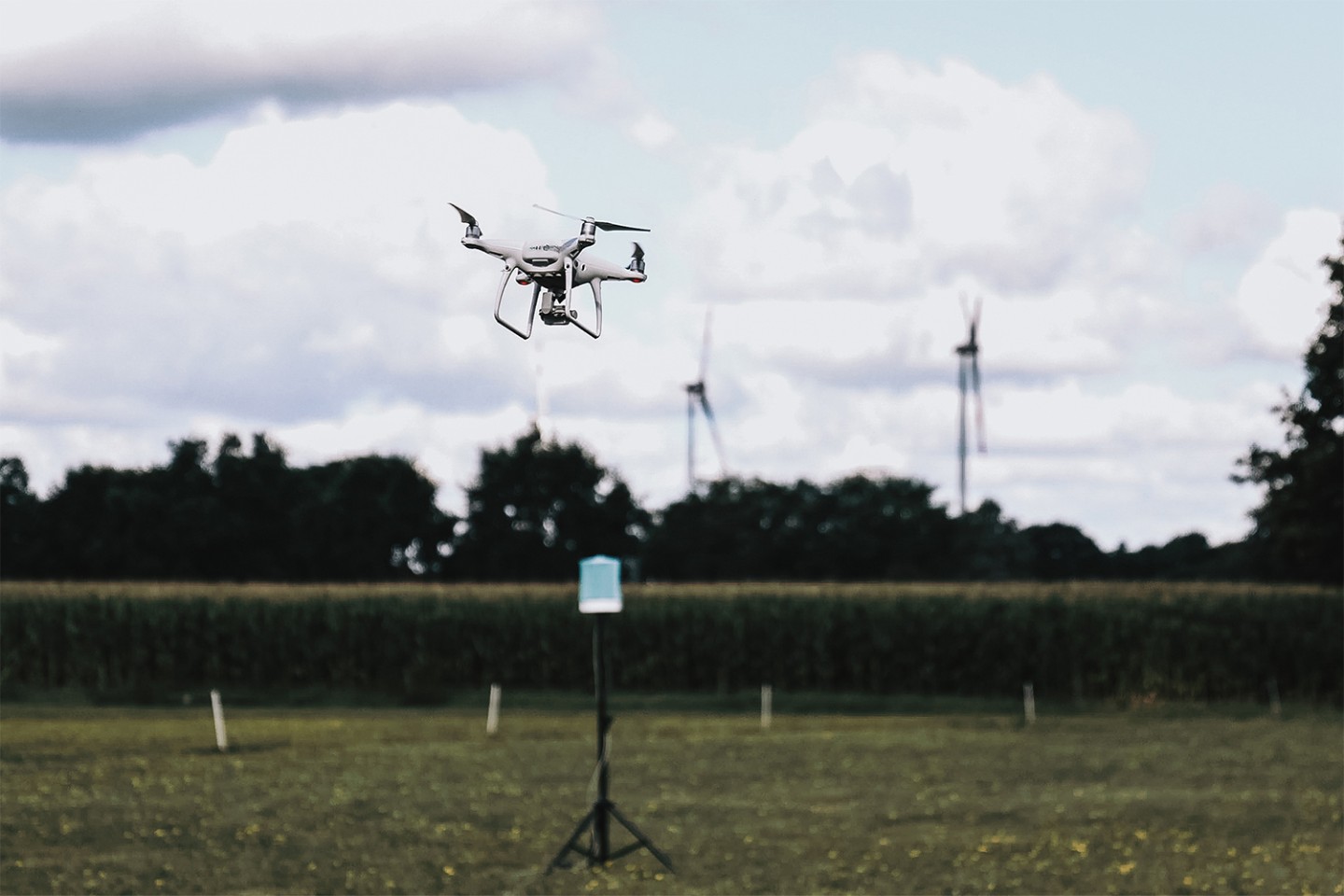
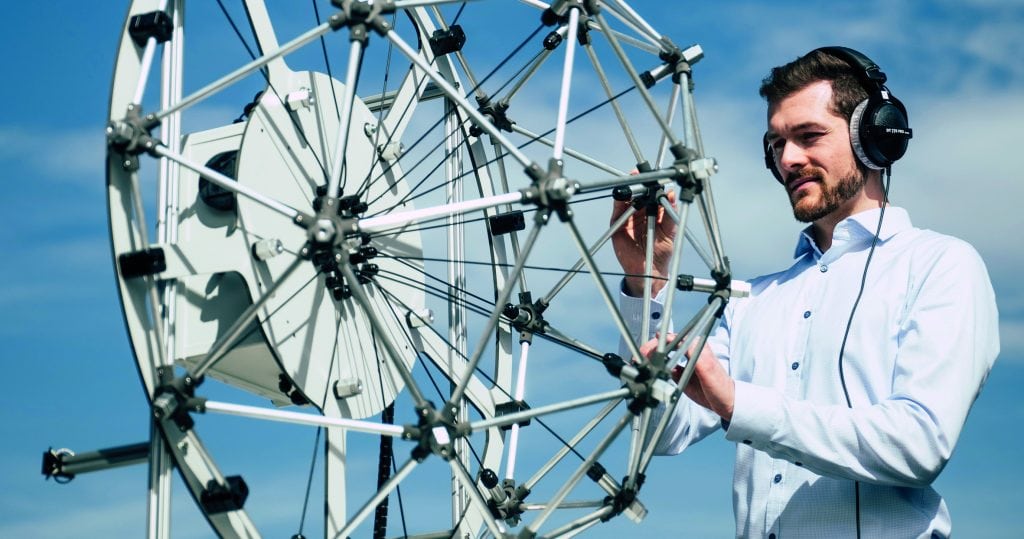
A passive acoustic array of 151 microphones
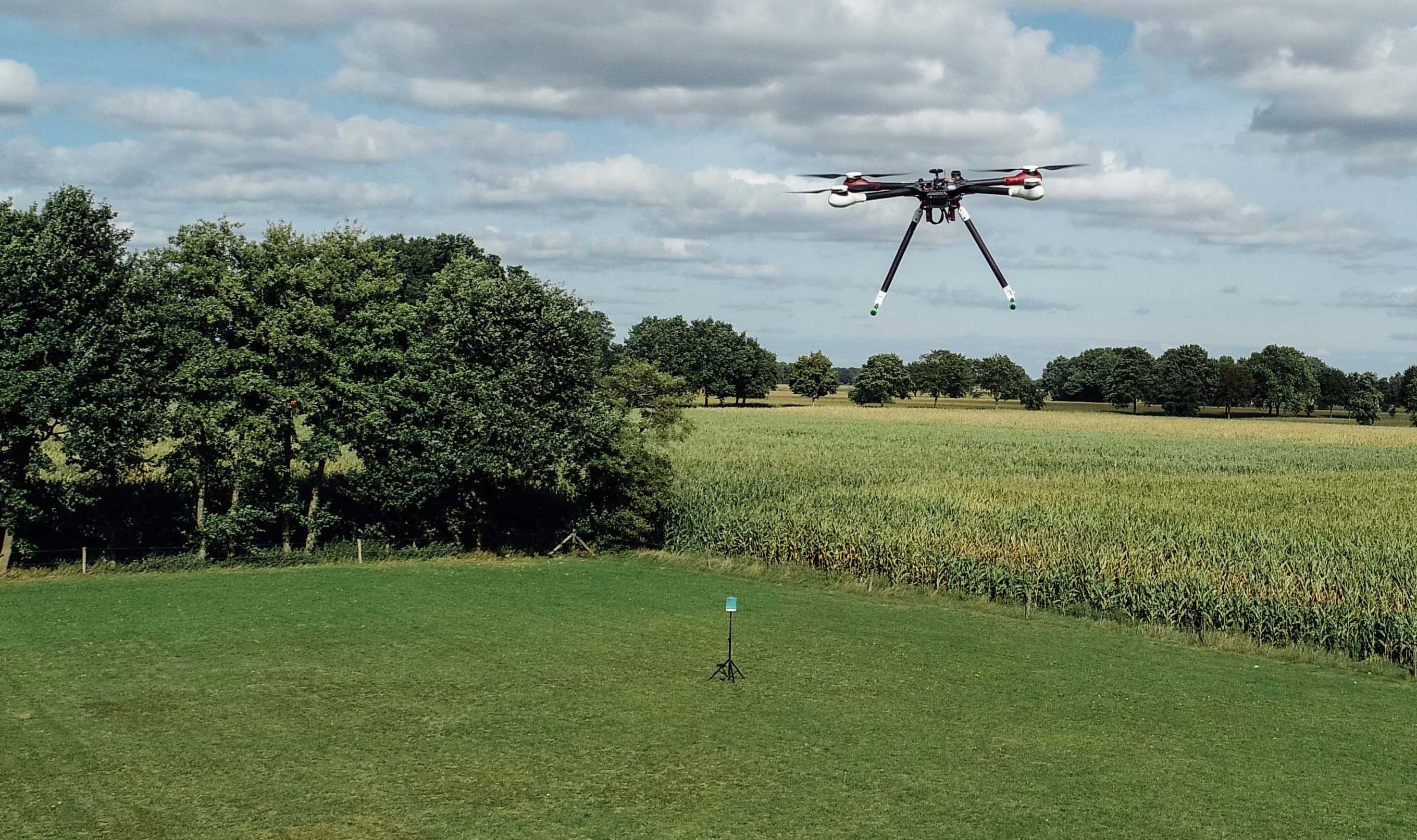
The BeephoniX M2 detects a drone from the noise of its propellers, without emitting a signal. The Dutch company that manufactures it announced on 17 November 2026 a partnership with Bertin Exensor, a Swedish specialist in unattended buried sensors, to jointly offer passive acoustic drone detection, as reported by the Unmanned Airspace portal.
The announcement does not describe the joint product. It names two areas of expertise: an acoustic array on one side, sensors placed on the ground on the other. A site manager will chiefly read this as coverage distributed across several listening points rather than a single mast in the middle of the perimeter.
Its operating principle explains the appeal. A radar emits, and therefore gives away its presence; a microphone merely receives. The Austrian institute Joanneum Research, which is developing a hemispherical network of 32 calibrated microphones to track multirotors up to 500 metres, ranks this discretion among the advantages of acoustics at a sensitive site, compared with radars that broadcast their waves.
The datasheet figures and what they do not cover
The M2 fits within 40 centimetres and carries 151 MEMS microphones. The datasheet states fully passive listening, with no radio or optical emission.
Two orders of magnitude have been published. In a demonstration with the Dutch army, the M2 detected FPV drones at between 600 and 900 metres, without direct line of sight. A commercial drone of the DJI Mavic 4 type was picked up at 200 to 300 metres by a single sensor.
These distances do not describe any environment. No measurement is given for a noisy site: refrigeration unit, traffic, wind, workshop in operation. The real coverage of a perimeter, the false-alarm rate and the behaviour with several aircraft at the same time are not included in the announcement.
The subject is not new. Fraunhofer IDMT has been working on acoustic drone detection since 2016 in Oldenburg, in the AMBOS (BMBF) and ALADDIN (H2020) projects; its HSA branch was funded from November 2019 to October 2025 by the "Vorab" programme of the Lower Saxony Ministry of Science and the Volkswagen Foundation, according to the institute's presentation.
Adding acoustics to an existing detection system
Acoustics does not replace already installed sensors. Fraunhofer IDMT presents it as an additional channel, associated with radar, camera and lidar, which takes over where terrain, a building or weather cuts the line of sight.
An equipped site can therefore add acoustic arrays to an existing system without rebuilding its detection chain.
The network logic points in the same direction. Joanneum Research is planning distributed acoustic nodes to extend range, with compact MEMS networks installed as close to the terrain as possible. On the Dutch-Swedish side, Bertin Exensor's buried sensors provide discreet listening points that are difficult to locate and neutralise.
Nothing is said, however, about a previous generation of the M2 or about a migration path from an installed base. Interface protocols with command platforms, alert formats and software integrations are not listed.
An operator who already runs an anti-drone system cannot tell, from reading the announcement, how acoustic alerts would be reported up into its supervision system.
Price, availability and field feedback absent
The system's price is not published. Neither is its availability date. No operational feedback from an active site accompanies the announcement, even though acoustic detection depends heavily on local background noise.
BeephoniX says it is preparing ten to fifteen projects for 2025, for €1.2 to €1.5 million in early revenue. The context pushes towards a decision: Unmanned Airspace puts global spending on anti-drone systems at more than 53 billion dollars in the first eight months of 2026, and Drone Industry Insights forecasts put the civil market at 83 billion in 2035.
In Europe, Norway is opening U-space sandbox trials, with full commercial operations targeted for 2026, and the 2026 European drone summit is due to examine the Commission's Drone 2.0 strategy.
In Germany, the Bundesrat is examining a one-year prison sentence for flying over critical sites.
For a given site, the only figure that matters remains the detection distance measured against its own background noise, and it is not published.
← Back to home · Search · Suggest a topic · Lire en français / Read in French