
Drones & accessories — NL
CASC flies the Qingqibing solar drone, 30 hours announced
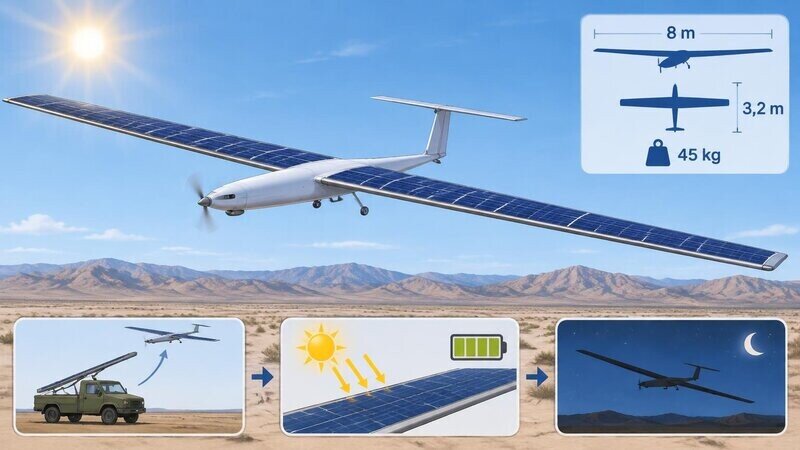
The figures on the data sheet
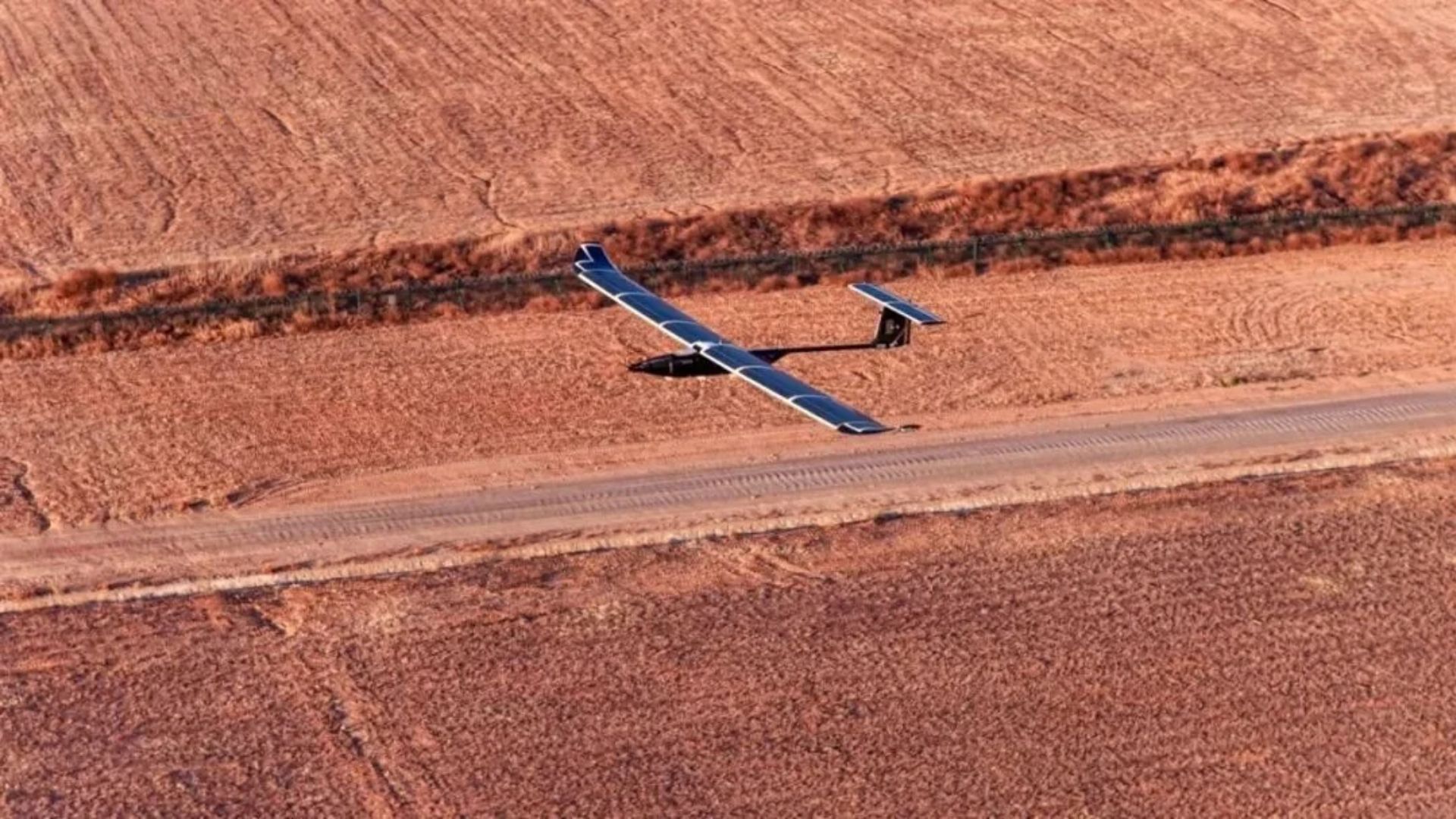
The aircraft is 3.2 metres long with an 8-metre wingspan, weighs 45 kilograms at take-off and climbs to a service ceiling of 7,000 metres. The payload exceeds 5 kilograms and the maximum design endurance reaches 30 hours.
Propulsion is entirely solar: the panels power the motor during the day and recharge batteries that take over.
Payloads are changed according to the mission. CASC cites electro-optical instruments for observation, communications equipment and detection systems. The announced applications cover long-distance pipeline inspection, inspection of large hydraulic structures, mapping, natural resource inventory, rapid reconnaissance after a disaster and large-scale target surveillance.
The data sheet gives neither battery capacity, nor photovoltaic cell power, nor cruising speed, nor operational range. Nothing is said about the payload mass that can actually be carried on a long-duration mission.
The 30 hours are a design value, not a performance measured in flight.
The maiden flight did not measure endurance
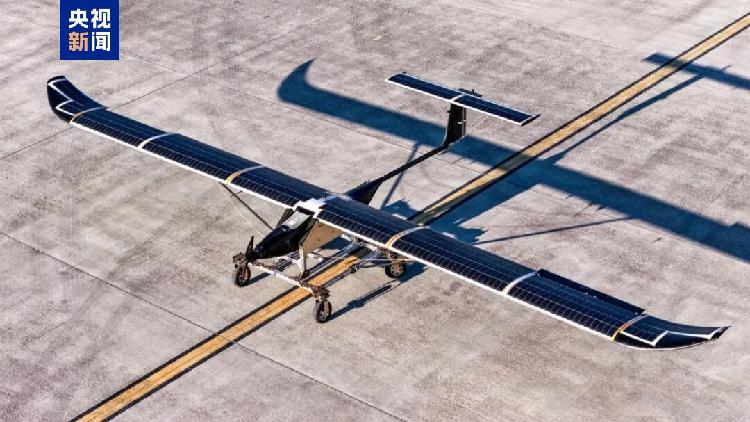
The maiden flight took place on 11 November 2026 in north-west China. The 11th Research Institute of CASC, which developed the aircraft, says that take-off, climb, circuit and landing took place without incident.
The tests covered flight controls, avionics, energy storage, stability and aircraft behaviour. The manufacturer asserts that all systems were operating normally after landing.
No flight duration is published. The figure of 30 hours therefore remains a target. CASC presents the aircraft as the country's first commercial-grade solar-powered drone, a formulation that comes from the manufacturer and state television, not from an operating record.
The Chinese press calls it Qingqibing; English-language reports translate this as Light Cavalry.
Deployment relies on a vehicle-mounted launcher, with no runway. Ground preparation is announced at around 20 minutes. This deployment mode targets sites lacking aviation infrastructure, which corresponds to the inspection missions cited.
Medium class and access to Chinese airspace

China's interim rules, which came into force on 1 January 2024, classify unmanned aircraft by mass. At 45 kilograms at take-off, the aircraft falls into the "medium" class, capped at 150 kilograms, and not the "small" class, limited to 25 kilograms.
From the "small" class upwards, a Chinese remote pilot licence is mandatory.
Registration remains the first step: the Civil Aviation Administration of China requires real-name registration of all civil unmanned aircraft on the UOM platform before any use.
Beijing has applied its own regulations since 1 May 2026. The text was tightened on 11 September 2026 and its revised version applies from 15 November 2026. Until 14 November 2026, every outdoor flight requires authorisation; from 15 November 2026, drone flights are prohibited in principle in the city, and so are holding or storing an aircraft.
Bringing a drone into Beijing is prohibited, including air transit. The penalties: confiscation and a fine of 500 to 5,000 yuan for bringing one in without authorisation, up to 10,000 yuan for an unauthorised flight, and, since 1 January 2026, detention of 5 to 10 days in the most serious cases.
No previous generation is documented, and the manufacturer does not announce compatibility with payloads already in service. Integration into an existing fleet therefore means starting again from the sensors and the data-processing chain.
Price, availability and flight feedback missing
The price is not disclosed, nor is the commercial launch date, the number of units built or the first customers. No user operator is named. For a fleet manager, these elements weigh as much as the 30 hours: the cost per flight hour decides the comparison with a light manned aircraft or a combustion-powered drone.
Operational limits are also missing. Nothing is said about wind resistance, panel ageing, maintenance intervals or behaviour in low sunlight. The aircraft has carried out a qualification flight.
A 30-hour endurance is judged on repeated flights, with the mission payload and usable readings.
← Back to home · Search · Suggest a topic · Lire en français / Read in French