
Professional applications — IT
In Bari, D-Flight tests its U-space over three days of port flights
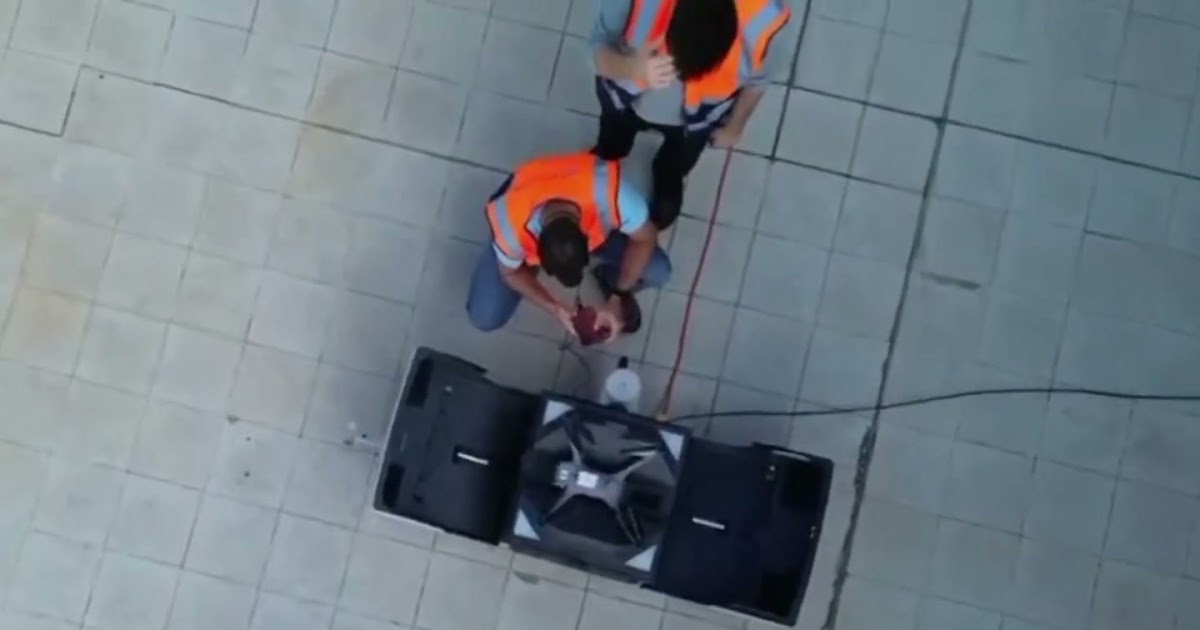
Three days over the basin, one dock and two operators in orange vests
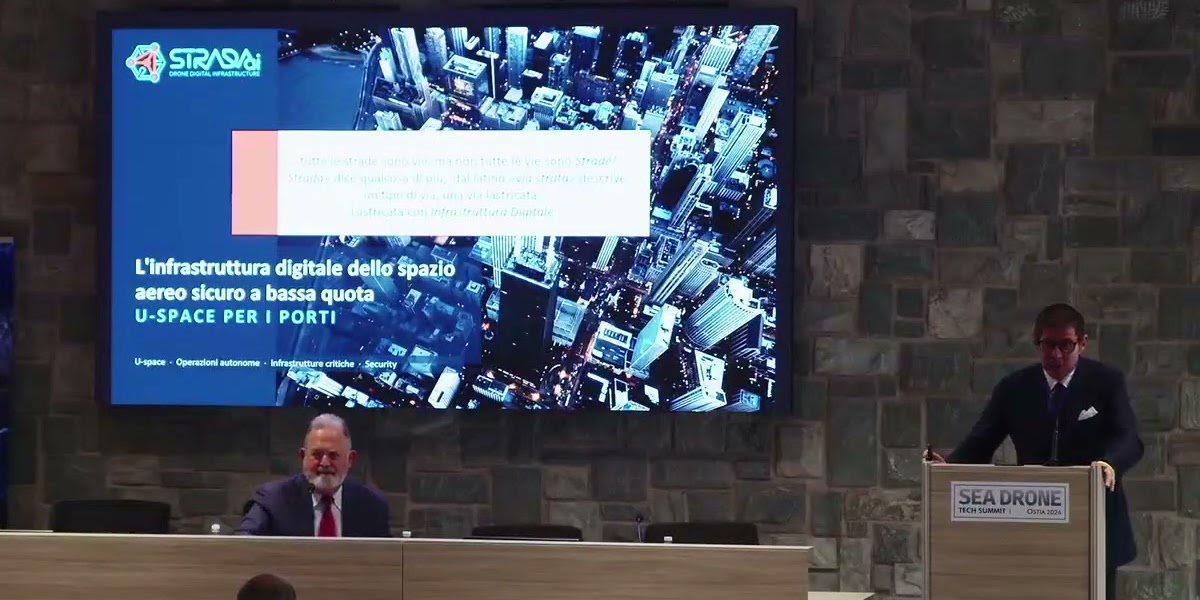
The sequence lasts a few seconds. In the video shown at Ostia, the station on the mole opens in two, reveals the quadcopter inside, and two operators in orange vests stand beside it.
The operations centre screen then shows the drone above the dock basin of the port of Bari. Marco Formato, Research and Business Development manager at D-Flight, showed these images on Friday 6 November at the Sea Drone Tech Summit 2026, in the final session of the congress, devoted to unmanned aircraft for maritime use.
The Ostia campus of Roma Tre University hosted the event for the first time. The team, he said, had returned from Bari about ten days earlier.
The project is called SCIAME. Three days of flights, a drone taking off from an automatic station, and remote monitoring from the Drone Operation Center of Techno Sky. The work concerned the integration of the U-space digital services provided by the D-Flight, CISP and USSP platforms into the human-machine interface of the Techno Sky centre.
The DJI Dock 3 station sets the hardware constraints. The dock is rated IP56, recharges its drone from 15 to 95 per cent in 27 minutes, covers a radius of 10 km, and the aircraft flies for up to 54 minutes, according to the manufacturer.
The temperature range given for the dock is minus 30 to 50 °C. On a mole, wind, sea spray and the temperature swings within a single day put those figures to the test.
The pilot sees the images and the U-space services on the same screen

In Bari, the pilot sees on the same interface the drone images and the U-space services from D-Flight. The operator supervises the flight and compliance from the Techno Sky centre, with no one on the mole during the mission.
The services in question are those required by the European framework. In a U-space, a portion of airspace that the State designates after a risk assessment, every flight uses at least four services: network identification, geo-awareness, flight authorisation and traffic information.
They are provided by one or more certified providers. Common data, such as the zone boundaries and the list of providers, are distributed by the CISP, which the State may entrust to a single actor.
The regulatory basis is Implementing Regulation (EU) 2021/664, in application since 26 January 2023, supplemented by Regulations 2021/665 and 2021/666 for coexistence with manned aircraft and controllers.
In Italy, ENAC entrusted the CISP role to ENAV in 2022. D-Flight, an ENAV spin-off 60 per cent owned by the group and the rest by an industrial partner led by Leonardo, obtained CISP certification in December 2024 and USSP certification in February 2025, the first company in Europe to hold both.
Outside U-space, flights remain subject to European Regulation 2019/947 and to ENAC rules, including Circular ATM-09; the D-Flight portal publishes maps of the territory with ceilings by colour, zero metres in red, 25 in orange, 45 in yellow, 60 in blue.
What another port can take over, and what depends on the State
The technical architecture can be reused elsewhere: a docking station installed on site, an automated flight, remote supervision, and the U-space services housed in the tool the remote pilot already uses.
Nothing in this chain is specific to the port of Bari. A port operation that already has an operations centre can aim for the same integration.
The rest depends on designation, which is a national decision. In Italy, ENAC designates the U-space; its December 2023 guidelines require an airspace risk assessment (ARA) and a business plan demonstrating the sustainability of the service.
The application can come from any entity, including a public administration. In January 2026, ENAC put a draft national regulation on U-space out to consultation. The first Italian U-space operational since 1 January 2026 is that of San Salvo, in the province of Chieti, presented by ENAC as the first in Europe, and it is not a port.
The Palermo case shows where the timetable jams. Giulio Segurini, founder of STRADAai, presented the Sicilian port's U-space project on 5 November: protocol signed with the port authority, airspace not yet activated, a target of 2027.
The day before, the company announced that ENAC officials had told it of its USSP certification, and the document had not yet been issued. Its website still presented it as a provider undergoing certification, a process begun in December 2023.
Two limits remain for a French or Belgian port wanting to copy the Bari set-up. The CISP single window is an Italian choice, backed by ENAV; elsewhere, the division of roles and the designation procedure fall to the national authority.
And the results of the Puglia trial have not been published: what the three days demonstrated in real conditions, and the date on which such a service would be rolled out across a port area, have not been settled.
← Back to home · Search · Suggest a topic · Lire en français / Read in French