
Regulation — PL
Warsaw opens the regulatory path to agricultural drones, without an application date
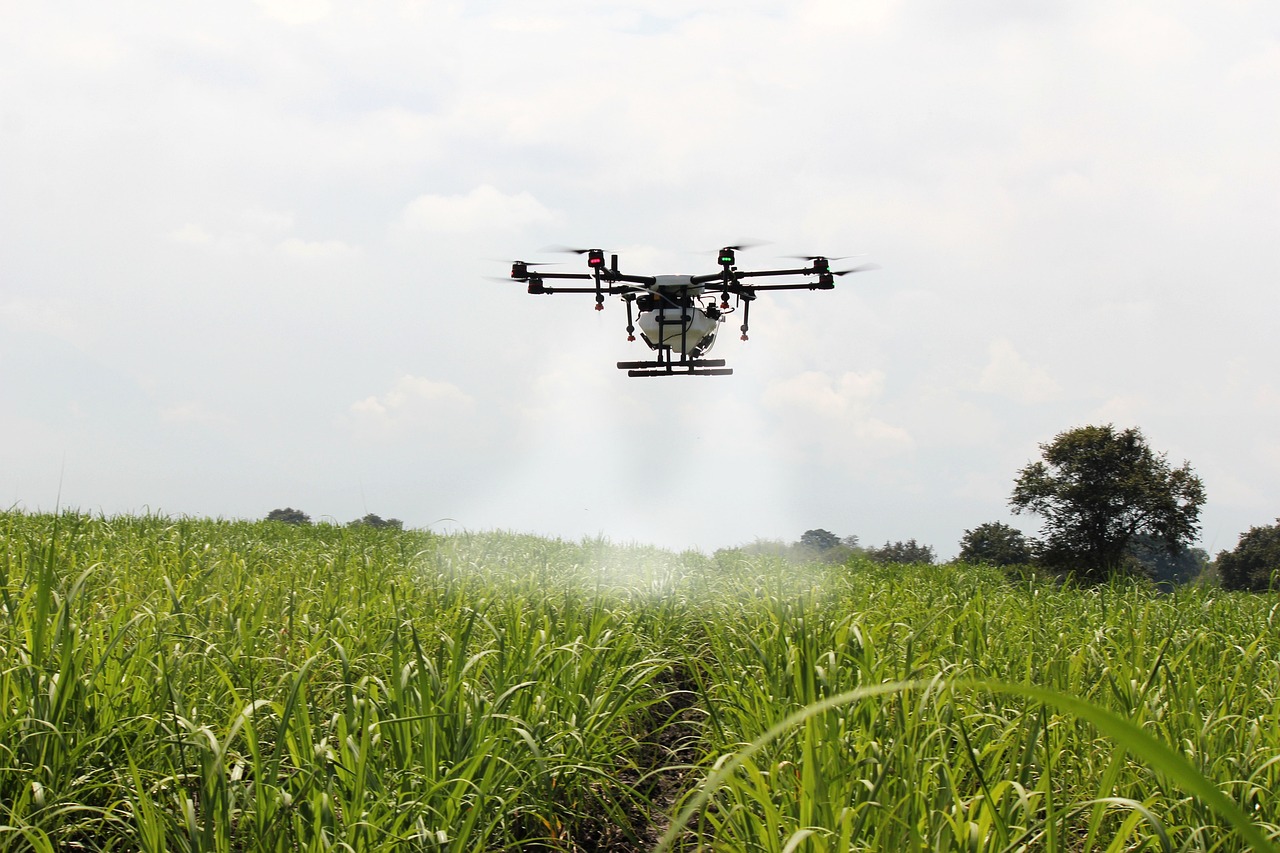
Poland’s Ministry of Agriculture and Rural Development has added to the government’s legislative work programme a bill that opens the use of drones to fertiliser spreading and plant protection treatments.
The text has been referred for further work. It remains a bill: no implementation date has been set, and the elements made public specify neither flight height, nor mass, nor distance from dwellings.
Two laws amended, no operating regime

The amendment covers two texts: the Law on Fertilisers and Fertilisation, then the Law on Plant Protection Products. According to AgroNews’s presentation of the bill, the objective is twofold — fertiliser spreading and plant protection treatments — for farms as well as for agricultural service companies.
Two laws because there are two uses that the Polish administration processes separately.
The bill creates a possibility. It does not describe the operating regime, and the information published to date does not indicate which authority would issue authorisations or on what criteria. The referral for further work therefore leaves open the most concrete part for a remote pilot: what will have to be demonstrated, declared and complied with before taking off over a plot.
The Polish subject should be read in a changing European context. The European Commission is preparing to lift the ban on spraying by drone, documented in the Brussels process on aerial spraying. A common framework would change the situation for Member States moving forward alone, such as Poland.
Heights, masses and distances missing from published details
No height ceiling, no maximum take-off mass, no drone class and no minimum distance from dwellings appear in the documents made public. The bill opens a possibility; the values that will decide the feasibility of a plot are not published, and the ministry has not given a deadline for this part.
The ministry had indicated beforehand that its proposals on drones in plant protection take into account the results of research carried out in 2024 and 2025 with targeted grant funding from the ministry.
This methodological point explains the order followed: first a legal basis, then the parameters.
Italy chose another path by opening its rules to agricultural maxi-drones up to 5 metres in dimension, a precedent that shows the range of possible choices.
A timetable without dates, a signposted path
The bill can be consulted in the register of the Government Legislation Centre, under reference 12410702. It still has the ordinary path of a Polish law: interministerial and public consultations, examination by the bodies of the Council of Ministers, a vote in the Sejm and then the Senate, signature by the President, publication in the Dziennik Ustaw.
None of these stages has an announced date in the available details.
The ministry did not specify whether the technical parameters would be set by regulation or written into the law itself. This imprecision matters for an operator: a value set by decree can be revised more quickly than a value enshrined in a law, and the level of legal protection is not the same.
What can still shift the text
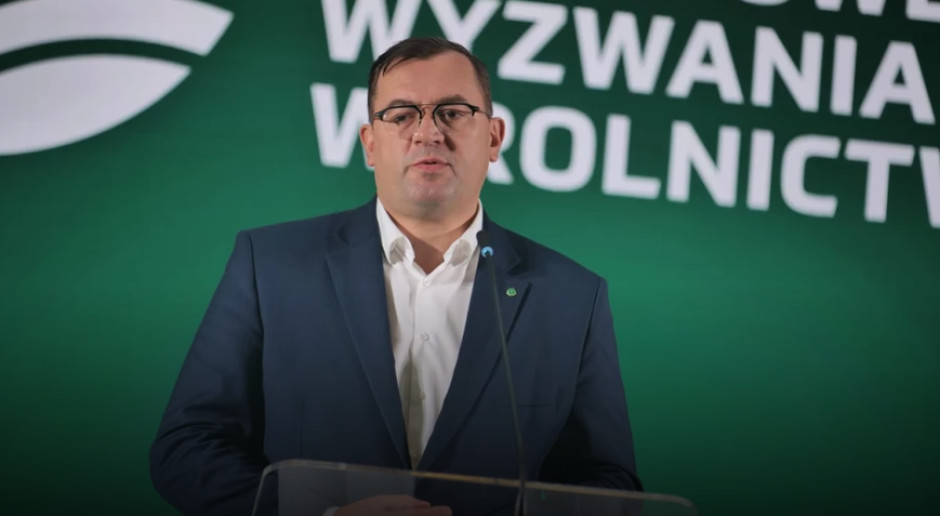
The scope may move. Fertiliser spreading and plant protection fall under two laws and two procedures, and one can advance without the other. The political timetable also weighs: Minister Stefan Krajewski links the dossier to the development strategy for Polish agriculture, for which he is requesting at least EUR 37 billion of Common Agricultural Policy funding after 2027, as reported in the press release taken up by PortalSpozywczy.
The benchmarks cited by the ministry give the scale of the work. The deputy minister mentioned 17,953 premium applications submitted between 2023 and 2026, including more than 7,200 in the latest call, and nearly 500 operations linked to water resource management between 2020 and 2025.
The number of agricultural producer groups fell by half between 2015 and 2023, starting from nearly 1,400. Polish agri-food exports reached around PLN 248 billion in 2025.
The ministry estimates the administrative simplification at 100 hours gained over 200 days if the operator saves thirty minutes per day.
Litigation remains a possible blocking factor. In the Antilles, drone spreading in banana plantations is the subject of a legal challenge, which shows that a technical authorisation is not enough to secure a sector.
In Poland, as long as the bill is not published in the Dziennik Ustaw, no drone spreading or spraying operation can rely on it.
← Back to home · Search · Suggest a topic · Lire en français / Read in French