
Business — EU
Bipartisan House report links DJI to PLA swarms

Forty-seven pages, one sentence on DJI
The report runs to 47 pages. DJI's name appears once, on page 9, in the introduction. The sentence asserts that there is “no coincidence” in the fact that the commercial dominance of the “national champion” Da-Jiang Innovations has advanced in parallel with the Chinese military's drone swarm capabilities.
No elaboration follows this observation.
The text is entitled “Rigging the Game: How China Undermined Western Manufacturing and Helped Hollow Out American Industry”. John Moolenaar, Republican of Michigan and chair of the House Select Committee on China, published it with ranking member Ro Khanna, Democrat of California, on 13 November 2026.
The committee held a hearing on the report in Washington on Friday 20 November.
No DJI business figures in the document
No revenue, no margin, no profit, no year-on-year comparison: the report contains no financial data on DJI. The sentence on page 9 serves as an example of the Chinese doctrine of civil-military fusion.
The four case studies that follow cover bioproduction, aerospace, semiconductors and machine tools. The rest of the text mentions neither DJI nor Autel, nor any unmanned aircraft.
The only quantified element on swarms comes from elsewhere. In January, the Chinese military released footage of a single operator controlling 200 fixed-wing drones, during a test conducted by its National University of Defense Technology.
The report does not say that DJI supplied equipment, software or personnel to this programme, nor to any other PLA swarm project. Its thesis is parallel growth, nothing more.
A correlation asserted without citation or measurement
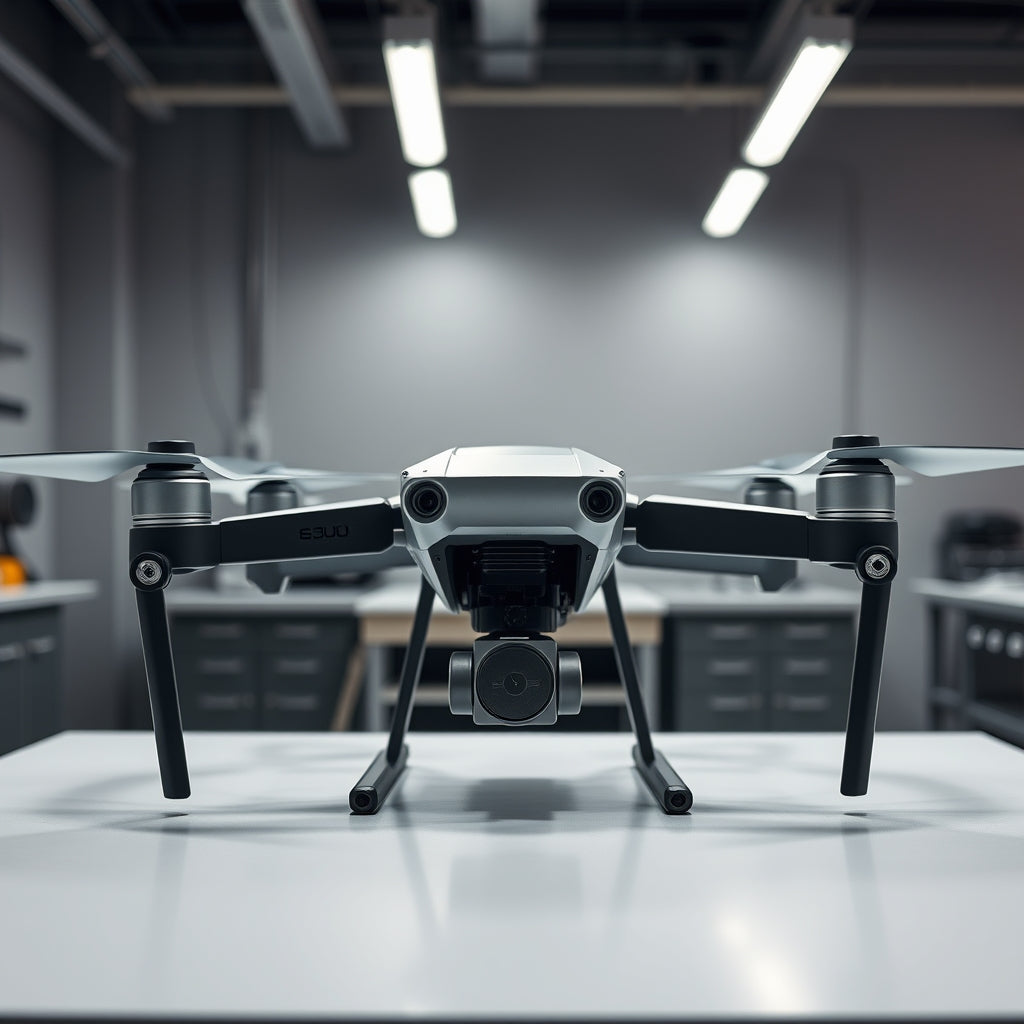
The passage appears in a part of the introduction largely devoid of footnotes. The argument remains general: a company that manufactures commercial quadcopters is a national security asset, whether its government intended it or not, just like battery plants and shipyards.
The sentence on DJI cites no source to establish the link with military swarms.
The report makes no numbered recommendations. Its final section calls for a national industrial strategy pursued with the urgency of the Manhattan Project or the Interstate Highway System, without naming any sector-specific measure for drones.
The committee's press release quotes Mr Moolenaar and Mr Khanna, never DJI. The document therefore remains a political signal, as also noted by the analysis of the report published on 24 November.
The 20 November hearing, entitled “Outproducing the CCP: Restoring American Manufacturing”, brought together four witnesses. Two have written on drone manufacturing. Mark Widmar, chief executive officer of First Solar, echoed the quadcopter phrase; Pat Gelsinger, former chief executive officer of Intel, cited drones among sensitive technologies, according to the account of the proceedings of 23 November 2026.
What this means for a professional fleet in Europe
For a European operator, the report changes no rules. It is a US congressional document, with no procurement measure or restriction attached, and FAA rules do not apply in Europe.
The sentence does, however, feed compliance and supplier-dependency debates at a time when professional fleets are becoming denser, as in Spain with 150,332 registered operators, 26% more in a year.
The open question is what follows. A committee report of this kind sometimes precedes legislative proposals; nothing in the text sets a timetable, product scope or procurement threshold.
The document cites no other manufacturer, does not establish a list of equipment to exclude and does not distinguish professional ranges from consumer ranges.
The absence of citation weakens the sentence as evidence, not as a political argument. Criticisms of the European industry's dependence on public support, voiced by Stephen Sutton, should be read in this same context of reshaping of procurement.
On 20 November, at the close of the hearing, no measure targeting drones had been announced. The sentence on page 9 remains the only point of contact between the report and the sector.
← Back to home · Search · Suggest a topic · Lire en français / Read in French