
Regulation — US
A drone cloud-seeding project targets 1,640 square miles in Oregon
The 1,640 square mile area remains a proposal
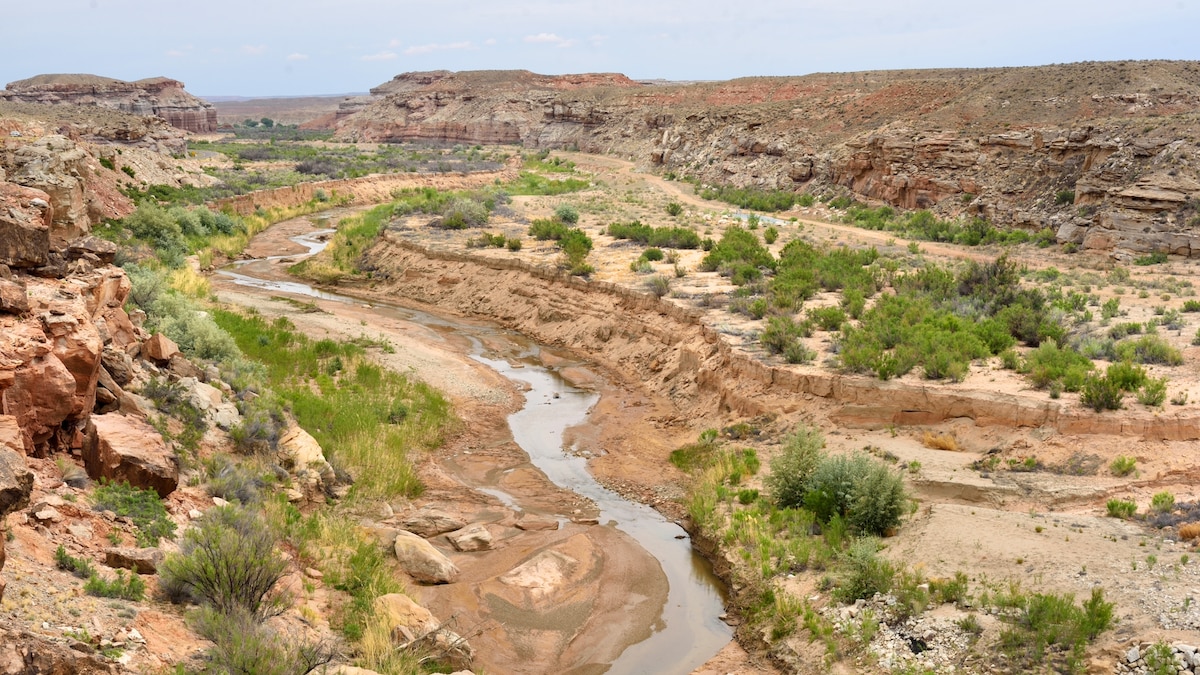
The project covers 1,640 square miles in Oregon, seeded with silver iodide from drones. It is a draft text. No flight authorisation follows from it, no rule currently applies under this document, and no date for entry into force has been announced.
The technique itself is more than 80 years old: silver iodide particles introduced into a cloud serve as nuclei for ice crystals, which grow and then fall back as rain or snow depending on the ground temperature.
The drone changes the carrier, not the principle. Rainmaker, a company based in El Segundo, California, conducted drone seeding trials in Pendleton, Oregon, during the summer of 2026, as documented by OPB's Think Out Loud programme.
The local context is one of entrenched drought: more than 2 million Oregon residents live in affected areas, and Umatilla County is under a drought declaration after one of the warmest winters recorded in the state and historically low snowpack.
No implementation date, no funding settled
No timeline exists publicly. Neither an implementation date, nor funding, nor operating conditions appear in the available material. Implementation would require at least an authorisation decision, an identified funder and flight rules specific to the area.
None of these steps has a date at this stage.
The Pendleton trials do not constitute authorisation for the 1,640 square miles. They show that a private company can fly seeding drones in the state, not that the scheme will be authorised over this area.
Other territories are moving forward on the same regulatory ground without having set an implementation date, such as the announced opening in Warsaw for agricultural drones.
Twenty grams of iodide per flight, no public flight ceiling
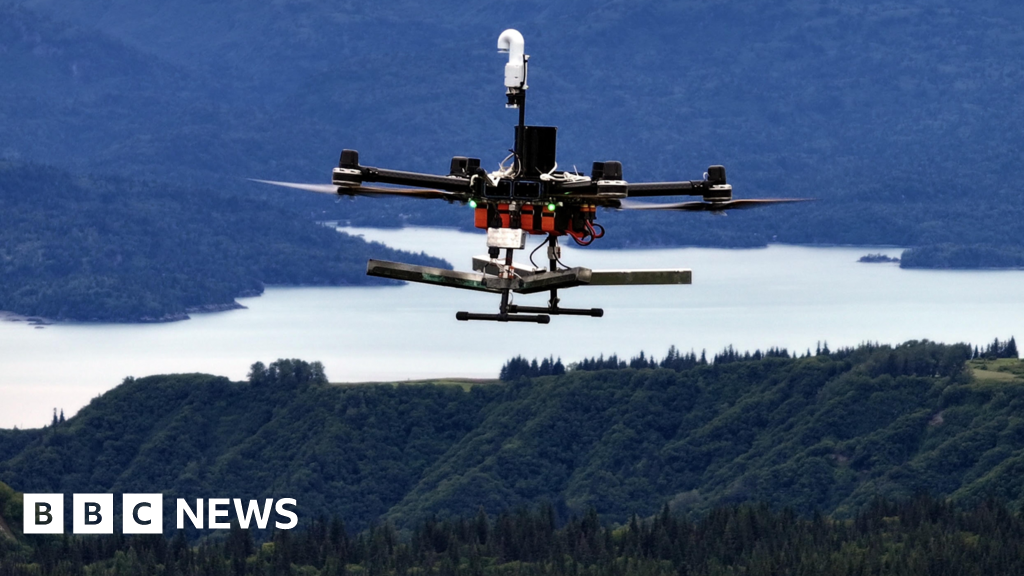
The published parameters concern the product, not the aircraft. Rainmaker states 20 grams of silver iodide per flight, dispersed over thousands of square kilometres. Its founder, Augustus Doricko, puts the increase in ground concentration at the order of one part per quadrillion, below the threshold authorised by the FDA, according to the detail published by the BBC.
The claimed output gives a measure of the service. The company says it produced 19 million US gallons in three hours over Alaska in August 2026, or about 0.01 inches of rain over 100 square miles.
Scaled to the Oregon area, the order of magnitude remains that of a supplement rather than a resource.
No flight altitude, no maximum take-off mass and no safety distance are publicly associated with the project. Yet these three parameters determine the aircraft class, the type of authorisation and the areas overflown.
The published work concerns the meteorological effect: a 24-minute seeding episode produced more than 89 million gallons during the SNOWIE experiment in 2017, the contents of 135 Olympic swimming pools, and the increase in precipitation per event is estimated at between 10 and 20%, according to National Geographic's assessment.
What could still shift the text
Environmental monitoring remains the most contested point. Cooper Freeman, Alaska director of the Center for Biological Diversity, notes that no downstream monitoring verifies the fate of the silver iodide after the flights carried out at Homer.
The challenge concerns the measurement of the effect, not the principle of seeding.
US precedents show the form a service could take. Utah has been seeding since the 1950s, and its Division of Water Resources is exploring drone seeding after testing manned aircraft between 2022 and 2025.
The state seeds only during qualifying winter events, as a drone does not create precipitation from a clear sky.
Rainmaker, founded in California in 2023, plans to deploy an unmanned quadcopter and a piloted Beechcraft King Air C90A. Aerial application by drone is already operating at the scale of thousands of hectares, such as the nearly 15,000 hectares of cover crops sown by Oligoplus in 2026.
The exact area, the duration of any authorisation, the measurement obligations and the allocation of funding remain open. A change on any one of these points would alter the text before any implementation.
← Back to home · Search · Suggest a topic · Lire en français / Read in French