
Regulation — UK
British expert neutralises DJI drones for under €1,000
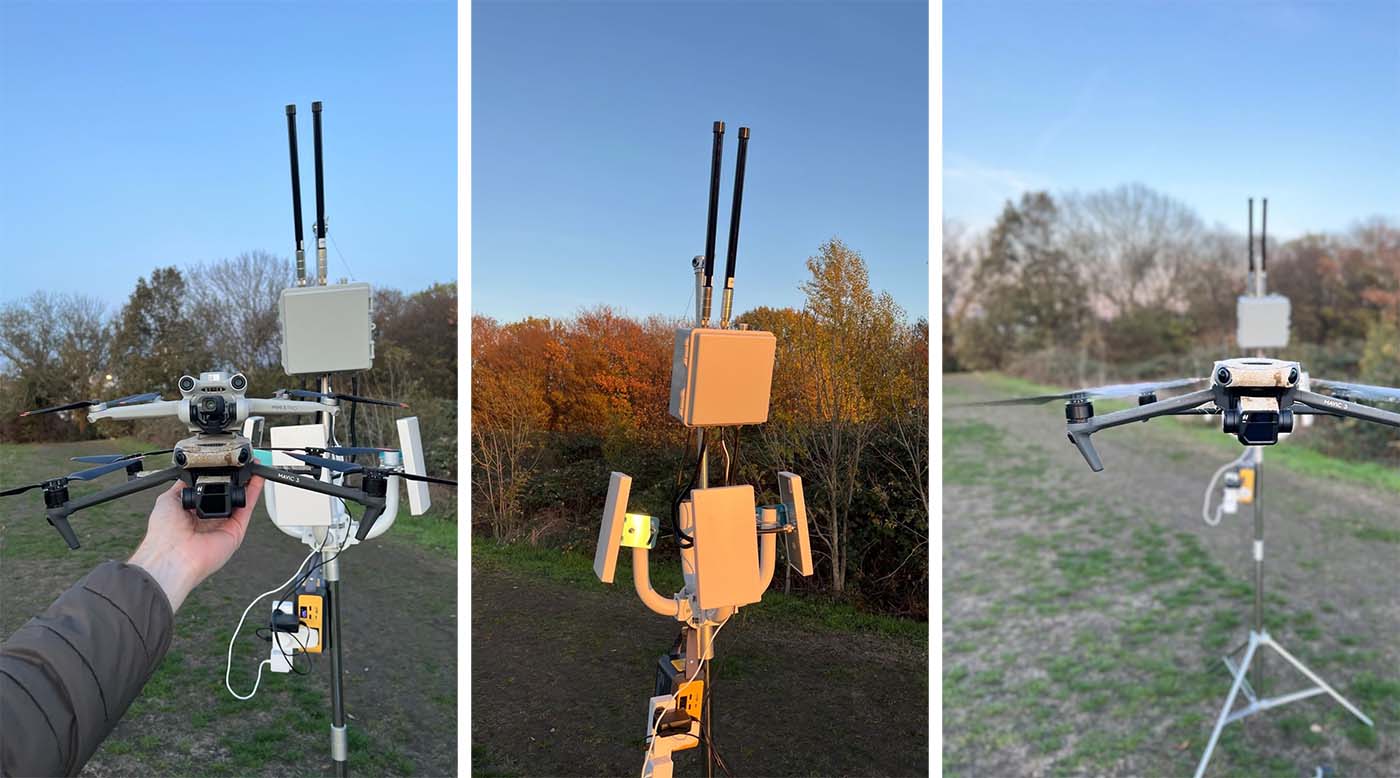
The system detects DJI drones several kilometres away, then cuts the link between one of them and its remote controller, provided that the aircraft is within one hundred metres of the unit.
Two ways to cut the link, one of which brings the drone down
Curtis C., director of Harbinger UAS, presented the device in two updates published on LinkedIn, with demonstration videos. The system uses two methods. The first saturates the DJI remote controller until it locks up: the drone then triggers its return-to-home procedure on its own.
The second is more brutal: the aircraft is forced to reboot in flight and falls.
The developer's argument hinges on selectivity. A conventional jammer blankets an entire frequency band, and everything transmitting nearby suffers its effects. The system presented is said to target a single aircraft, including when several drones are flying in the same area.
This is a statement from the designer, published by Dronewatch NL.
The stated figures and the silences of the technical sheet
The price quoted is under £900, or around €1,000 for the complete installation. The neutralisation range tops out at around 100 metres. The detection component claims up to ten kilometres on Remote ID and around two kilometres on DJI DroneID.
The system also displays ADS-B data from manned aircraft, detects FPV video feeds and allows zones with entry alerts to be defined. A smartphone mobile interface completes the package.
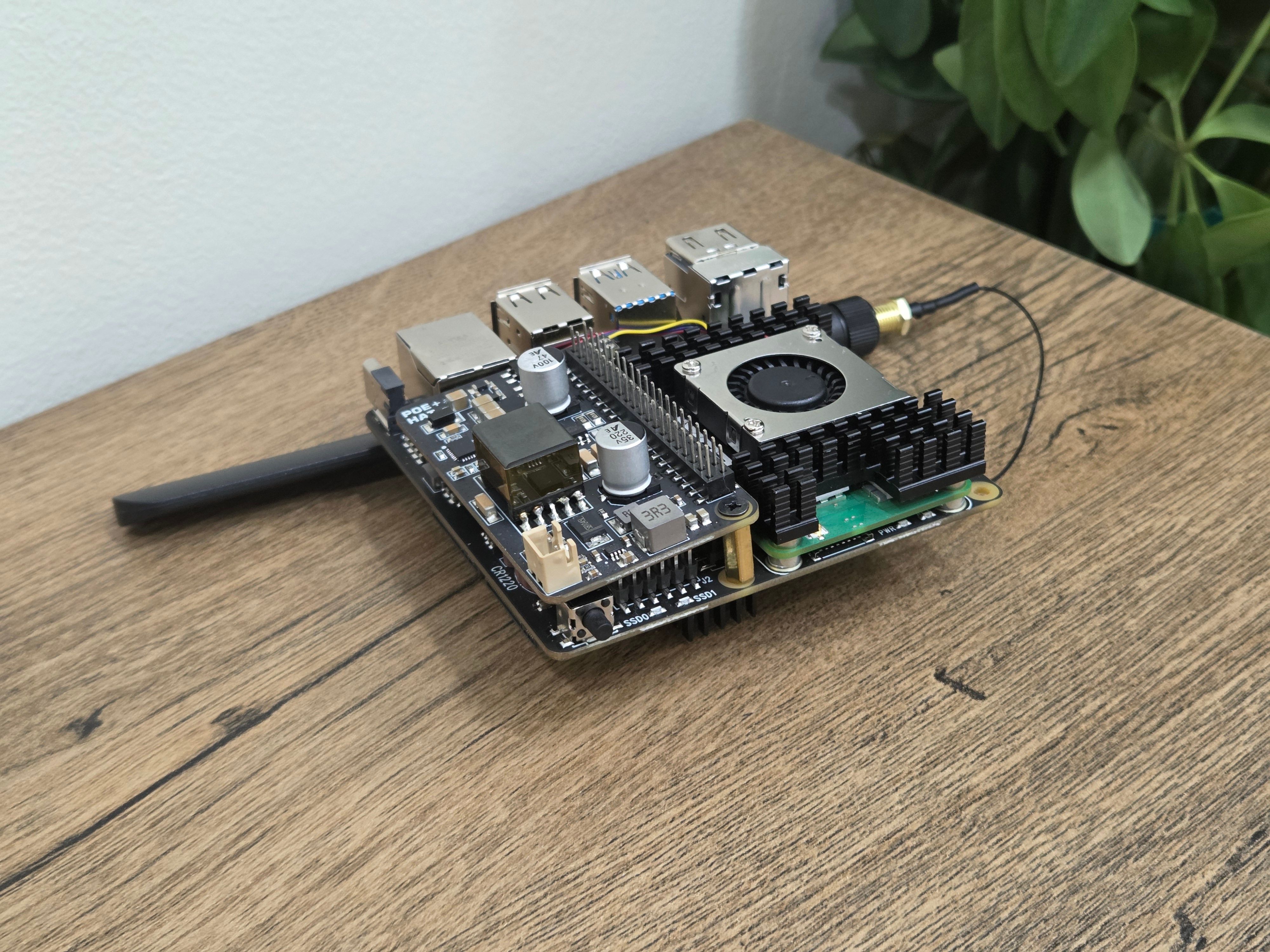
The exact mechanism remains partially documented. Curtis corrected his initial description: he does not hijack the OcuSync link, he injects information and sends authenticated commands to the flight controller. No SDR is used, he states.
The hypothesis of a recently discovered Bluetooth vulnerability is neither confirmed nor ruled out; the developer refuses to answer on this point. The demonstrations come from the designer alone. No independent verification of the technique or of its behaviour in other flight conditions has been published.
Three DJI tested, no Enterprise model in the trials
Three aircraft were used in the trials: the Mini 3 Pro, the Mavic 3 Cine and the Avata 2. The Mavic 3 Thermal did not react to the attack, which surprises the developer himself.
The behaviour of the brand's professional platforms, including the Matrice 5T, does not appear in the published results, even though the comparison of thermal drones classified C1 and C2 shows how much sensors and links differ from one model to another.
Neutralisation concerns only DJI. Detection, for its part, covers a broader field: Remote ID, ADS-B, FPV video. The previous generation, the AeroScope built by DJI, saw only the brand's aircraft.
The difference from the AeroScope lies in individual targeting and cost. The system does not open up to other manufacturers.
DJI drones under 250 g escape Remote ID, but continue to transmit the brand's DroneID. Standard Remote ID receivers miss them, and a drone that emits no signal remains invisible to any radio detector, recalls the Slovak manufacturer DroneWard, which sells a passive unit receiving Remote ID and DroneID without emitting anything.
Another route exists: passive acoustic detection, promoted in Europe by BeephoniX and Bertin Exensor.
What is missing to judge, starting with the legal framework
Neutralising a drone is not an unrestricted operation. It remains tightly regulated in the United Kingdom and rarely authorised for a private operator; the framework reserved for law enforcement does not extend to a construction site operator or a photographer.
As of 19 November 2026, nothing published establishes that this system has an authorisation for use, nor that its use would be lawful outside a law-enforcement framework. Passive detection, for its part, is presented as free to operate according to its manufacturers.
The price of under £900 is that of a self-build announced by its author. No commercialisation, no public pricing and no availability date accompany the demonstration. No feedback on use from outside the developer's circle exists.
The reliability of the in-flight release, that of the forced reboot and the system's performance against a drone that no longer emits anything remain undocumented.
Counter-drone nevertheless features among British priorities: the defence investment plan announced on 30 July 2026 commits more than £5 billion to drones and autonomous systems, including counter-drone (DRONELIFE).
This envelope concerns the armed forces, not civil operators. For a professional remote pilot, the figure that matters remains the stated range: 100 metres, for a unit costing under £900.
← Back to home · Search · Suggest a topic · Lire en français / Read in French