
Regulation — NL
Netherlands: drone project over oil terminals alerts civil aviation
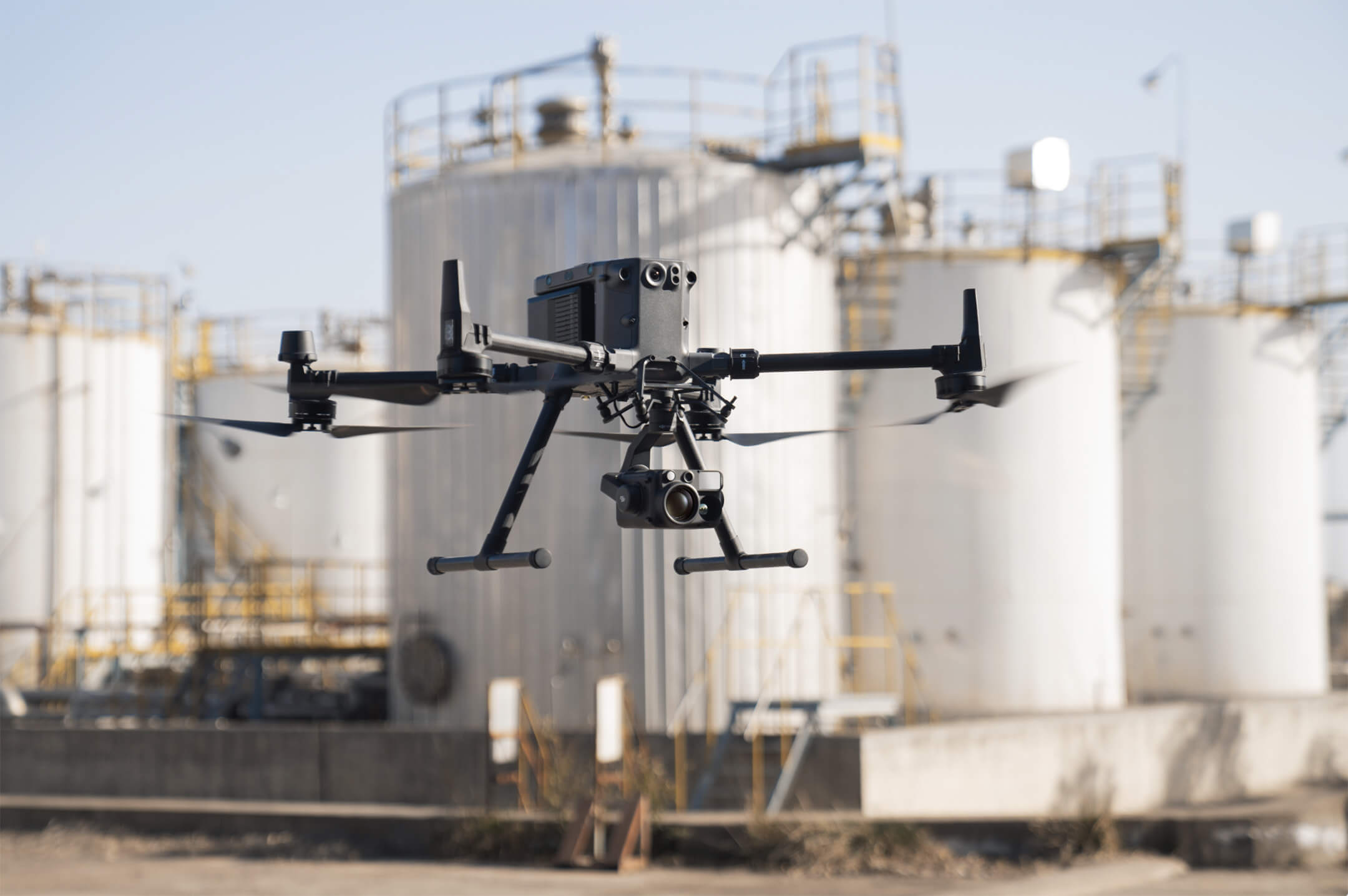
Weekly flights to estimate tank levels
The project dates back to 2025. A US commodities data and analytics company wanted to set up a proof of concept to estimate the volume of refined petroleum products stored in tanks in the so-called ARA region, namely Antwerp, Rotterdam and Amsterdam.
The specification provided for weekly drone flights over one year, with thermal and optical cameras. Analysis of the images was to make it possible to assess the liquid levels inside the tanks and then deduce the quantities held.
The mission was classified as a priority, with a start expected as soon as possible.
The company was looking for a licensed professional drone pilot able to cover all the terminal sites in the three port areas. Image capture was planned at a maximum distance of 500 metres. The equipment envisaged was similar to a DJI Matrice 350 RTK equipped with Zenmuse H30 and H30T cameras, a set-up the company already used at a site in Cushing, United States.
A Dutch contractor withdraws for lack of agreement from operators
In June 2025, the company contacted a licensed Dutch drone operator. The operator discovered that the terminal operators had not been consulted and that the client did not intend to contact them.
The terminals are classified as critical infrastructure and are often located a short distance from one another. Flights carried out up to 500 metres from a tank could therefore pass over or in the immediate vicinity of sensitive installations.
The operator concluded that the mission could not be carried out safely and legally without prior coordination with the companies concerned. The client offered to take responsibility for the operation.
The contractor refused this arrangement, recalling that he remained legally responsible for his own flights, and withdrew from the mission. In his correspondence, he described the purpose of the project as having something of industrial espionage about it.
He was subsequently reportedly informed that another drone company might have been approached, although its identity was not known. The client had also considered using a helicopter, as a replacement for the drones or in addition to them.
The file referred to the national coordinator on 13 June 2025
The case was then discussed internally at the Dutch Human Environment and Transport Inspectorate (ILT), which acts as the civil aviation authority. The June 2025 exchanges concerned the collection and commercial use of information relating to installations owned by third parties, without the operators being aware of it or having given their consent.
Officials also questioned whether the planned flights complied with the rules applicable near critical infrastructure. On 13 June 2025, the ILT referred the matter to the National Coordinator for Security and Counter-Terrorism, the NCTV.
An internal email dated the same day suggests that the work could also be carried out by helicopter. The NCTV replied on 23 June that the report had been brought to the attention of its security partners and that the case would be examined in the interministerial working group on unwanted drone activities, led by the Ministry of Infrastructure and Water Management.
In November 2025, the ILT followed up with the initial operator, who had not been contacted again by the client, and had still received no response from the NCTV.
No confirmation of flights or authorisation
The documents released following Dutch access-to-information requests do not say whether the project was authorised, supervised or abandoned. Nothing confirms that flights took place or that images were collected.
The identity of the data company is not established in the published documents, nor is that of the possible second contractor approached.
For an operator, the sequence recalls a fundamental rule: responsibility for flights remains with whoever operates them, whatever written commitment the client gives. It also shows that a flight over an industrial site classified as critical comes up against two distinct obstacles: access to the site and the commercial exploitation of data collected on third-party installations.
In Belgium and the Netherlands, these points fall under different national authorities, and coordination between operators, the civil aviation authority and security services is a precondition for the feasibility of a drone measurement campaign over oil tanks.
← Back to home · Search · Suggest a topic · Lire en français / Read in French