
Professional applications — FR
Oligoplus sowed nearly 15,000 hectares of cover crops by drone in 2026
A 15,000-hectare campaign run from the Vosges
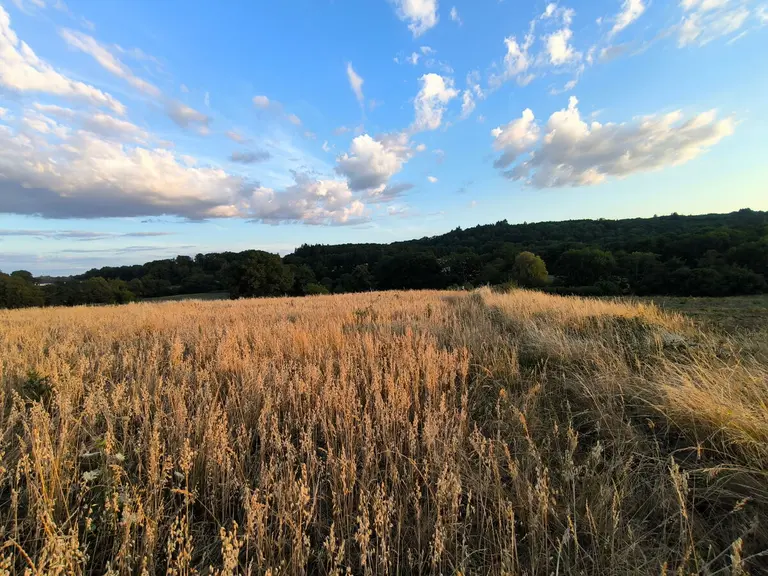
Oligoplus announces nearly 15,000 hectares of cover crops sown by drone during the 2026 campaign. The agricultural services company is based at 10 rue des Riaux, in Neufchâteau, in the Vosges, and its manager, Maxime Imhoff, describes a service carried out before harvest, on plots still under crop.
The company also claims 27,000 hectares treated with foliar nutrition and 400 farmer customers, two markers that indicate the size of the organisation.
The operations are first understood at the scale of a single plot. On 30 June 2026, on an oat plot of EARL Autour in Lavaufranche, in the Creuse, a demonstration of red clover sowing was organised as part of the Innov'Action days and the Dephy network.
The aircraft took off with around fifty kilos of seed on board. In September 2026, Paysan Breton followed a comparable operation in an unharvested maize plot, where the drone broadcast seed over the tall plants.
Automatic flight between 3 and 5 metres above the rows
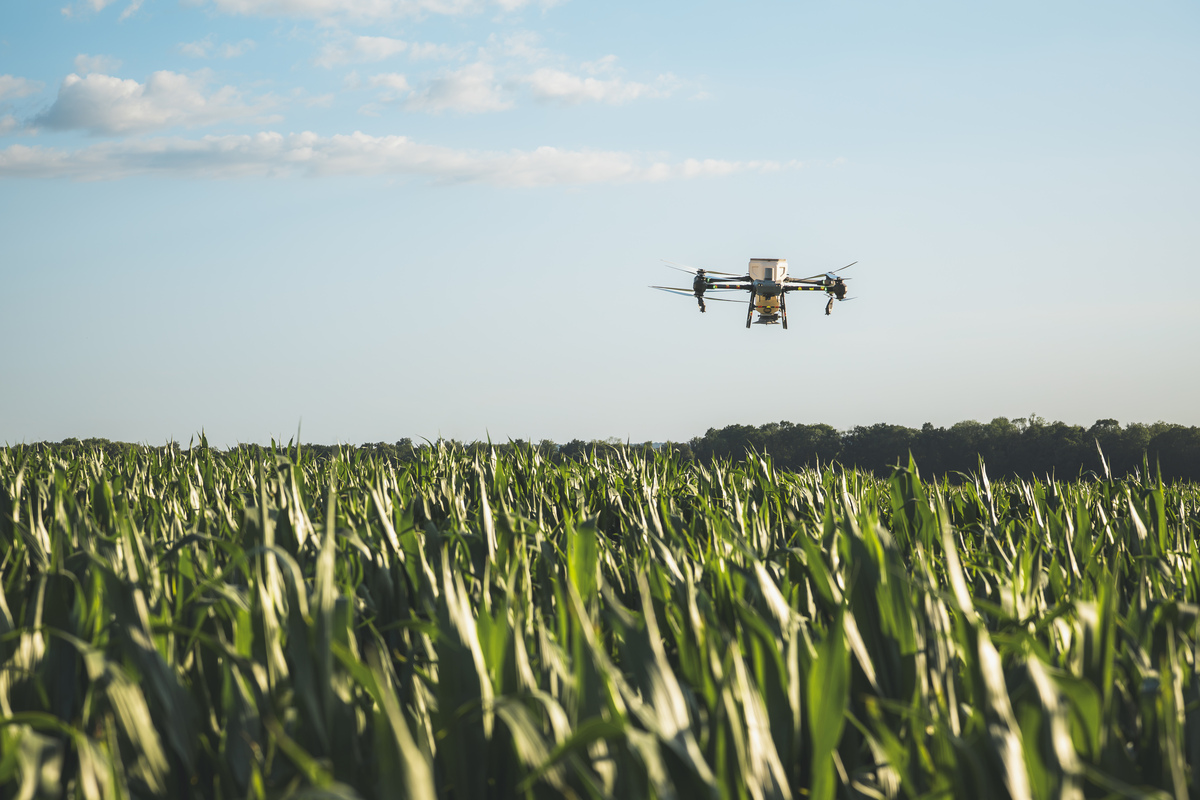
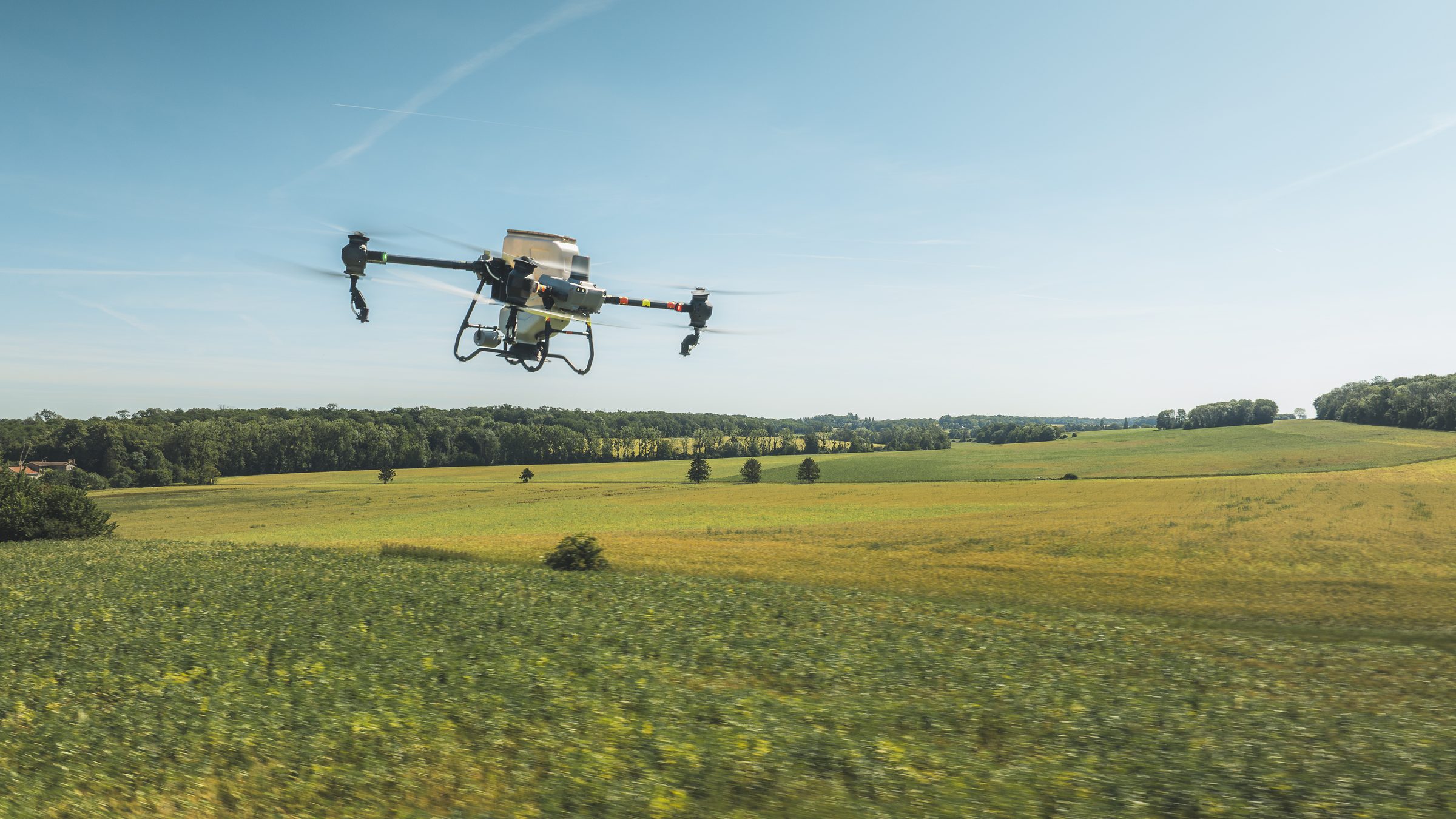
The drone carries up to 50 kilos of seed, flies between 3 and 5 metres above the crop and works in automatic mode. The technician-pilot programs it to avoid obstacles, including posts.
The spreading width is given as between 6 and 10 metres depending on the operation, 6 metres during the demonstration in the Creuse, with a work rate of up to 7 hectares per hour under optimal conditions.
The blades create turbulence that parts the foliage, which limits the seed retained in the hollows of the leaves.
The field constraint is not visible on the technical data sheet. In Lavaufranche, a technical problem on one of Oligoplus's drones forced the demonstration to be scheduled at the last moment, and the number of farmers present remained below what had been hoped for.
The sowing window also depends on the residual moisture under the standing crop, the moisture that the seed must find in order to germinate.
The regulatory framework separates two uses. Seed sowing falls under aviation regulations, not those for plant protection products: a trained remote pilot and a declared operator are sufficient, under the rules of the Directorate General for Civil Aviation.
Spraying by drone remains prohibited in principle. Law no. 2025-365 of 23 April 2025 opened up very tightly regulated derogations, and the implementing texts arrived in 2026: Decree no. 2026-270 of 14 April 2026 and an order of 19 May 2026 setting the list of authorised products, which approves around 150 products usable by drone on entry into force.
Since 1 January 2026, the former national scenarios S1, S2 and S3 no longer exist.
A month of sunshine gained for the cover crop
On cereal crops, Oligoplus intervenes two weeks before harvest. Many farmers sow two weeks after the combine harvester passes, which makes a month of sunshine gained for the cover crop, summarises Maxime Imhoff, who recalls that by sowing early more biomass is produced per hectare.
The seed benefits from the residual moisture under the standing crop and establishes earlier. Sowing before harvest gains 10 to 15 days of vegetation, time that is recovered as biomass in the autumn.
The more developed cover protects the soil, slows weeds, improves structure and makes use of nutrients. On the mechanisation side, the drone eliminates a field pass, limits compaction and reduces fuel consumption.
On an oat or maize plot still standing, it crushes nothing.
What can be replicated, what remains to be quantified
Aerial sowing is suitable for small seeds: clover, phacelia, mustard, radish, vetch. The dose is set as for conventional broadcast sowing, generally from 10 to 25 kg/ha for a cover crop between crops, depending on the species and the mixture.
The drone goes where the tractor can no longer go, on wet or sloping ground, and sows into an already established crop.
What does not transfer relates to the organisation of the operation. A trained remote pilot, a declared operator and a fleet available at the right time are needed, as the breakdown of 30 June in Lavaufranche showed.
The service also requires compliance with the applicable flight rules, in a framework that changed on 1 January 2026 with the disappearance of national scenarios S1, S2 and S3.
The figure of 15,000 hectares says nothing about the yield per hectare obtained, the cost of the service or the flight authorisation constraints encountered operation by operation, which are not detailed.
On the Lavaufranche plot, monitoring and measurements were announced to assess the effectiveness of the practice.
← Back to home · Search · Suggest a topic · Lire en français / Read in French