
Business — DE
Nomadic raises $6M for its drones that land on power lines
An expanded fleet and remote repositioning in 2027

The $6 million will first be used to expand the fleet that Nomadic makes available to grid operators in Europe and the United States. The round is also intended to finance the start of production, in 2027, of remote repositioning of the devices along a line, according to the round summary published by Sesamers.
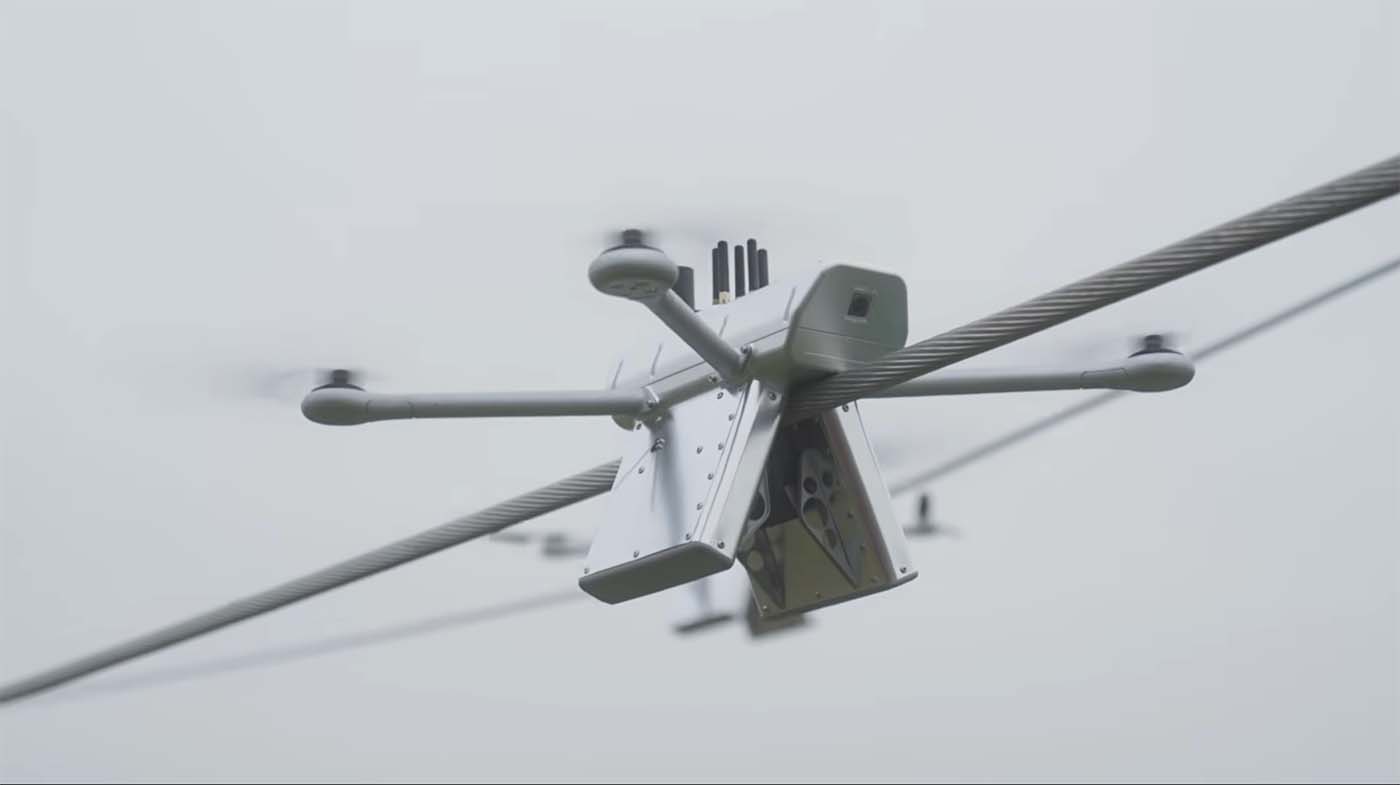
A NOMAD lands on the conductor, attaches to it and recharges by induction from the cable's electromagnetic field, without interrupting the power supply. Autonomous movement from one point on the line to another is among the next developments cited by the company, according to the presentation of its technology by Dronewatch Europe.
A single system covers about 25 km of line. Fixed sensors, by contrast, are generally installed every 1 to 5 km, leaving gaps where nothing is measured.
Six million dollars led by Foundamental

Foundamental leads the round, with Verve Ventures, Cyan Ventures, Outlander VC, Asia2G Capital and business angels from the alumni network of the German Business Foundation (sdw). The converted amount comes to approximately €5.5 million, as reported by munich-startup.de.
The announcement dates from 17 November 2026.
Nomadic was founded in 2024 at the University of California, Berkeley by Andreas Moldskred, chief executive officer, and Lauritz Weil, chief technology officer. The company is now based in Munich.
Twenty thousand flight hours and a monitoring market that is doubling
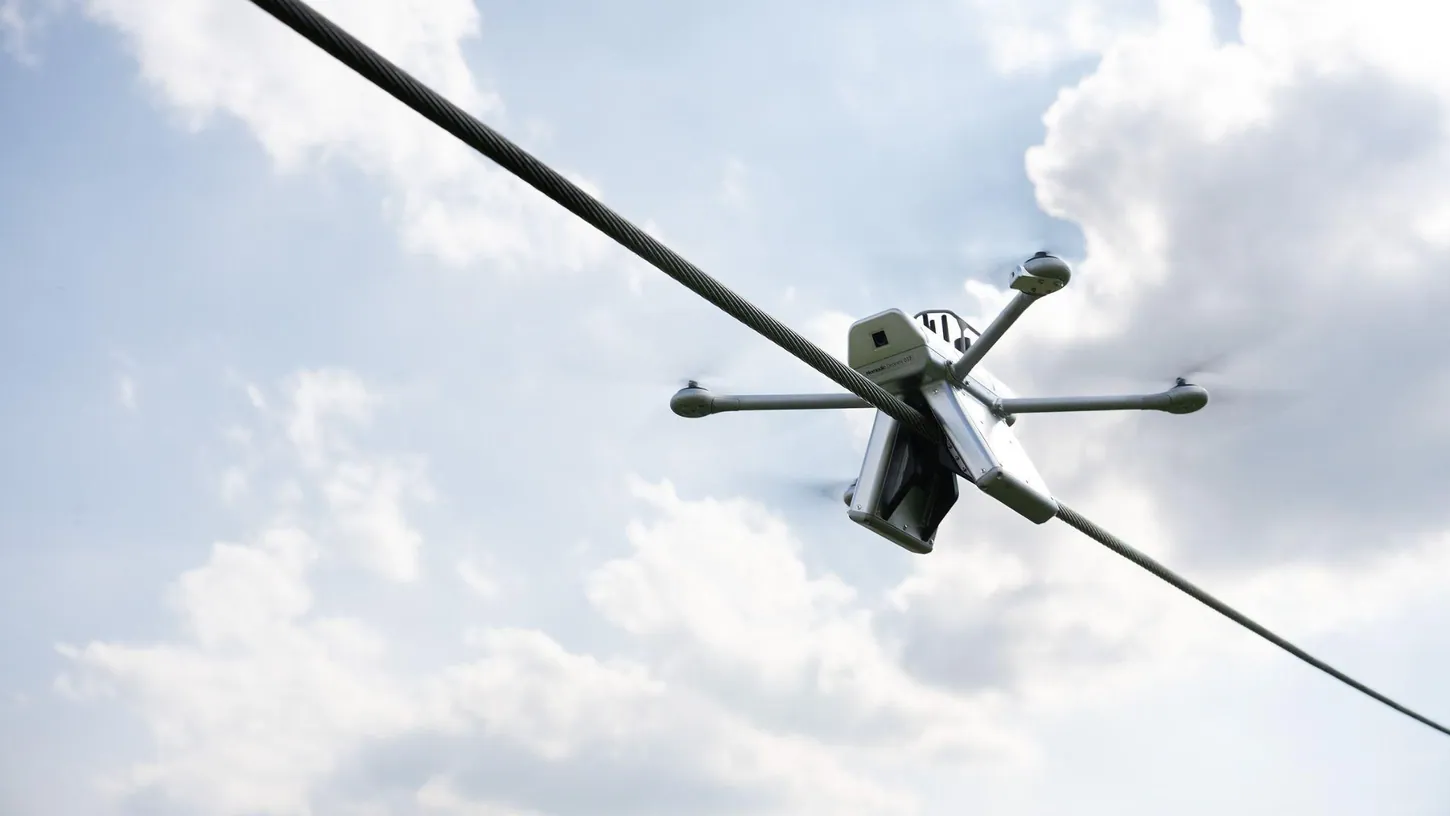
The company reports more than 20,000 operating hours on live lines, at voltages of up to 420 kV and in temperatures falling to minus 25 degrees Celsius.
Its 4 kg devices are in service on German transmission and distribution networks and have been deployed in Norway and the United States, according to the funding presentation.
Measurements of conductor temperature, vibration and sag are sent to Nomadic OS, a platform that cross-references them with weather models, network topology and historical readings.
For a grid operator, the argument lies in the linear distance covered per device and in the elimination of battery swaps: a long-duration inspection mission no longer requires a return to the ground to change the battery.
Competition is divided between fixed sensors, which are numerous but immobile, and conventional inspection drones, which return to their station to recharge.
The automation of linear inspection is concentrating among a few operators, as illustrated by CONDOR's acquisition of HHLA Sky and the consolidation of automated drones under a single brand.
The amounts involved explain buyers' interest. The line monitoring systems market is estimated at $4.2 billion in 2025 and projected at $8.0 billion in 2034, a compound annual growth rate of 7.8%, according to Market Intelo.
A narrower segment, transmission line fault detection devices, is valued at $1.83 billion in 2024 and $2.63 billion in 2030 by 360iResearch. The International Energy Agency estimates that annual investment in grids could increase by about 50% by 2030, from a level of around €363 billion.
The authorisation regime applicable to parking a drone on a live conductor is not publicly established, either in Germany or elsewhere in Europe. The company says it operates on German transmission and distribution networks without interrupting power, and the question of flying over and contacting an electrical asset remains to be settled with grid operators and civil aviation authorities.
The industrial stage itself is documented: flight hours have been achieved, production of remote repositioning is targeted for 2027, and adjacent surveying follows the same consolidation trend, with acquisitions of surveying companies to integrate drones into them.
← Back to home · Search · Suggest a topic · Lire en français / Read in French