
Professional applications — EU
The Matrice 5TD and its 1280 px thermal imaging arrive in Europe, not the United States
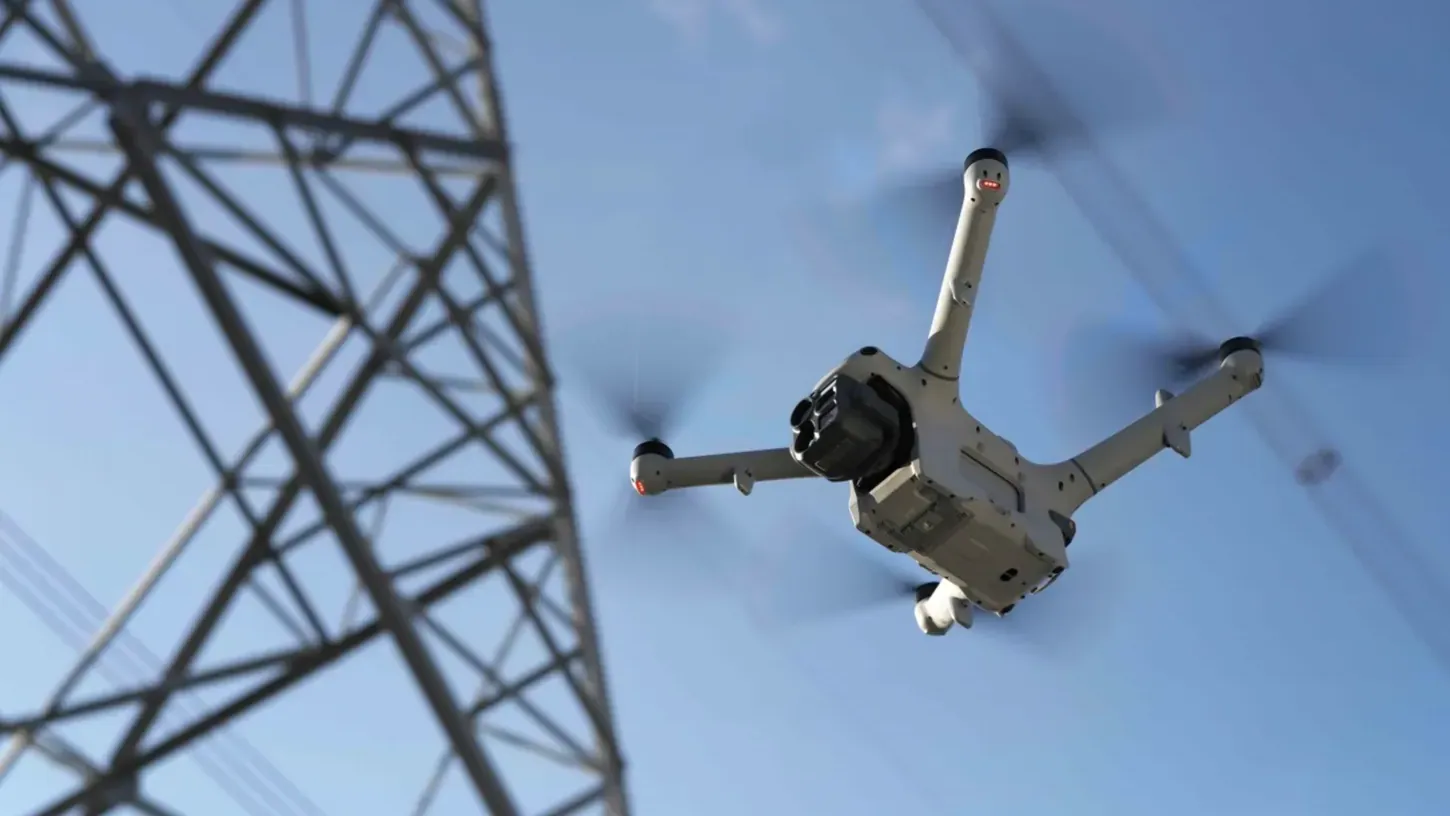
The Matrice 5TD arrives in Europe without FCC approval
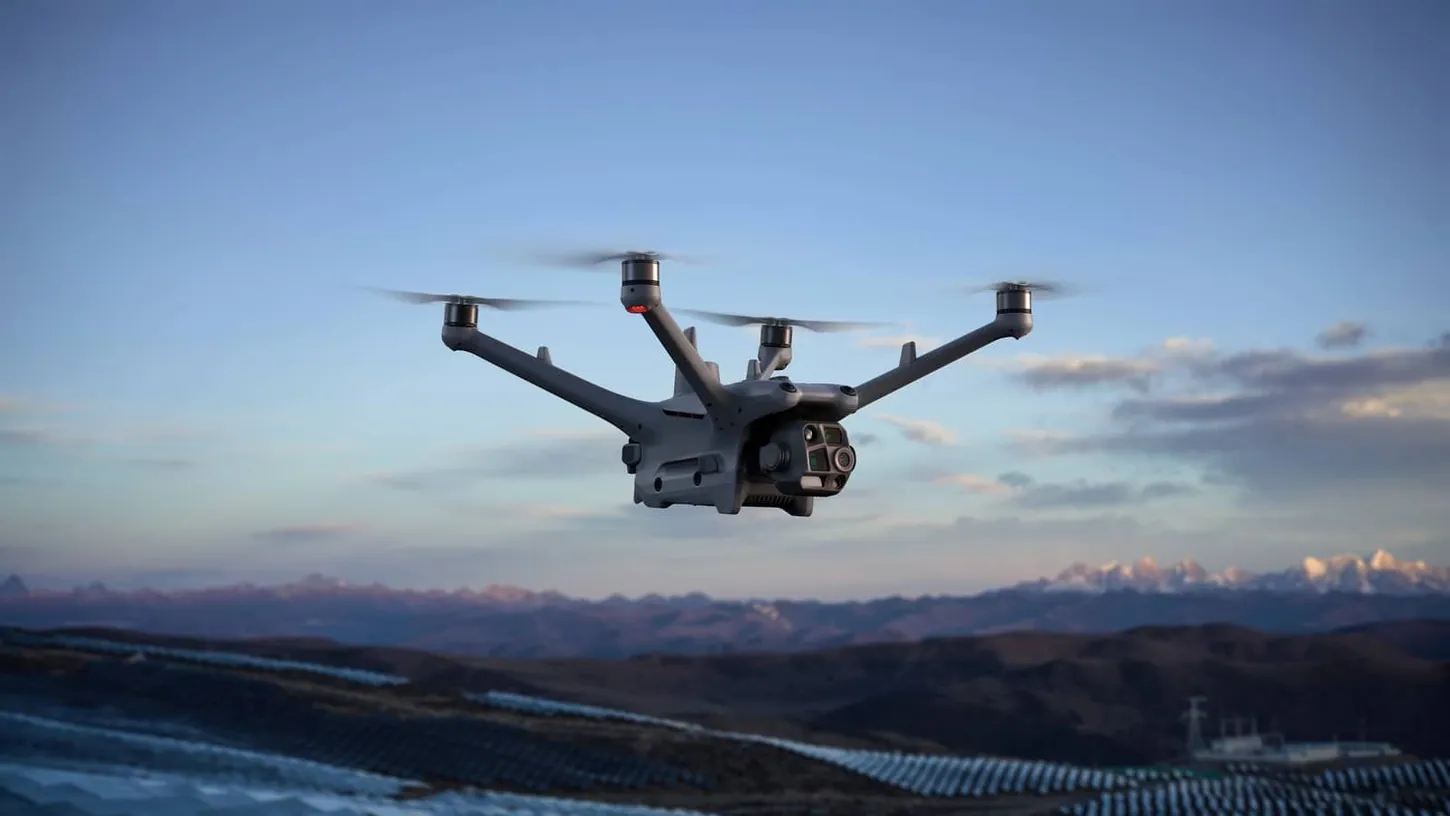
DJI launched the Matrice 5TD with its Dock 4 station on 14 October 2026. The drone carries a native 1280 by 1024-pixel thermal camera, four times the resolution of the 640 by 512 detector on the Matrice 4T and Skydio X10.
Its technical specifications list radio approvals for Canada, Europe, China and Japan. None for the FCC.
Canadian, European and Japanese resellers can therefore sell the 5TD. No American reseller can: the FCC added foreign-made drones to its Covered List on 22 December 2025, and no new DJI model has obtained approval from the agency since.
Brendan Carr, chairman of the FCC, said that day that the agency would work with American manufacturers to “unleash American drone dominance”.
For a European operator, the consequence is direct. The most compact 1280 px thermal sensor in DJI's range remains orderable, and the renewal schedule for an inspection fleet does not depend on US regulatory decisions.
The 1280 px format establishes itself as the inspection standard
DJI did not invent this format out of nowhere. The Zenmuse H30T introduced it in May 2024 with a 1280 by 1024 detector on a 12 µm pitch, as a payload for the Matrice 300 RTK and 350 RTK, with the Matrice 400 since listed as a carrier.
The 5TD changes scale: the pitch falls to 8 µm, which places 1.3 million pixels on a sensor less than half the area and allows a more compact lens at an equal field of view.
The 5TD specifications mention an uncooled vanadium oxide microbolometer at 30 Hz, a UHR mode at 2560 by 2048, a 3,000 m laser rangefinder and three 50 MP sensors.
The 5TD is not a conventional field drone. It weighs 2,600 g, measures 393 by 477 by 230 mm without propellers and is not flown from a radio controller. The folding thermal model in the range remains the Matrice 4T, 1,219 g, 260.6 by 113.7 by 138.4 mm when folded, with its 640 by 512 detector.
DJI Enterprise launched a folding drone on 5 November whose teaser shows the same gimbal, the Matrice 5T, with native 1280 px, a 176x zoom, four sensors, a laser rangefinder and IP55 certification.
A gap created by regulation, not by a commercial decision
Nothing in DJI's public documents presents the 5TD as withdrawn from the US market. The block is administrative: the Covered List of 22 December 2025, and the absence of FCC approval for any new model since.
Economists have documented what this type of protection produces in the protected industry. Philippe Aghion, Nick Bloom, Richard Blundell, Rachel Griffith and Peter Howitt showed in 2005, in the Quarterly Journal of Economics, that innovation and competition follow an inverted U-curve: it progresses when firms are close to their rivals, and stagnates where competition is weakest.
Stephen Nickell found a comparable result across about 670 British firms in 1996. Bloom, Mirko Draca and John Van Reenen measured the effect of Chinese imports on twelve European countries between 1996 and 2007 and attributed about 15% of European technological modernisation between 2000 and 2007 to that competition.
The downside also exists. David Autor, David Dorn, Gordon Hanson, Gary Pisano and Pian Shu found in 2020 that the US sectors most exposed to Chinese competition filed fewer patents, with the pressure first reducing sales and R&D spending.
On tariffs, Gary Hufbauer and Kimberly Elliott estimated those in place in 1990 at about $70 billion a year for American consumers, nearly half attributable to 21 heavily protected sectors, with an average cost of $170,000 per job preserved, within a range of $100,000 to more than $1 million.
Jason H. Lu, founder and head of Los Angeles-based manufacturer Flyby Robotics, posted on X on 25 October that DJI is making 1280 by 1024 thermal imaging standard on Mavic-sized drones while American 640 by 480 imagers show lead times of six months or more.
The post exceeded 165,000 views by Monday morning. “This should be a MASSIVE wake up call to the Western industrial base,” he writes.
A non-Chinese alternative exists. Teledyne FLIR OEM launched the Boson SX8 on 8 June 2026, an uncooled 1280 by 1024 module on an 8 µm pitch, NDAA-compliant and ITAR-free, in volume production in the United States, in a format the company compares to its 640 by 512 modules.
A European operator whose tender requires a sensor outside the Chinese supply chain therefore has a documented option.
What remains unestablished
The cause of the absence of 1280 px models in the United States is not settled: export control or a commercial choice by DJI. The FCC framework explains why no new model obtains approval, not why this range would be affected rather than another.
Reboot Hub, which takes up the analysis, notes that the reference to economists there remains directional and relies on no identified name, institution or formal forecast.
For Europe, two points remain open. The 5TD specifications mention European radio approvals and European resellers can market it, without the scope of the service network, spare parts and support period for this model being published.
The Matrice 5T, folding and closer to field use, was announced on 5 November; its delivery schedule outside North America is not documented.
← Back to home · Search · Suggest a topic · Lire en français / Read in French