
Reviews — International
The Changying-8, a 7-tonne cargo, successfully completes its first delivery trial
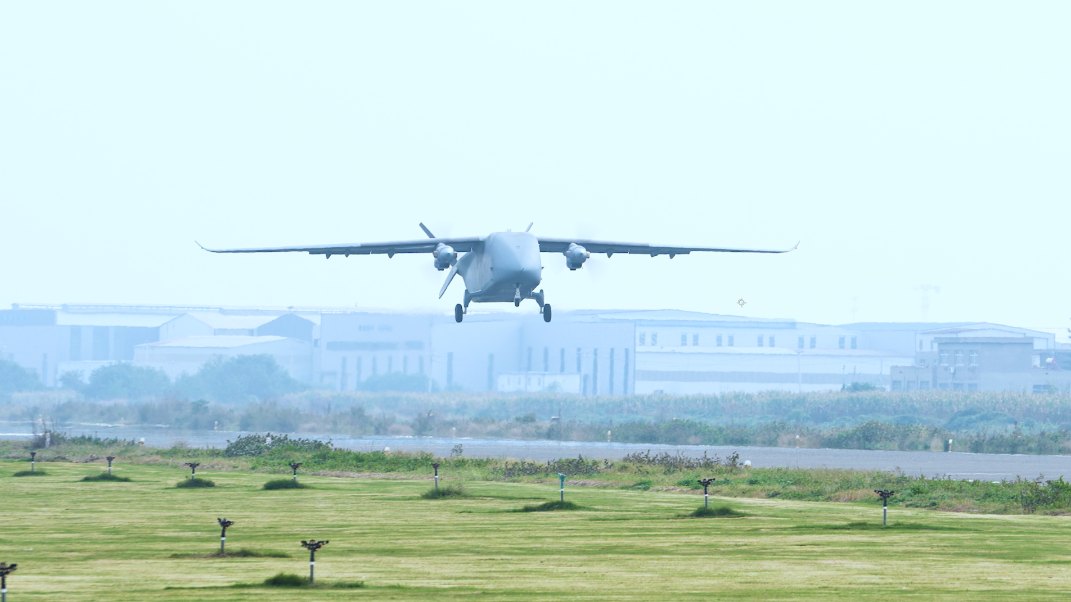
Pallets, 300-metre drop and 18-cubic-metre cargo hold
The Changying-8 carried out a transport and delivery test combining the loading of modular pallets and an aerial drop. The aircraft, developed in China, was used to verify five functions during this flight: securing modular pallets, dropping from an altitude of 300 metres, automatic control of the cabin-exit timing, recovery of the parachute suspension lines and assessment of the landing point.
The intended uses are logistics freight, emergency support and missions to poorly served areas.
The announced specifications put the aircraft at a maximum take-off mass of 7 tonnes, a payload of 3.5 tonnes and an 18-cubic-metre cargo hold. It accepts standard supplies, fresh produce and cold-chain goods, as well as emergency equipment.
The range exceeds 3,000 kilometres, and the aircraft can take off and land on a plateau or within a distance of 200 metres.
50-metre accuracy for a 100-metre target
The accuracy target was set at 100 metres; the drop achieved 50 metres, according to the Changying-8 project manager, Geng Jianzhong, quoted in the test report.
The result relates to a drop carried out from an altitude of 300 metres using the aircraft’s system. The manufacturer presents it as the best heavy drop carried out by a drone in the same class, without publishing comparable data for other cargo drones.
The test was conducted by the manufacturer, which publishes its results and quotes its own project manager. Two elements of the sequence affect operations: automatic control of the exit timing, which determines the scatter of packages around the target point, and assessment of the landing point, which governs recovery of the load and the parachute.
The 200-metre take-off and landing distance matters as much as the payload for emergency sites, where no runway is available.
A single test, with no operator or location identified
The manufacturer, the test location and the operator are not identified in the report. The flight date is not given; the publication is dated 17 November. The exact mass dropped, the weather conditions and the number of passes also do not appear in the text.
The certification framework applicable to a 7-tonne take-off aircraft is not mentioned, nor is the certification timetable.
Only one documented campaign exists at this stage, conducted by the manufacturer: the findings on drop accuracy rest on this single test, without replication by a third party. The first flight of the Changying-8 took place in March this year, leaving eight months between the maiden flight and the delivery test.
No information specifies the load actually parachuted during the 50-metre test.
A payload milestone, with no operating timetable
For an operator, the test establishes three things: an automatic drop from 300 metres, a load of several tonnes and 50-metre accuracy announced by the manufacturer. These parameters correspond to resupplying isolated sites, emergency freight and links where the road imposes a detour of several hundred kilometres.
The W5000, a 5-tonne uncrewed cargo aircraft, belongs to the same category: large cargo hold, interregional range, short-runway take-off.
Three pieces of information are missing to turn the test into a purchase or lease decision: who will operate the aircraft, under what authorisation regime, and at what pace the tests will follow one another. The civil drone market forecasts, at USD 83 billion in 2035, situate the commercial stake.
Access to this market remains conditional on an operating authorisation that the test does not document. The first flight of the Changying-8 took place in March; no date is put forward for the next stage.
← Back to home · Search · Suggest a topic · Lire en français / Read in French