
Regulation — DE
Bundesrat examines one year in prison for flying over critical sites

A Hessian bill to create an overflight offence
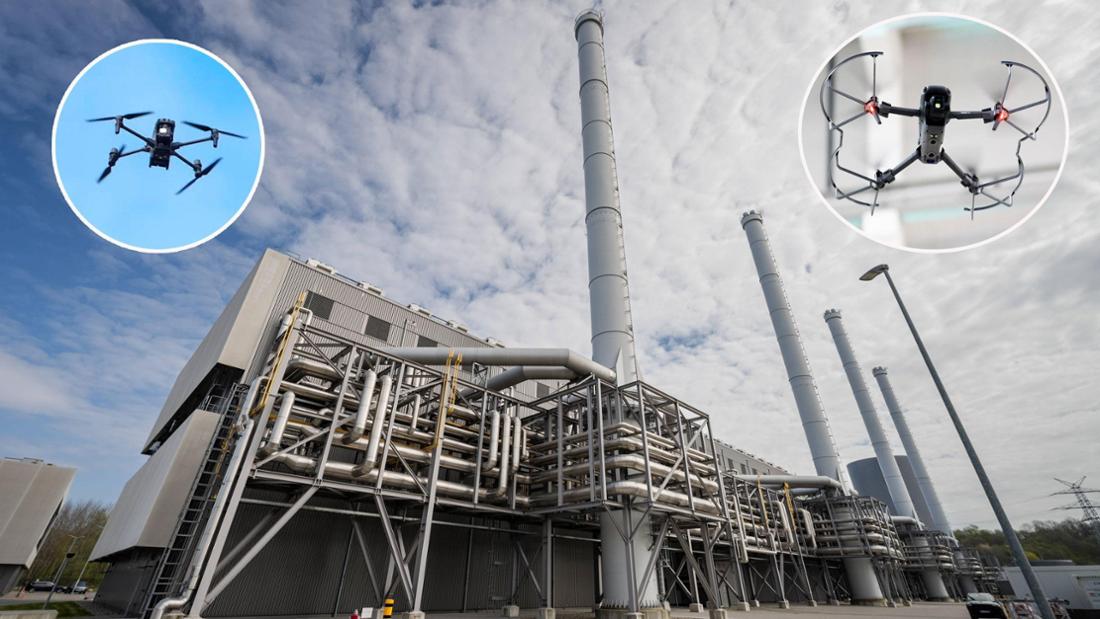
The Bundesrat will vote on 16 October 2026 on transmitting to the Bundestag a bill tabled by Hesse. The text inserts into the Criminal Code a section 123a StGB, entitled « violation of the home to the detriment of the community », which provides for up to one year's imprisonment for the unauthorised overflight of critical infrastructure by an unmanned aircraft.
The competent committees have already recommended that the text be allowed to proceed. The vote in the chamber of the Länder concerns this procedural step, not the adoption of the penalty: the Bundestag must then examine the bill.
Situation as at 12 October 2026, in Germany.
The new section would cover two types of conduct. The first is unauthorised intrusion into a critical installation, including remaining there. The second, the one of interest to remote pilots, is the unauthorised overflight of these installations by a drone.
Acts preparatory to an attack or sabotage fall under a more serious classification.
From a fine to a criminal offence
Today, overflying a power plant or a water treatment plant falls under administrative law. Section 21h of the Luftverkehrs-Ordnung defines geographical zones where drone flights are prohibited or subject to authorisation, with minimum distances from industrial installations, power plants, public authorities, railway installations and hospitals, plus large protection zones around airports.
A violation is an Ordnungswidrigkeit, punishable by a fine with a ceiling of 50,000 euros, although the amounts imposed in practice remain well below that for simple offences. If air traffic safety is concretely endangered, section 315 StGB already applies.
The Hessian bill fills the intermediate space: overflights for which no concrete endangerment can be demonstrated, but which can be read as reconnaissance or preparation. The bill's justification relies on more than 1,000 suspicious flights reported up to December 2025 over military installations, airports and other critical infrastructure, and on the inadequacy of existing offences, trespass and criminal damage.
Procedural consequence: according to the Hessian Ministry of Justice, such acts could be prosecuted without a prior complaint from operators.
Remote pilots and operators concerned, timetable
The scope of the sites refers to the KRITIS-Dachgesetz, which entered into force in March 2026. The text does not create a new definition: it relies on installations already classified as critical, including power plants, airports, railway stations and water treatment plants.
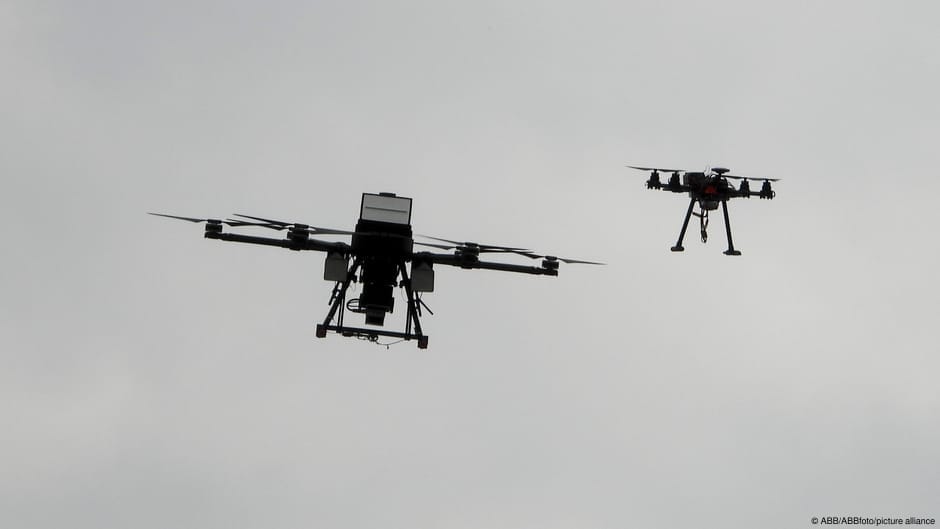
For an inspection provider, this shifts the risk analysis: flying over or near one of these installations no longer exposes only the operator to a fine; it exposes the remote pilot to a custodial sentence.
Operators are not outside the scope. The KRITIS-Dachgesetz requires them to assess risks, plan protective measures and report incidents. Sebastian Daub, a partner at Ashurst, sees in this a catalogue of obligations for management, with a risk of personal liability in the event of a breach.
Self-defence remains out of reach: Jan Hörmann, of the same firm, recalls that a private or municipal operator cannot bring down a drone. The context explains the pressure: more than 350,000 drones in private use in Germany in 2023 according to the Statista portal, flights that paralysed Munich Airport for hours on 2 October 2025, and formations observed in September 2025 over a power plant, a university hospital, a refinery and a shipyard in Kiel.
On the state side, the Bundespolizei has had a unit specialising in counter-drone defence since early December 2025, stationed in Ahrensfelde near Berlin. An overhaul of the aviation security law, under discussion in the Bundestag, is intended to authorise the Bundeswehr to shoot down drones outside its own premises.
The reform of the Federal Police Act, approved at the end of September by both chambers, for the first time regulates the use of drones and their neutralisation, with electromagnetic pulses, jamming of GPS signals and physical means.
No date of entry into force has been set: the text is still in the parliamentary procedure.
Scope of sites and penalty thresholds still open
Three points remain to be settled. The exact list of protected installations depends on the interpretation of the KRITIS-Dachgesetz, and the threshold from which an overflight becomes punishable is not set in the publicly available information.
The wording chosen for the absence of authorisation will also determine the margin left for declared missions.
One question remains that the Bundestag raised in the spring in a resolution: whether and how operators of critical infrastructure can themselves detect and repel a drone without incurring liability. The Federal Ministry of the Interior is examining the matter.
No answer has been published.
← Back to home · Search · Suggest a topic · Lire en français / Read in French