
Regulation — ES
FAA authorizes Skyways to connect Louisiana to a Shell platform in BVLOS
A hybrid VTOL announced for 450 to 500 miles
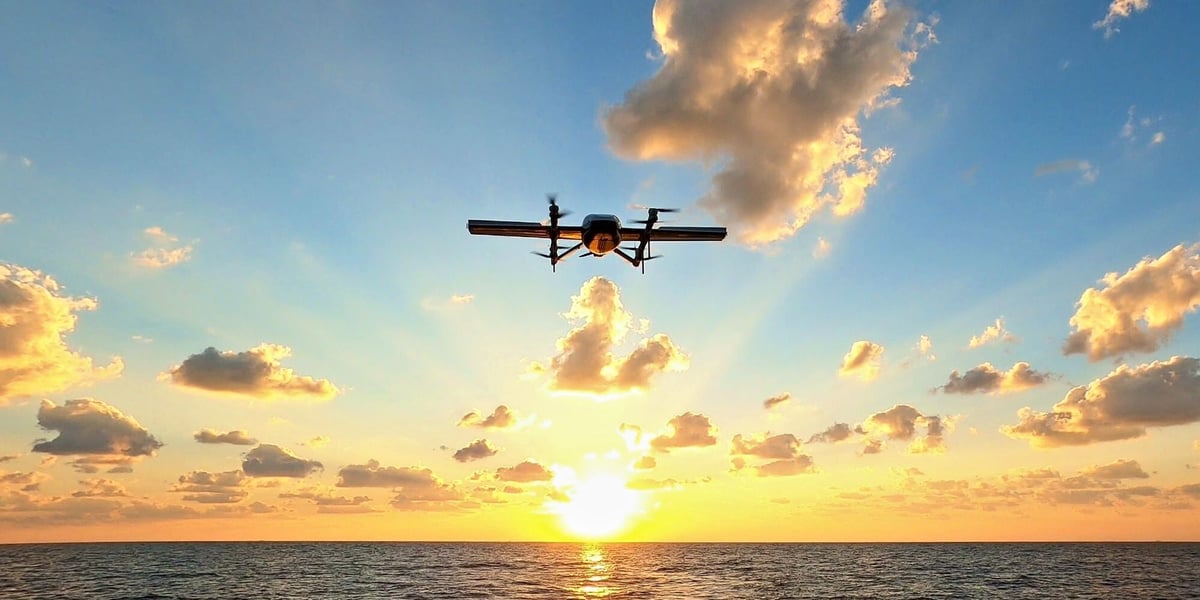
Skyways' V2 is a hybrid VTOL: electric motors handle vertical take-off and landing, and a heavy-fuel cruise engine takes over for transit. Skyways claims 450 to 500 miles of range and 30 pounds of payload.
The command and control link runs over satellite, which is what makes flights beyond the reach of ground stations possible. Mission preparation, dispatch and tracking rely on SkyNav, the company's operating software, developed in the United States.
All three figures come from the manufacturer. No airworthiness datasheet or certification file accompanies the announcement, and nothing indicates how many V2 examples are currently in flyable condition.
Pipeline inspection and simulated delivery on the same flight

The aircraft will take off from SPLC's facility in Gibson, Louisiana, to reach a Shell platform in the Gulf of Mexico. On the outbound leg, it inspects a pipeline right-of-way. At the platform, it simulates the delivery of critical equipment.
Two offshore missions in a single flight, with nobody on board.
What the authorisation brings that is new can be summed up in one sentence: the flight takes place beyond the operator's direct line of sight, from the coast out to sea. The FAA granted it under Section 927 of the agency's 2024 reauthorisation act, a mechanism that allows certain operations to be approved without writing a new rule or going through an exemption.
The agency describes it as a first for an uncrewed aircraft departing the American coastline for the high seas. Liam McKenna, the FAA's acting deputy administrator, sees it as a way out of the usual operational limitations; Michael Kratsios, director of the White House Office of Science and Technology Policy, places the authorisation in the perspective of advanced operations that have become routine.
The timetable is still missing. Skyways gives neither the date of the flight nor the distance at which the platform lies. FAA guidance reserves high-seas eligibility under Section 927 waivers to operations located more than 12 nautical miles from the US coast, without the exact distance being published.
A fleet already in use in the Baltic and the North Sea
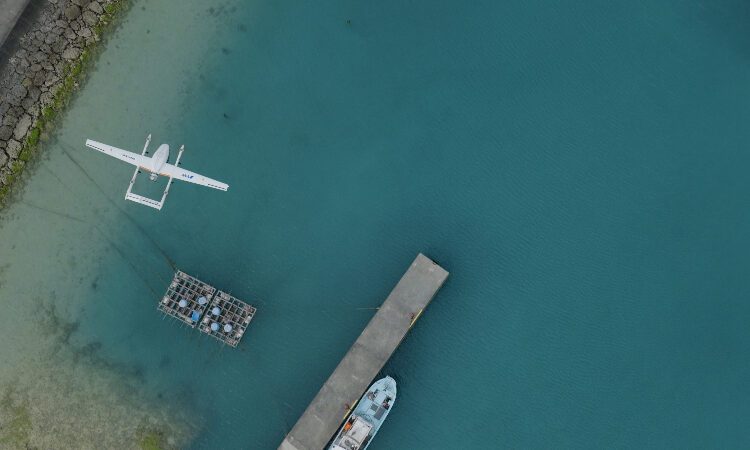
Skyways claims 3,500 autonomous flights and around 90,000 kilometres flown, for customers including the US Navy, Japan's Ministry of Defense and All Nippon Airways. In 2025, the company carried out three weeks of cargo drops to a Baltic Sea wind farm with Skyports Drone Services, up to 22 pounds per rotation on 50-mile round trips.
In September, it signed with Danish logistics company DSV, which plans to carry supplies from Norden, Germany, to wind farms and energy platforms in the North Sea. The Baltic rotations covered 50 miles with 22 pounds; the V2 is announced at 450 to 500 miles with 30 pounds.
At the customer's end, the authorisation adds to a system that already exists: Shell operates a high-seas drone programme and had been working with Skyways on pipeline inspection in the Gulf.
Wesley Stewart, president of SPLC, expects the waiver to ease inspections, maintenance and offshore logistics.
Nothing in the available documents describes an earlier generation of the V2, nor a plan to migrate an existing fleet to this aircraft. The authorisation itself applies to US territory and to this mission; no European operator can invoke it, as FAA rules do not apply in Europe.
Price, availability and the Part 108 timetable
To judge the aircraft, the essentials are missing: the price, the number of units available, the delivery schedule, the operating cost per flight hour. The breakdown of the 3,500 claimed flights and any incidents are not documented either.
None of these data appears in the published material.
The regulatory framework on US territory, as of 13 November 2026, remains transitional. The final rule on routine BVLOS, Part 108, has been under White House review since it was submitted in July.
As proposed, it would authorise drones of up to 1,320 pounds to fly beyond visual line of sight below 400 feet above ground level, without a waiver or exemption. Until it is published, operations of this type continue to go through individual authorisations.
Skyways expects it to provide a basis for more frequent inspection flights in the Gulf, and then for paid cargo transport. No date is given for either step.
The demonstration flight itself has no public date.
← Back to home · Search · Suggest a topic · Lire en français / Read in French