
Regulation — EU
EASA records 39 serious drone accidents and incidents in 2025
Thirty-nine reported events, two serious injuries
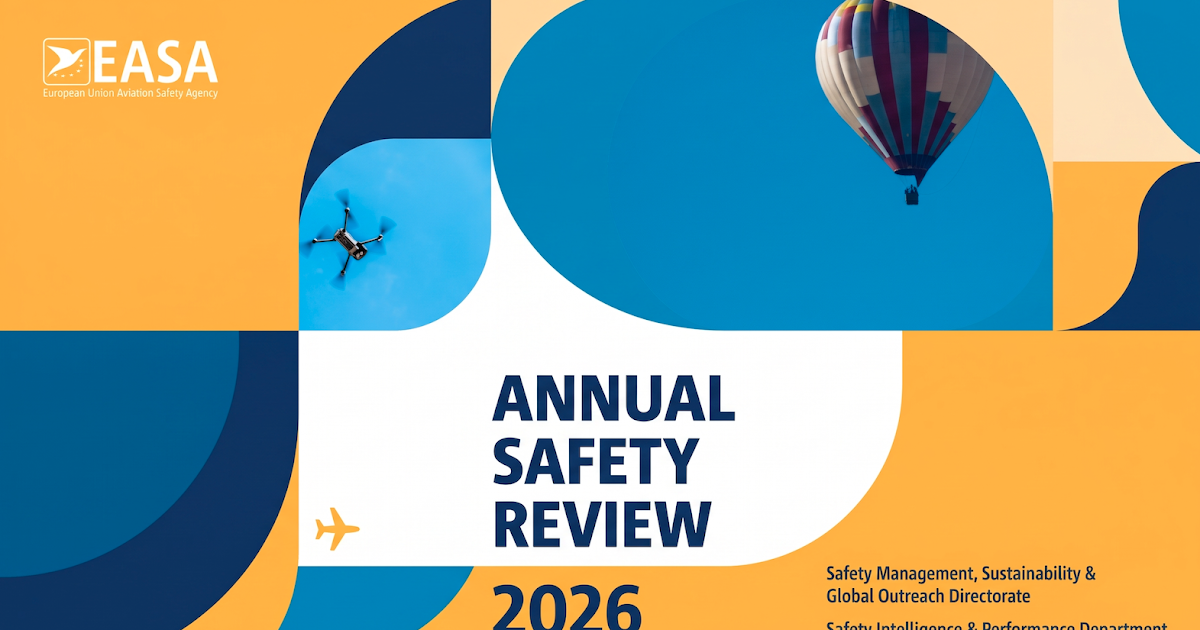
The European Union Aviation Safety Agency's (EASA) Annual Safety Review 2026, published on 27 October 2026, counts 39 accidents and serious incidents involving UAS in its Member States for 2025.
The breakdown gives 27 non-fatal accidents and 12 serious incidents. No fatal accident is recorded for the year.
The total rises compared with the two previous years.The agency's published count puts 2024 at 26 events, including 17 non-fatal accidents and 9 serious incidents, and 2023 at 24, a year marked by one fatal accident and six serious incidents.
The series for serious incidents, from 6 to 9 and then to 12, rises more steadily than that for non-fatal accidents.
Two people were seriously injured in 2025, compared with none in 2024. The first was during a drone operation in support of agriculture; the second was a person piloting a model aircraft, a category that the European framework classifies among UAS.
The only fatal accident in the three-year period dates back to 2023: a model aircraft, at a site dedicated to that activity.
Non-fatal accidents make up 27 of the 39 events in 2025. Some result in material damage only, such as the crash of a drone onto a tower crane in Manchester.
The 2023-2024 biennium revised upwards, with no identified cause
The series are not fixed. Compared with the previous edition, the 2023-2024 biennium has been revised upwards: non-fatal accidents go from 30 to 34 and serious incidents from 10 to 15.
The 2025 total may therefore still change.
The pages devoted to drones give no explanation for the increase. The collection scope affects interpretation. The data come from accident and serious incident notifications required by Regulation (EU) 996/2010 and from those submitted to the European Central Repository (ECR) under Regulation (EU) 376/2014, cross-checked with sources from national investigation authorities.
Mandatory reporting is limited to UAS subject to certification or a design declaration, except in the case of serious or fatal injury, or involvement of an aircraft other than a drone. State, military or police aircraft remain out of scope unless a civil aircraft is involved.
The report cites a borderline case: the April 2025 collision in France between a police AS350 Écureuil helicopter and a 570-gram drone in the open category, which is absent from the ECR and therefore from the count.
Six events involving a manned aircraft, versus ten in 2024
Six of the 39 events in 2025 involved a manned aircraft in addition to the drone: one accident and five serious incidents. The share goes from 38% in 2024, or 10 cases out of 26, to 15% in 2025.
In 2023, it was 21%, with 5 cases out of 24.
The accident is a collision between a small UAS and a manned hot-air balloon: minor injury to the pilot, a tear in the opening of the envelope. The five serious incidents are divided between Germany, two cases, and Switzerland, three.
Four are Airprox involving helicopters and fixed-wing aircraft. The fifth is interference by an unauthorised UAS with operations at Munich aerodrome, the only aerodrome event of the year classified as serious although intrusions were numerous.
Airport operational disruptions linked to drones remain common, such as repeated runway closures at Leipzig/Halle.
Airprox reporting and risk analysis by operators
A remote pilot who finds that they have caused a close encounter with a manned aircraft must report it. EASA writes that such self-declarations remain rare. An unreported Airprox appears neither in the statistics nor in the operator's feedback, although it is one of the few signals available on coexistence with manned aviation.
Security events remain marginal: two in 2025, three across the 2023-2024 biennium, or 1.5 per year. The Agency describes them as low but to be monitored. Of the 50 events in the 2023-2024 biennium, loss of control in flight and mid-air collision accounted for 37 risk allocations, 24 for the first and 13 for the second.
These two categories top the analysis expected of an operator.
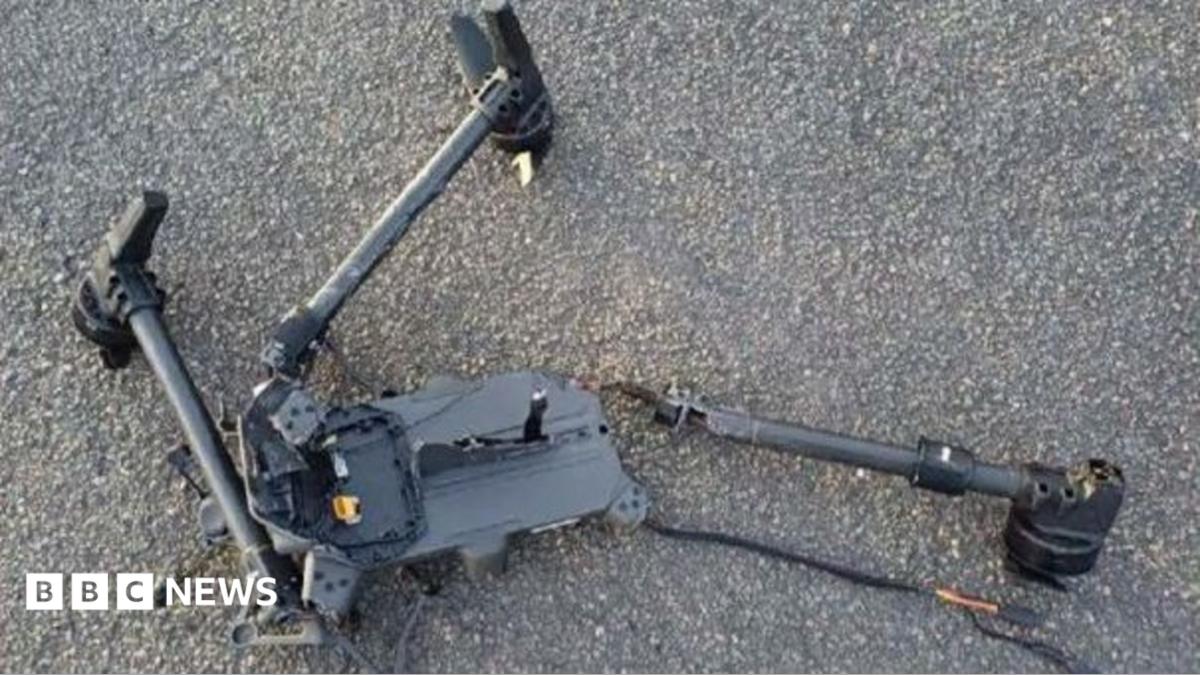
Pre-flight preparation remains the most accessible checkpoint. In the United Kingdom, the AAIB report published on 14 November 2026 examines the crash of a Nottinghamshire Police DJI M300 at West Bridgford on 1 June at 03:20: an incorrectly installed motor arm, a loss of control at 380 feet and a crash onto the roadway, with no injuries.
The agency concludes that the impact could have been fatal. The police made a check of the motor-arm locks mandatory before every flight, and the National Police Chiefs' Council recommended that other services equipped with similar models carry out a visual pre-flight inspection.
← Back to home · Search · Suggest a topic · Lire en français / Read in French