
Regulation — EU
EASA prepares an STS-03 for agricultural drones up to 5 m
An Opinion forwarded to Brussels, with no legal effect at this stage
EASA has forwarded to the European Commission Opinion No 06/2026, accompanied by two annexes that amend EU Regulations 2019/947 and 2019/945. The text is not applicable. The Agency itself states that the formal decision lies with the Commission, which may take up the proposed amendments in full or amend them.
No new obligation is placed on operators as a result of this publication.
This Opinion does not contain the expected simplifications. It forms the first of the two tranches arising from NPA 2026-103, whose public consultation gathered around a thousand comments. This first tranche, known as the Security Package, is being handled under an urgent procedure: registration of the operator from 100 g, formal verification of the operator's identity, a security module in the A1/A3 attestation, Remote ID and blocking of take-off when the operator code is missing or incorrect.
The second tranche, covering operational simplifications and the reform of standard scenarios, is scheduled by EASA for the fourth quarter of 2026.
STS-03 belongs to this second tranche. This third European standard scenario is reserved for agricultural, horticultural and forestry areas. It must cover aircraft whose characteristic dimension reaches 5 m (diameter for a multirotor, wingspan for a fixed-wing aircraft) and be based on a future class C7.
Adoption, one-year grace period, declaration in 2028 at the earliest

The timeline remains a working assumption. After transmission of Opinion 06/2026, the Commission must adopt the text, and publication in the Official Journal then sets the date of entry into force.
For the second Opinion, nothing has been published: EASA is aiming for the fourth quarter of 2026.
Current work assumes adoption of the new scenarios in the second half of 2027, followed by a one-year grace period for industry and operators to align. Declaration under STS-03 would then become possible in the second half of 2028.
This estimate may slip by a few months.
The transition year has specific content. Remote pilots must complete additional training for their attestations and have their certificates amended. Manufacturers must prepare aircraft compliant with classes C5, C6 and C7, which was not guaranteed, as industry players have been cautious so far.
Five metres, classes C5, C6 and C7, Italian national PDRA
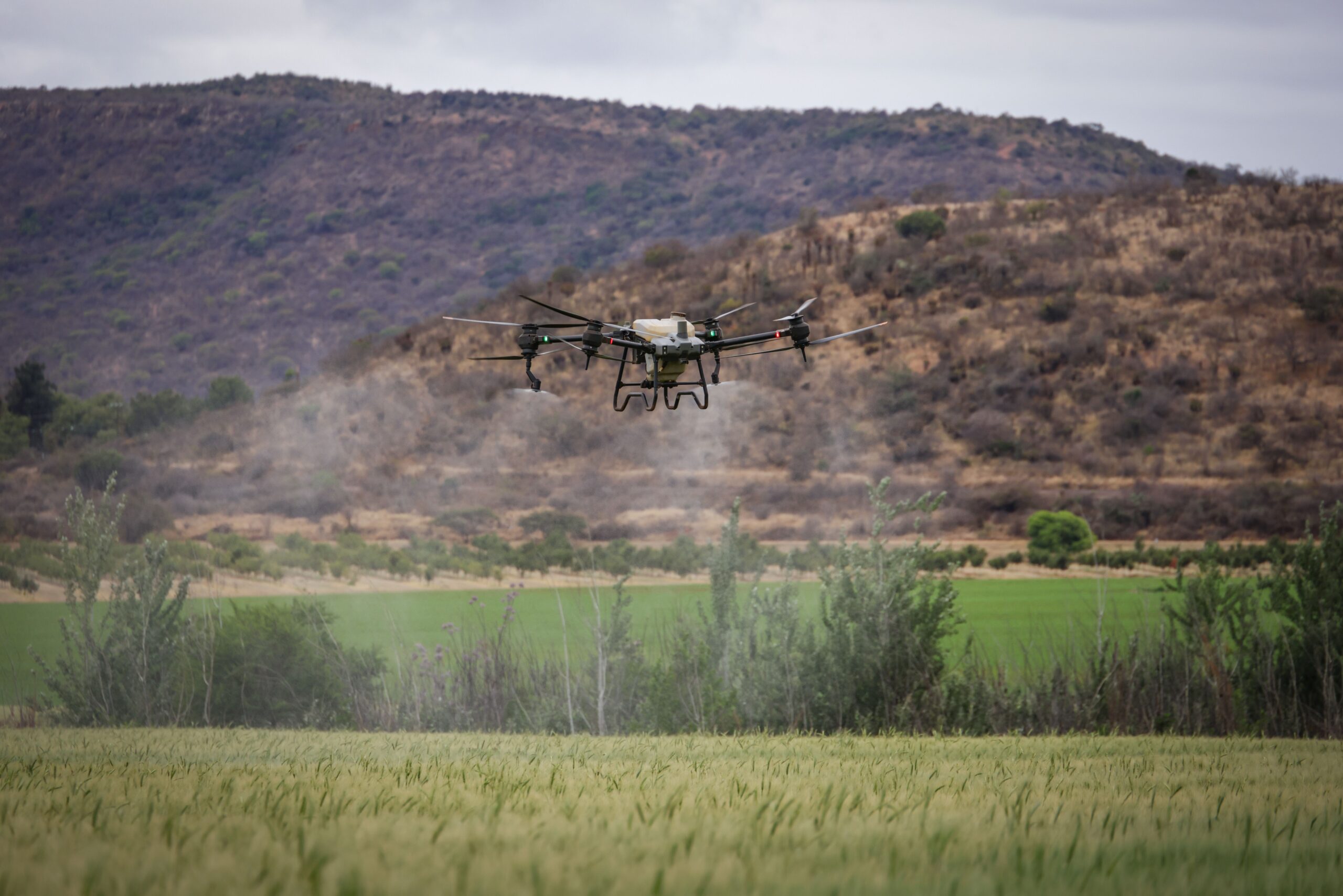
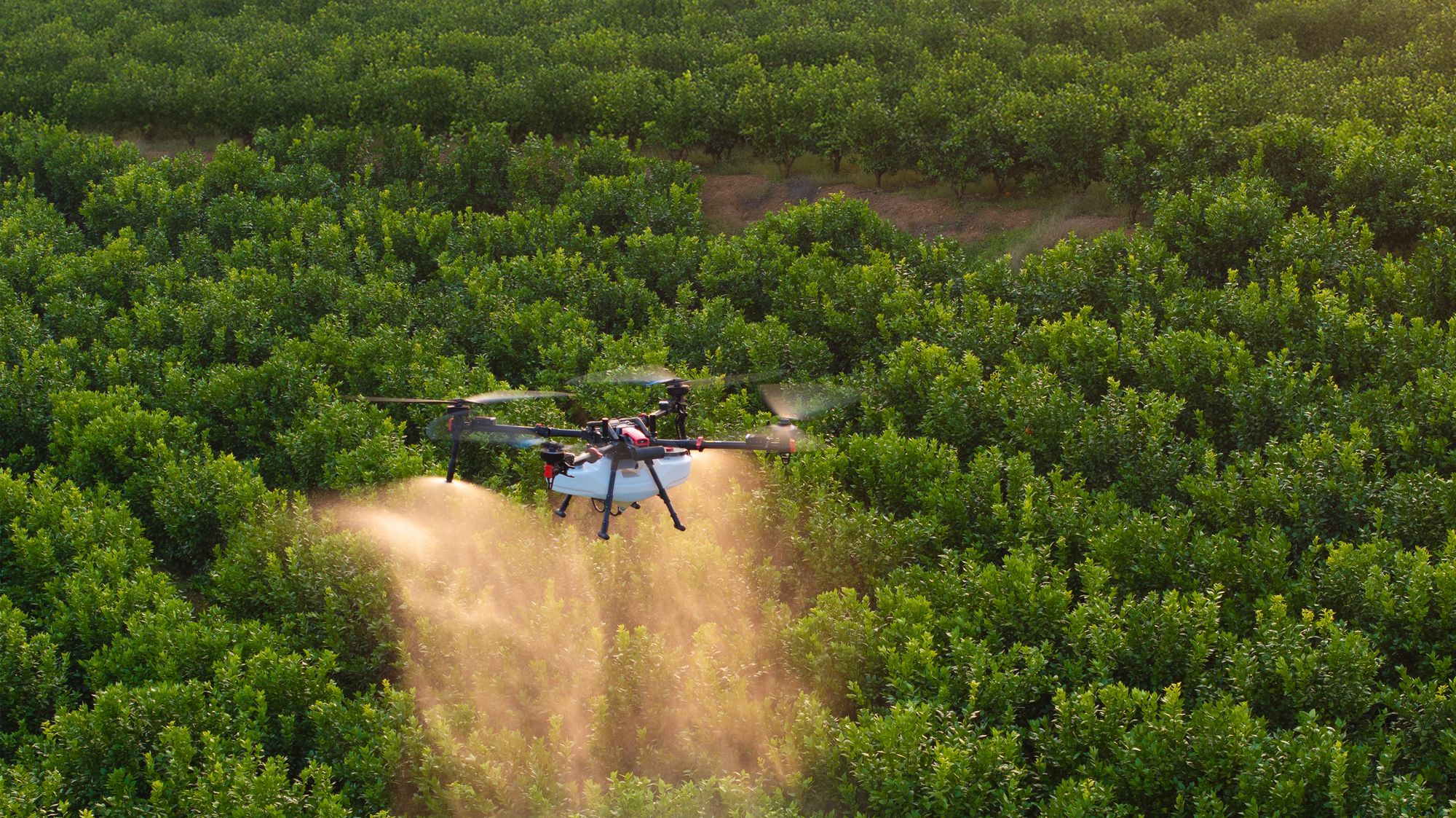
The current framework comes up against a dimension limit. PDRA-S01, which allows a Specific operation to be documented in a simplified way, is limited to a characteristic dimension of 3 m. Large agricultural drones, with tanks of 50 to 70 L and a wingspan of more than 3 m, fall outside its scope and must go through a full authorisation.
In Italy, ENAC published AltMoC IT-UAS-2026-002 on 14 August 2026. This text does not extend PDRA-S01: it creates a national PDRA for agricultural, horticultural and forestry operations, with the limit raised to a characteristic dimension of 5 m.
The conditions are explicit: flight within visual line of sight, controlled areas without uninvolved people, and a compliance checklist and operations manual template provided. The document is up to date as of 30 October 2026.
On the European side, the standard scenarios cover SAIL risk levels 1 and 2. Operations falling within them no longer require authorisation from the national authority. The time saving is the main argument: authorisation currently takes five to six months in Italy and up to twenty months in Germany.
On the market, an 80 L XAG P150 Max is listed at between €14,545 and €21,818 for medium and large farms.
What may still change before publication
The Commission is not required to take up all the annexes to Opinion 06/2026 in full. Any change delays the security part and, in turn, the sequence of work.
The content of the second Opinion is not public. The exact scope of the STS reform, the number of scenarios concerned and the publication date in the fourth quarter of 2026 remain to be confirmed.
In Brussels, the EU Council adopted on 27 May 2026 its negotiating mandate on amendments to Directive 2009/128/EC on the sustainable use of pesticides, in the Omnibus X simplification package.
This mandate serves as the basis for discussions with the European Parliament.
In Italy, the spraying of plant protection products by drone remains generally prohibited under Article 13 of Legislative Decree 150/2012. Article 6 of Law 182/2025 opens a three-year trial from 18 December 2025 until December 2028.
It will be practicable only after the implementing interministerial decree, which had not been adopted as of 30 October 2026.
← Back to home · Search · Suggest a topic · Lire en français / Read in French