
Regulation — EU
DJI delivers a BVLOS dossier for the Dock 4 and the Matrice 5TD

Three templates and three declarations in the package

The package is intended for operators preparing an application based on a SORA analysis in the specific category, including beyond visual line of sight flights, up to SAIL II. It brings together three templates (master document list, risk assessment aligned with version 2.5 of the method, operations manual) and three manufacturer declarations (MoC Light-UAS.2511, MoC Light-UAS.2512 and OSO #08).
The details of the compliance package set out the exact composition and applicable versions.
The division of tasks is explicit. DJI provides what the manufacturer can prove, in the form of templates and declarations. The operator provides what no one else knows: the site, the routes, the procedures and the risk assessment for its operation.
The templates include sections to be completed to describe the operation, while the manual also covers the expected content of an operations manual. The documents are version-controlled and follow the latest publications from DJI's compliance team; the system configuration and applicable version must be checked before use.
The flight termination system and the containment assessment
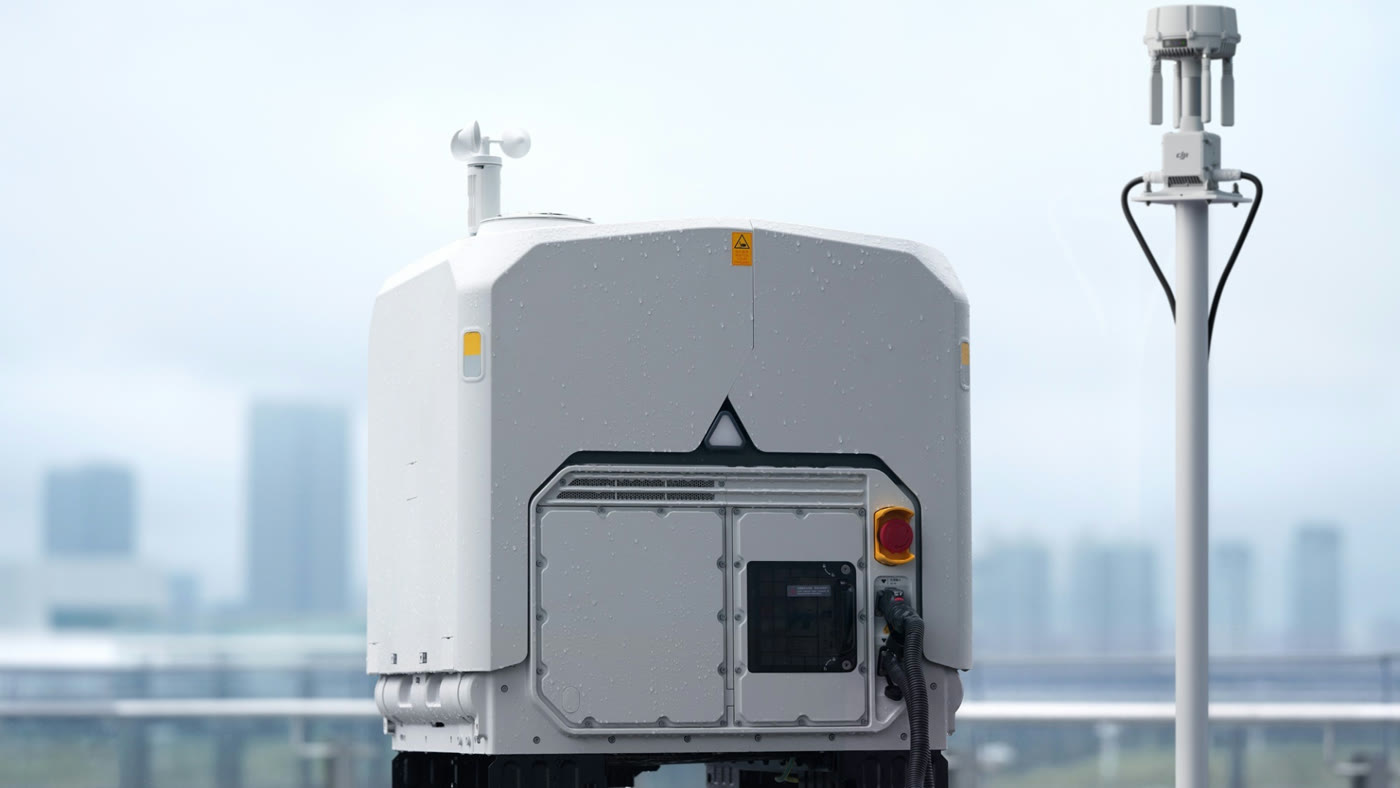
SORA version 2.5, introduced by EASA ED Decision 2025/018/R applicable since September 2025, includes a containment assessment. The operator must describe the measures it relies on and provide the corresponding evidence.
The MoC Light-UAS.2511 declaration covers the flight termination system, whose design rests on three points: the trigger link is separate from the aircraft command link, the termination command goes directly to the speed controllers and cuts motor power without passing through the flight controller, and the web termination portal operates as a standalone service, independent of FlightHub 2.
On ground risk, DJI states that the AP1 parachute is documented in accordance with ASTM F3322 and MoC 2511 and 2512, which gives the operator material for the ground-risk part of its application.
The presentation of the safety architecture cites an independent regulatory safety expert, Nicolas, who reviewed the documentation and test reports: more than 100,000 real operations without inadvertent deployment and more than 500 controlled deployment tests.
What the Dock 4 changes compared with the Dock 3
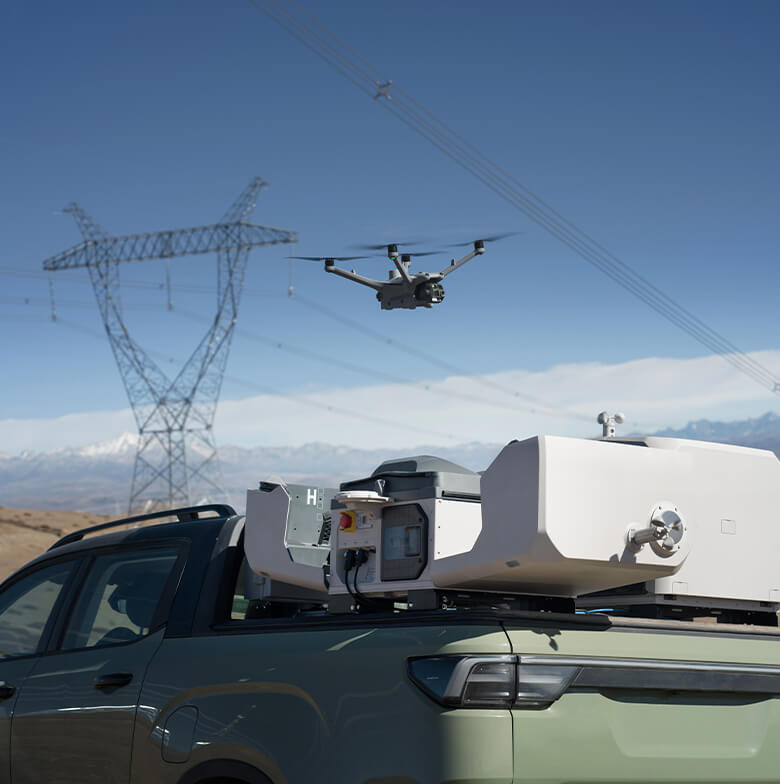
The Dock 3 and Matrice 4TD already held C6 marking with DJI's independent flight termination module. This module shared a slot with the enhanced transmission, which forced the operator to choose one or the other, and C5 went through a third-party parachute kit.
The Matrice 4TD is not compatible with the Dock 4, whereas the Matrice 4 firmware has already evolved on regulatory points.
With the AP1 parachute installed, the Matrice 5TD housed in the Dock 4 meets the EU C5 and C6 requirements and UK5 and UK6 in the United Kingdom. European and British production units are delivered with the AP1 fitted.
The orders of magnitude of the previous fleet give a sense of the leap. The Dock 3 weighs 55 kg and measures 640 × 745 × 770 mm closed and 1,760 × 745 × 485 mm open.
Its prices are $15,890 for the station alone, $24,272 with a Matrice 4D and $26,412 with a Matrice 4TD, whose payload combines a 640 × 512 thermal camera (1280 × 1024 in UHR mode), a 48 MP wide-angle at f/1.7 and two telephoto lenses of 70 and 168 mm.
The operators concerned and the authority that decides
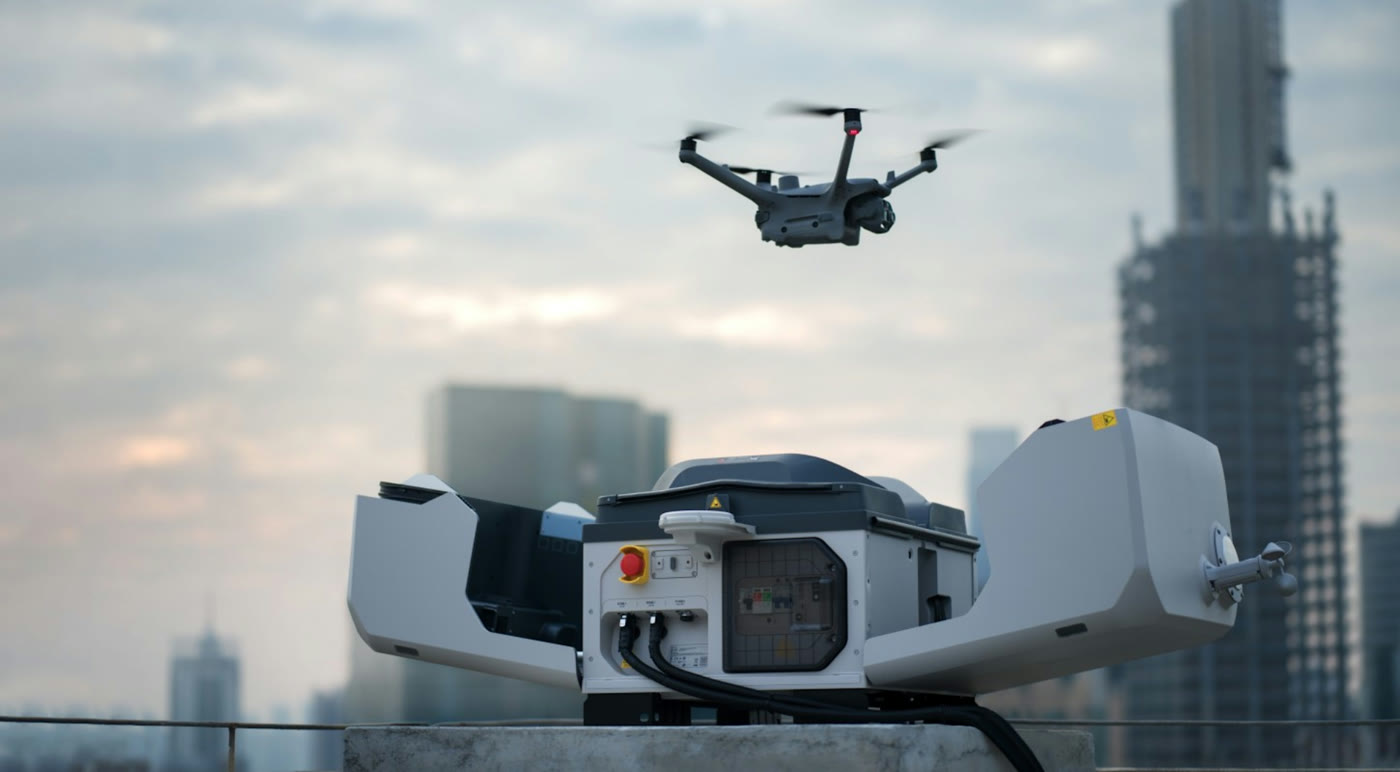
The package is valid only for one configuration: Dock 4, Matrice 5TD and AP1 parachute. It is used to prepare an application for an operational authorisation in the specific category, including beyond visual line of sight, up to SAIL II.
The authorisation is issued to the operator by the national authority.
A class marking is not an authorisation: an operational authorisation is required, for example an STS-02 declaration in the European Union or a SORA-based application in the United Kingdom, such as the SAIL 4 authorisation obtained by Amazon on the other side of the Channel.
In the United Kingdom, the Civil Aviation Authority replaced the former operational safety case with SORA as the application route in the specific category from 23 April 2025, and recalls that a beyond visual line of sight flight requires an operational authorisation that permits it.
The UK framework explained insists on one point: the station alone does not make an operation compliant; everything depends on the operating model, procedures and human oversight.
Submission arrangements vary from one State to another. The German case shows the use of maps, geozones and authorisation tools specific to a national authority, to be consulted before building the application: flight authorisation tools in Germany.
What remains to be established
DJI does not guarantee approval, and no document published by the manufacturer indicates that a national authority has validated this package as a sufficient basis for safety demonstration. The open question concerns how these templates and declarations are received in the various national applications.
The manufacturer directs the operator to prepare the information requested by its authority.
The scope of the flight termination declaration warrants close reading. It covers manual activation from the dedicated web page, on a separate device. Parachute deployment from FlightHub 2 and automatic Geo Caging termination are not covered by it.
The concept of operations, the site risk assessment and the procedures remain to be written by the operator.
Two checks are essential before submission: the exact system configuration and the version of the documents, which DJI presents as following the latest publications from its compliance team.
← Back to home · Search · Suggest a topic · Lire en français / Read in French