
Professional applications — International
Cincinnati students and NASA detect a faulty engine by sound
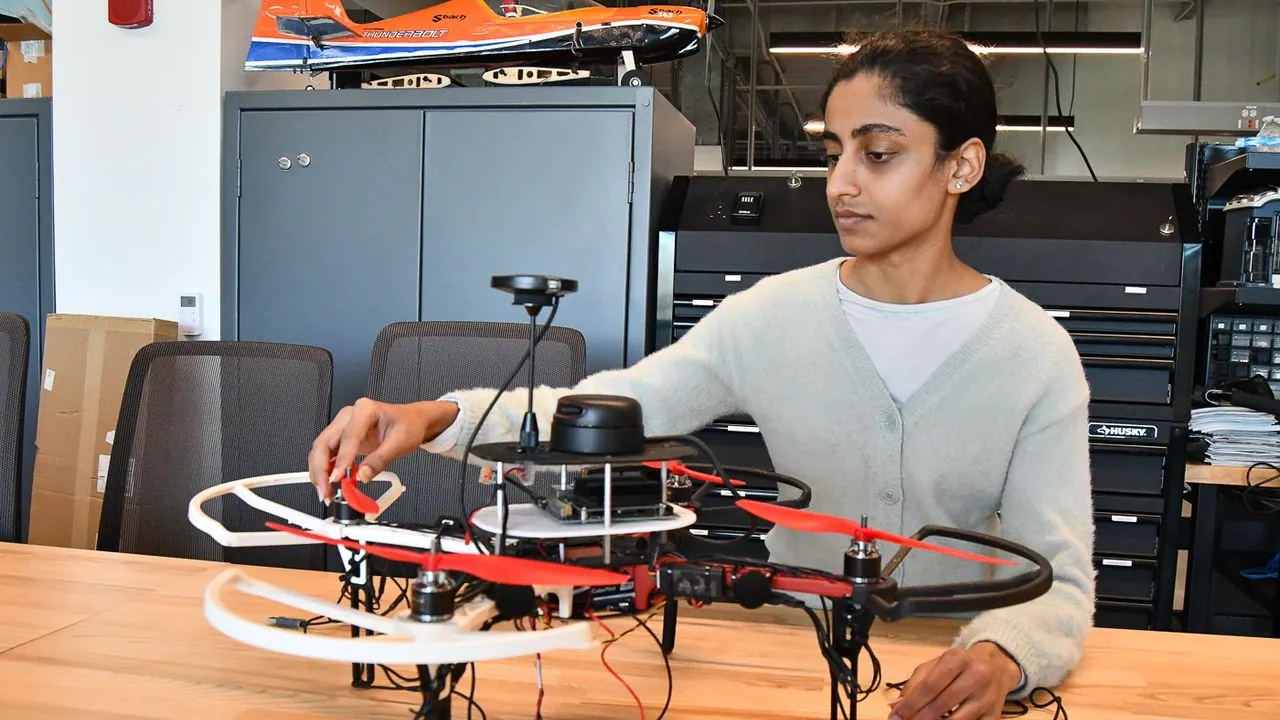
Students from the University of Cincinnati and a researcher from the NASA Ames centre have developed a pre-flight check that listens to a drone's motors and tells the operator whether the aircraft is fit to fly.
The model, trained only on the sounds of healthy motors, achieves around 97% accuracy and 92% recall, according to the abstract presented at the Modeling, Estimation and Control conference in Phoenix, from 25 to 28 October 2026.
A model trained without any failure examples

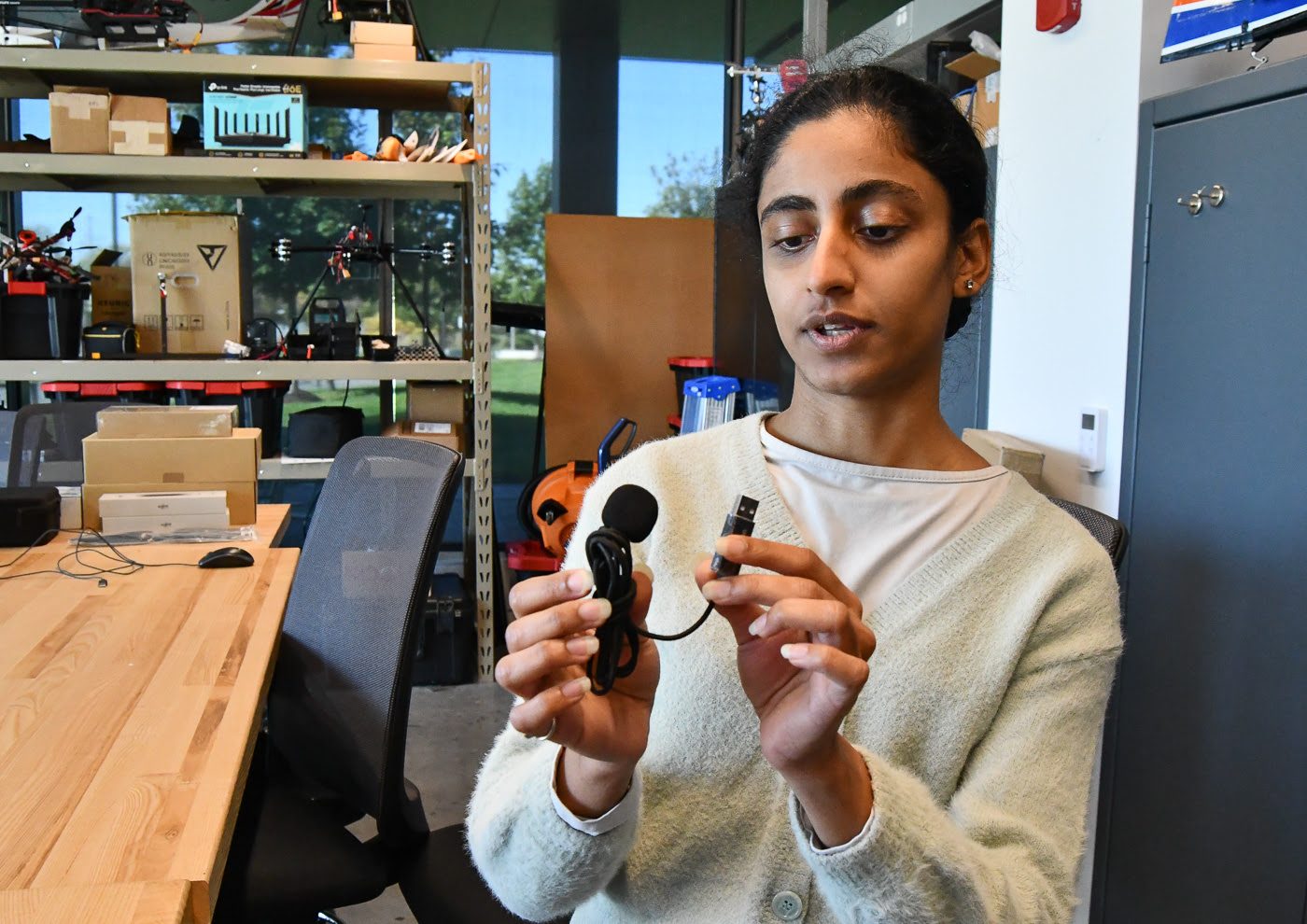
The team runs each motor on the ground, one at a time, and records it with microphones placed near the motors and propellers. The model is a one-dimensional convolutional autoencoder, trained on recordings of healthy brushless motors taken from nine operating manoeuvres.
Any sound that does not match what it has learned is flagged as a defect. The method avoids building a library of recordings for every possible failure.
Prissha Chawla, a doctoral student and first author of the paper, sums up the logic with a phrase quoted by the university: “anything that does not look healthy is considered faulty”. The targeted defects are concrete: chipped propellers, cracked propellers, grain or debris in a motor bearing that can seize it.
Chawla tells Spectrum News 1 that a failing motor sounds different depending on the severity of the failure.
The paper is entitled “Acoustic UAS Powertrain Monitoring: An Empirical Semi-Supervised Anomaly Detection for UAS Powertrains”. It is co-authored with Manish Kumar, professor of mechanical engineering at Cincinnati, Siddharth Urankar and Luke Busse, Manuel Arias Chao of the Zurich University of Applied Sciences and Chetan Kulkarni, of NASA Ames.
The project began in 2024.
Three false alerts per hundred, eight failures missed per hundred
The two figures in the abstract do not measure the same thing. With a defect taken as a positive result, 97% accuracy means that around three alerts in a hundred are false alerts. A recall of 92% means that around eight failures in a hundred go unnoticed.
For a police or delivery service, the second value matters more: a motor wrongly judged healthy is sent back into flight.
The abstract does not name the aircraft tested and does not specify the number of microphones used. The full text had not yet been deposited on arXiv or on NASA's technical reports server at the time of the report published by DroneXL.
The pre-flight check is already an obligation in the United States
In the United States, Part 107 requires the remote pilot to verify that the aircraft is in a safe condition for flight before each flight, namely 14 CFR 107.15. On a docked drone, for police or delivery work, nobody stands next to the propellers to do it.
Acoustic monitoring targets this blind spot: it runs on the ground, before take-off, on a machine that nobody inspects visually. The pre-flight condition check before each flight therefore remains the operator's responsibility, even when the aircraft takes off on its own.
Luke Busse, a student involved in the project, sees the use in drone-in-a-box systems, these stations that handle launch, landing, recharging and data loading on their own. “You could have sensors in the box that provide preflight checks,” he says.
The idea adds a sensor to already autonomous infrastructure, with no operator on site. The FAA has also proposed a Part 146 for drone traffic without controllers.
Sound in flight, and what has not yet been demonstrated
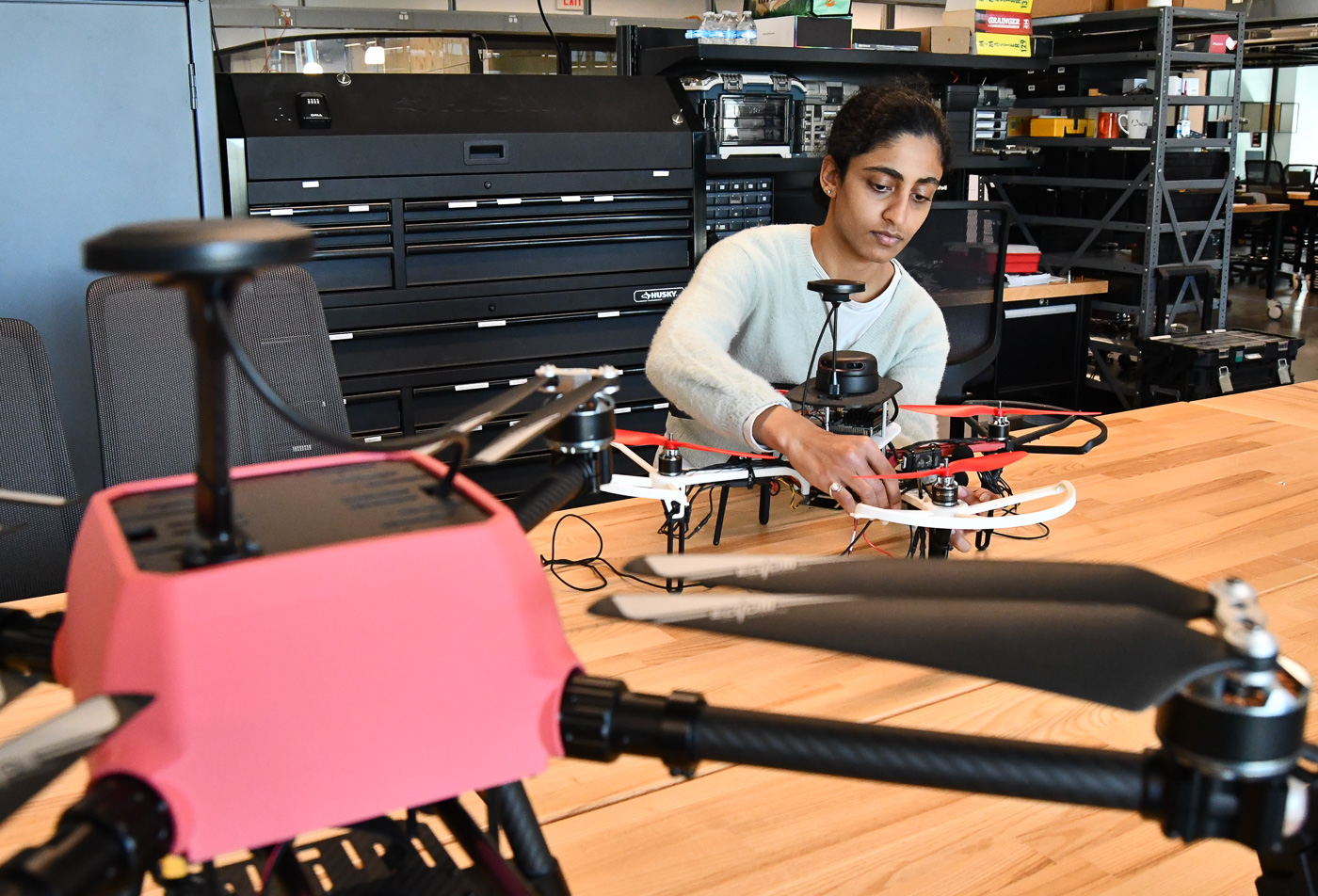
The work remains focused on the ground. The students envisage the next step in flight: a drone that listens to its own propellers and returns to its base before failure. No timetable or prototype of this kind is described in the published documents.
Three questions remain open. The accuracy obtained applies to the powertrains tested, which the abstract does not describe, and nothing indicates that it transfers to other airframes or other propellers.
The ambient noise of an urban area or an industrial site does not appear in the results presented. The gap between a test bench and an operating fleet, with motors worn in different ways, is not quantified.
Acoustic detection already has other civil applications, as shown by the work of BeephoniX and Bertin Exensor on passive detection. The principle remains the same: a microphone, a model, and a decision taken without dismantling the machine.
The full results are announced by the University of Cincinnati, which funded part of the conference, and reported by DroneLife.
← Back to home · Search · Suggest a topic · Lire en français / Read in French