
Regulation — EU
Brussels prepares to lift the ban on drone spraying
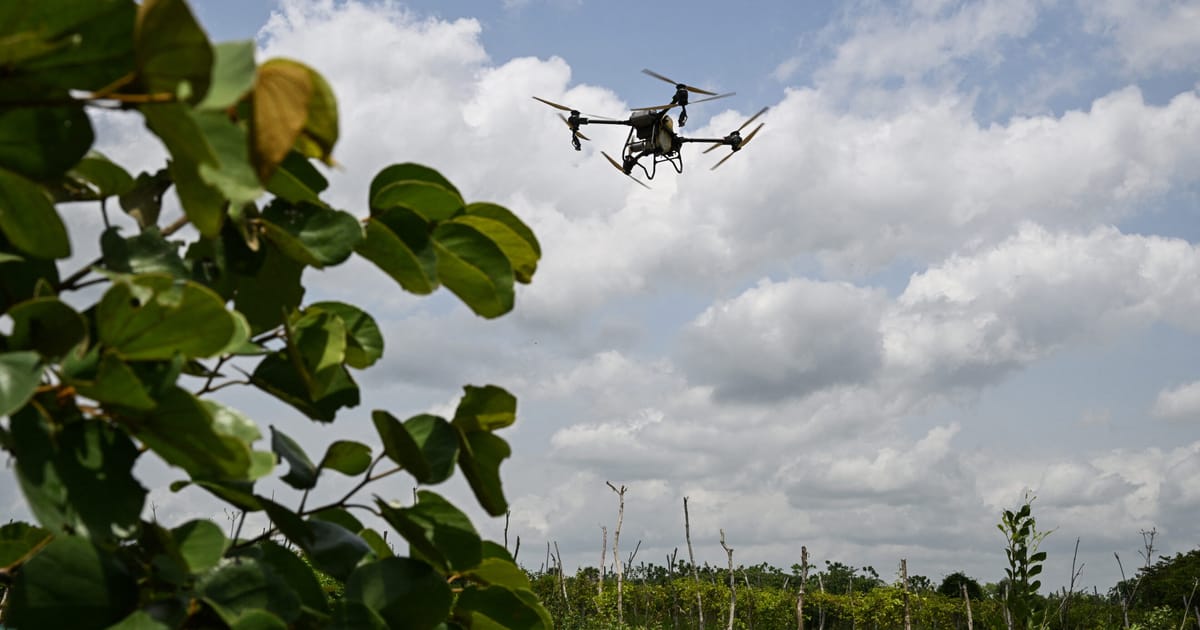
The European Commission is preparing to lift the ban on pesticide spraying by drone. The relaxation is part of the overhaul of European pesticide law; it has not been adopted, and the conditions under which farmers would be allowed to use it have yet to be set.
From a 2009 ban to a use that needs regulating
The framework currently in force dates from 2009. Directive 2009/128/EC on the sustainable use of pesticides in principle prohibits the aerial application of plant protection products, with derogations granted under specific conditions.
That regime was aimed at crop-treatment aircraft and helicopters. It was intended to limit spray drift, environmental contamination and human exposure, and it was drafted long before drones arrived on farms.
In practice, a European farmer may see spraying drones at a trade fair, but cannot fly them over their own fields, except in very specific cases. The announced change concerns precisely this point: the general prohibition would no longer apply to unmanned aircraft.
The shift is therefore from a prohibition in principle accompanied by derogations to an authorised use, the limits of which will be written into the text.
The gap with the rest of the world has widened. Since the 2010s, agricultural drones have gone from being a novelty to a standard tool in several regions of the world: in Côte d'Ivoire, aircraft have been spraying fungicides in passion fruit orchards near Djékanou since April 2025.
According to estimates presented at EIMA International 2026, more than 600,000 agricultural drones are already operating in more than 100 countries.
Fifteen capitals had been calling for a text since late 2024
The demand came before the announcement. In December 2024, fifteen capitals, including Prague, asked the Commission to prepare a new proposal on drones. In the overhaul of the pesticide rules, lifting the spraying ban is the least contested element, one on which member states have been insisting for several years, as Politico's report on drone spraying notes.
Agriculture Commissioner Christophe Hansen mentioned drones in a message published on Bluesky: "Europe has the talent and the technology to lead in digital agriculture. Farmers must now be able to benefit from it.
"
This direction does not settle the market question. Brussels has acknowledged that its drone strategy had not created a commercial outlet, and a more permissive framework for spraying does not on its own guarantee that farms will be equipped.
Farmers and service providers, with no date of application
The first parties concerned are farmers and the service companies that spray on their behalf. The European framework does not replace aviation safety rules: a drone remains an aircraft subject to Union law, and lifting the ban on products does not exempt anyone from flight authorisation.
Service providers are therefore dealing with two separate files: plant protection products and airspace.
The European timetable has not been set. The measure is part of the overhaul of the pesticide rules, whose adoption depends on the legislative process. No date of entry into application has been announced.
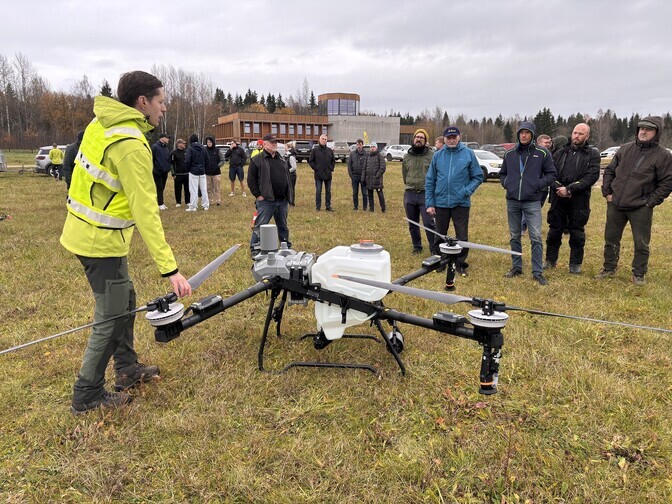
Some member states are moving ahead on their own. In Estonia, the law authorises aerial spraying of plant protection products under strict conditions, and the first authorised spraying flights in Estonia were presented on 29 October 2026 at the Nurmsi drone centre, in Järva County, where the rural knowledge centre METK was training farmers.
The argument put forward is that of targeted treatment: treating a patch of thistles rather than the whole field. Other national frameworks already exist, such as Italy's opening up to large agricultural drones.
The exact regime and the timetable remain open
The final text does not exist. Three parameters have not been publicly settled: the form of the authorisation, between a regulated general regime and expanded derogations; the technical requirements imposed on spraying flights; and the date of application.
No adopted decision fixes them at this stage.
For an operator, the applicable law therefore remains that of today. National rules continue to apply, and local disputes have not died down: in the French Antilles, the legal challenge to drone spreading in banana plantations is still ongoing.
One point is settled: the direction of the text. The general prohibition on aerial spraying, inherited from 2009, should no longer cover agricultural drones. The conditions for operating them, however, remain to be written.
← Back to home · Search · Suggest a topic · Lire en français / Read in French