
Reviews — EU
Brussels launches call for projects to detect drones via 5G
A call for expressions of interest open until 28 February 2027
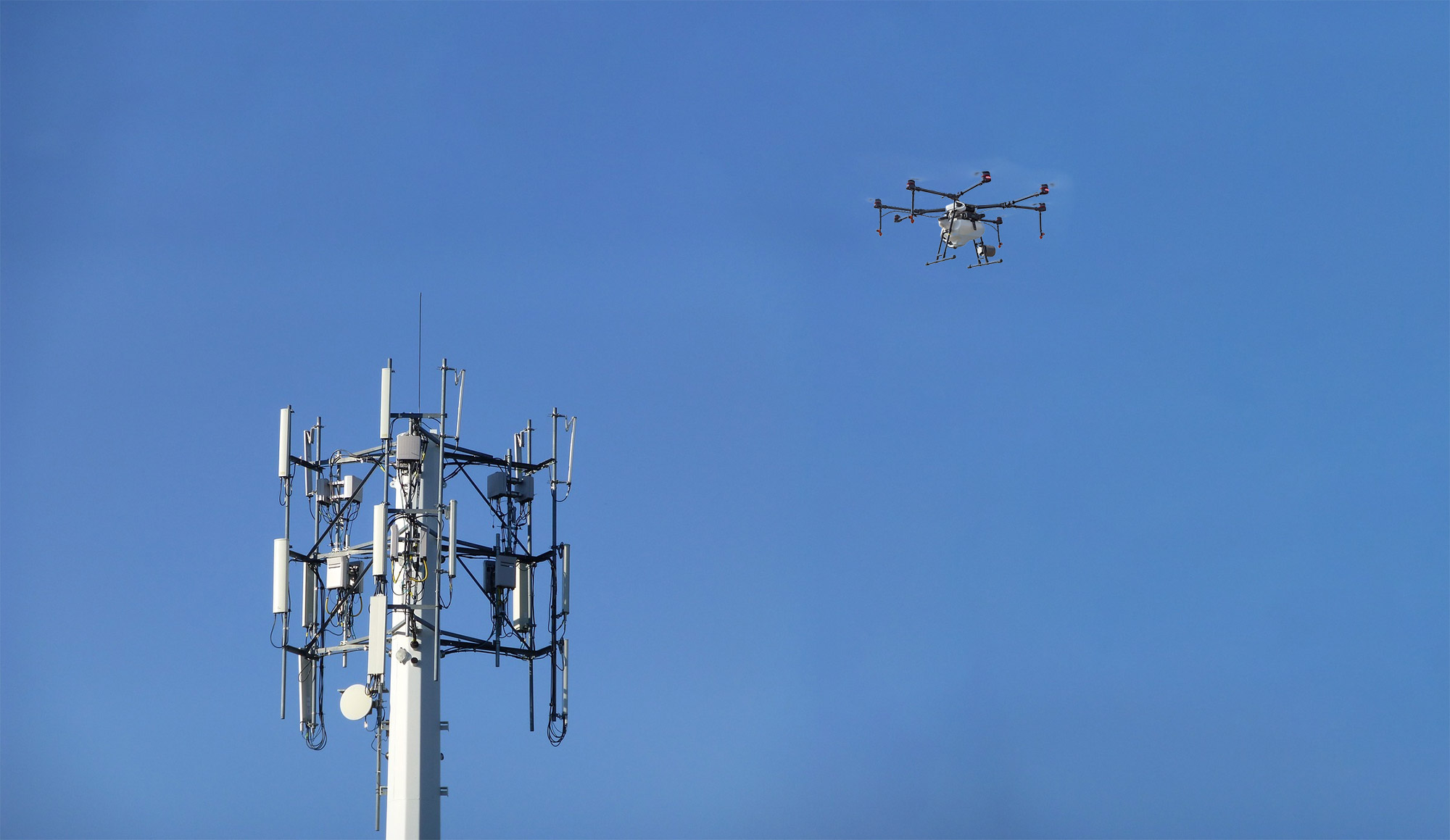
The European Commission published on 11 November 2026 a call for expressions of interest aimed at member states and industrial partners. The purpose: drone detection, tracking and identification systems built on existing mobile telephony networks, capable of spotting both aircraft connected to a network and those flying without a cellular link.
The text is tied to the EU action plan on drone security and counter-drone efforts.
Proposals are expected by 28 February 2027. They must not exceed 15 pages. The Commission itself sets out the intended uses: airports, critical infrastructure, borders, transport hubs and maritime facilities.
The scope covers civil security and military defence.
The call is not about a product to buy. It serves to gather information on available technologies and to identify what could strengthen the detection of hostile drones in Europe.
Two systems already in service, with no published results
Two documented initiatives give a measure of what exists. In France, Orange markets Drone Guardian, a detection service based on its mobile network. The system uses data collected by around 19,700 masts operated by TOTEM, Orange's infrastructure subsidiary.
It targets operators of critical infrastructure and organisations that need to monitor a site.
In Germany, the ipoque research institute, part of Rohde & Schwarz, is working with Helmut Schmidt University in Hamburg on analysing mobile network data using artificial intelligence and machine learning to identify unauthorised drone activity.
The two approaches are not comparable: one is a commercial service backed by an identified antenna estate, the other is research work. Neither publishes quantified performance data that would make it possible to judge the detection rate.
Related work has also explored the use of 5G to protect sensitive locations such as airports and stadiums.
Reliability in operational conditions still to be demonstrated
The central question remains open: the ability of 5G networks to provide sufficiently reliable detection and tracking in operational conditions has not been demonstrated. The Commission itself presents the detection of unconnected drones as the most ambitious part of the scheme.
The available findings come from two systems described by their promoters, with no comparative independent evaluation published to date. No public element documents how these systems behave in the presence of multiple drones, in a dense environment, or when facing a drone that deliberately cuts its emissions.
Detecting the connected drone or turning the antenna into a radar
The approaches differ in their physical principle. The first analyses network traffic: SIM card identities, transmission characteristics, unusual communication patterns. An artificial intelligence layer detects abnormal behaviour, unusual speeds or unexpected trajectories, and flags the suspicious operation early enough.
The second, known as Integrated Sensing and Communication (ISAC), does not assume any emission from the drone. Radio waves from base stations are analysed after reflection and disturbance by surrounding objects, which in theory makes it possible to determine the position and movement of a flying object, whether a drone or a balloon.
This method makes the network useful against drones that fly outside the mobile network or use dedicated radio links.
The third strand of the European initiative concerns integrating these detection and tracking capabilities into broader counter-drone systems. An operator comparing the two families is therefore not choosing between two versions of the same tool: one requires the drone to be on a network, the other does not.
For a site operator, a timetable with no commitment at this stage
The economic argument is simple. The radio infrastructure is already installed and maintained for telephony, whereas a drone detection radar is bought, deployed and maintained for its own sake.
An operator of a sensitive site sees in this access to detection without a full radar deployment, provided that coverage of the site is sufficient.
The published elements say nothing about the amount of funding, the timetable for tests or the data-sharing obligations imposed on successful applicants. Yet these three points determine the real interest for an operator: without visibility on the data it would have to hand over, a critical infrastructure manager cannot choose between an existing commercial service and participation in a European pilot.
The procedure is known: respond by 28 February 2027, in 15 pages. For the rest, the call first serves to map technologies. An operator looking for an operational solution today turns to the existing cellular offering, bearing in mind that reliability in real conditions remains the unresolved point.
← Back to home · Search · Suggest a topic · Lire en français / Read in French