
Professional applications — France
Arcachon Basin: two drones keep watch over the oyster beds
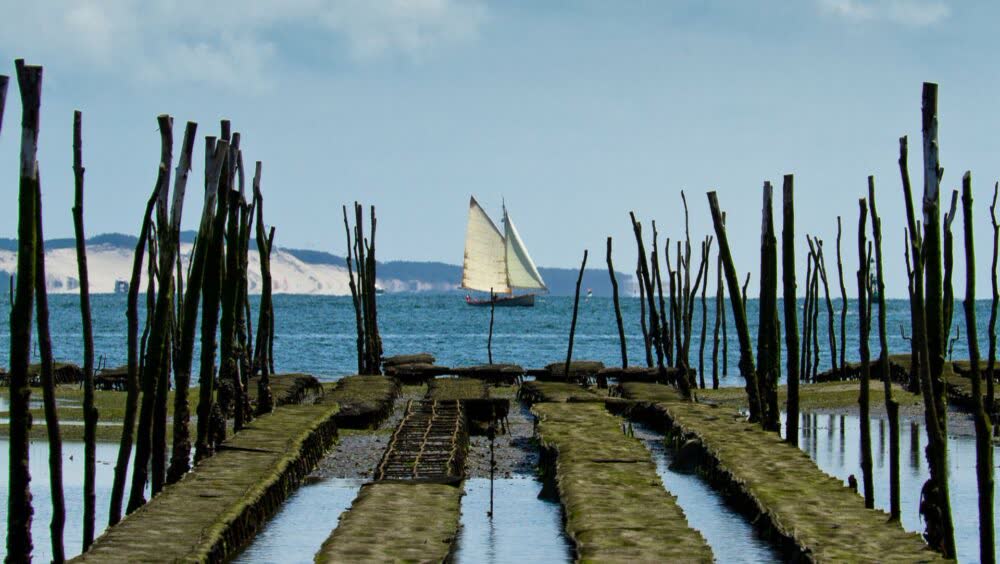
Since 30 October 2026, two camera-equipped aircraft can overfly the oyster beds of the Arcachon Basin. The Gironde prefecture presents this reinforcement as support for gendarmerie patrols, at a time when the oyster stock is valuable and thefts recur winter after winter.
A permit renewed for the festive season

The authorisation was signed by Sophie Brocas, prefect of the Nouvelle-Aquitaine region and of Gironde. It runs from Friday 30 October to Thursday 31 December 2026. The prefecture detailed its purpose in a press release published on 3 November.
The official text has two aims: to prevent the thefts that have already affected several holdings in recent years, and to better protect professionals in the sector. It adds that the devices will help gendarmes identify suspicious behaviour more quickly, in order to prevent harm to property and persons.
This sequence returns every autumn. A comparable order had covered the period from 13 November to 31 December 2023, after seventeen thefts committed in oyster huts during the night of 24 to 25 October 2023. A new authorisation had taken over from 12 November to 31 December 2024, with two high-definition camera drones.
Two drones, six flights a day, a tight perimeter
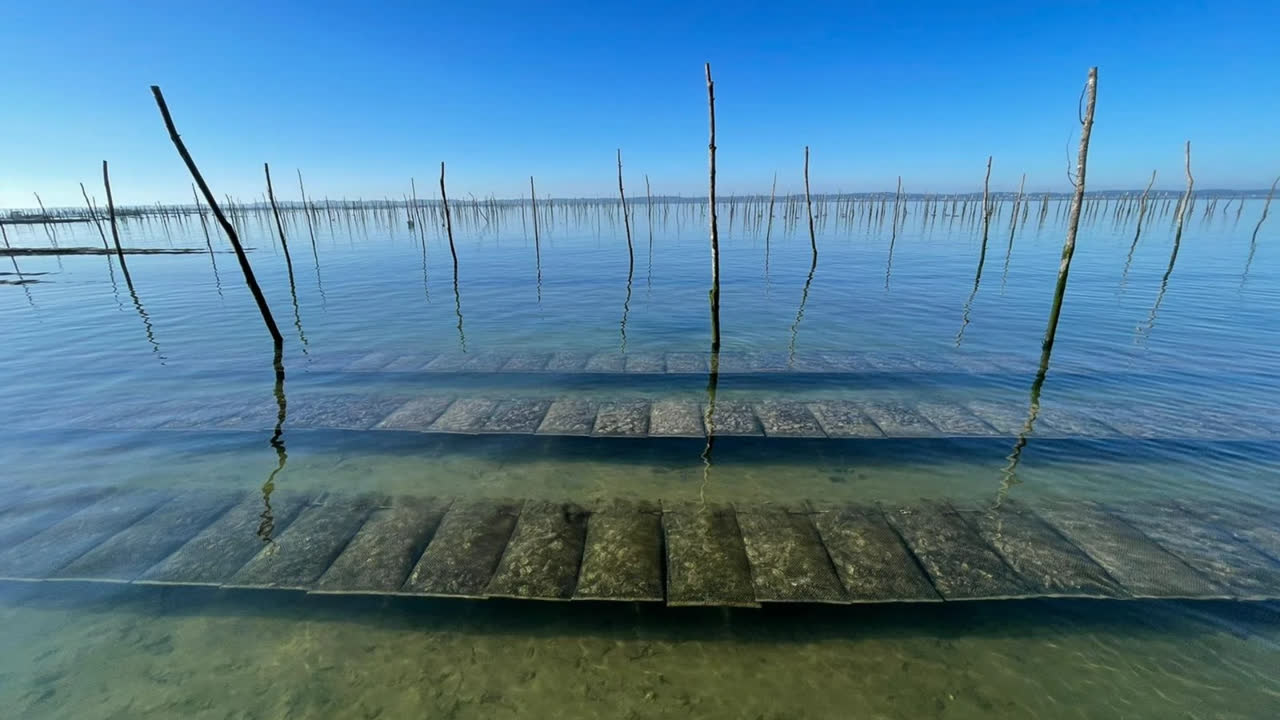
The operational detail appears in the prefectoral order, which the local press was able to read. Gendarmes may carry out at most six flights per day, between 9 a.m. and midnight, to capture, record and transmit images. The perimeter is limited to the Île aux Oiseaux area, in the communes of La Teste-de-Buch, Gujan-Mestras and Lège-Cap-Ferret, as Vivre le Bassin details.
Implementation is the responsibility of the nautical brigade of the Arcachon gendarmerie, a unit of around ten gendarmes. It already patrols in a launch, has thermal binoculars and was using a drone as early as December 2025, according to an account of an arrest published by Sud Ouest. The helicopter from the Mérignac air section completes the system on the same missions.
The argument rests on the geography of the basin. The concessions stretch over about 700 hectares, often far from the shore, and are hard to monitor from a road or a quay. An aircraft taking off from a fixed point sweeps in a few minutes areas that a launch would take much longer to cover, without tying up a crew.
These two machines add to a fleet that has become massive. The gendarmerie had 1,350 drones recorded in May 2026 and about 1,200 remote pilots, according to a Senate report from June 2026. Their 21,030 flight hours in 2025 exceed, for the first time, the 17,004 hours of helicopters.
A legal framework that strictly limits the camera
The use of these devices falls under Articles L. 242-1 et seq. of the Internal Security Code, introduced by the Act of 25 May 2021 and then amended by the Act of 24 January 2022. The Decree of 19 April 2023 set the conditions for applying this administrative regime, separate from the judicial police.
The prefectoral authorisation is capped at three months, renewable. Arcachon's covers two. It must name the responsible service, the purpose, the number of cameras capable of recording simultaneously, the geographical perimeter and the arrangements for informing the public. The prefect must verify that no less intrusive means can achieve the same aim.
Several prohibitions apply. Drones cannot capture sound, be used for facial recognition, or be automatically matched against other files. Images of the interior of homes are excluded, and recording must stop as soon as they appear. Retention is limited to seven days after the end of deployment, as CNIL recalls.
The offensive side is expanding in parallel. Certain critical operators can now detect, jam and force hostile drones to land, a framework we detailed in an article on the neutralisation of aircraft. The two texts do not overlap: one governs the State's camera, the other the response to an intruder.
A fragile sector, thefts that weigh heavily
The economic context makes surveillance more urgent. The Centre for Aquaculture, Fisheries and the Environment of Nouvelle-Aquitaine published its post-summer bulletin on 22 October 2026: 75.3% mortality among first-year oysters, 35.1% among second-year oysters and 16.4% among market oysters, Sud Ouest reports.
The consequence is arithmetic. Out of a hundred spat settled on a collector, barely ten remain to sell three years later. A theft removes goods ready for sale, and it also wipes out years of rearing, on a holding that has already lost the majority of its previous cycle.
Health crises are piling up. The norovirus wave of winter 2023-2024 had cost the basin's oyster farmers around €7 million in turnover, according to the government. Spat mortality, for its part, remains more than twenty points above benchmarks for the first year.
Gendarmes describe an organised phenomenon, often internal to the profession. In December 2025, the commander of the nautical brigade, Jérôme Goussard, referred to "several tonnes of oysters" stolen "in the space of a tide, in half an hour, by organised professionals". The annual average cited by BFMTV reaches three tonnes.
Ordinary law adds to the thefts. Gathering oysters is prohibited in the beds and within a radius of fifteen metres, as is recreational shore fishing. In December 2025, two men caught at night in the Bélisaire area were stopped and checked for this reason, after helicopter spotting.
The grey areas of the system
No source specifies the model of the two aircraft or the exact nature of their sensors. The press release speaks of "cameras" without mentioning thermal imaging, although flights can continue until midnight. The thermal binoculars cited by Sud Ouest equip the gendarmes on the ground, not necessarily the devices.
On this type of machine, the difference between a visible-light camera and a thermal sensor nevertheless changes everything in night flight, as our comparison of thermal-camera drones shows.
No assessment has been published on the flights actually carried out since 30 October, nor on any arrests linked to the system. The text of the order, however, is accessible: it appears in the special register of administrative acts no. 33-2026-382, published on 30 October 2026, alongside a second order dated the same day. It is this document that the local press read to establish the six daily flights, the times and the perimeter.
Finally, nothing indicates that a prohibited zone has been created for civil remote pilots. The authorisation governs the use of cameras by State services, not air traffic. The obligations of professionals and private individuals overflying the area remain those of ordinary law, to be checked before each flight.
← Back to home · Search · Suggest a topic · Lire en français / Read in French