
Regulation — United Kingdom
ANRA, Wing, Manna and firefighters test shared airspace in the UK
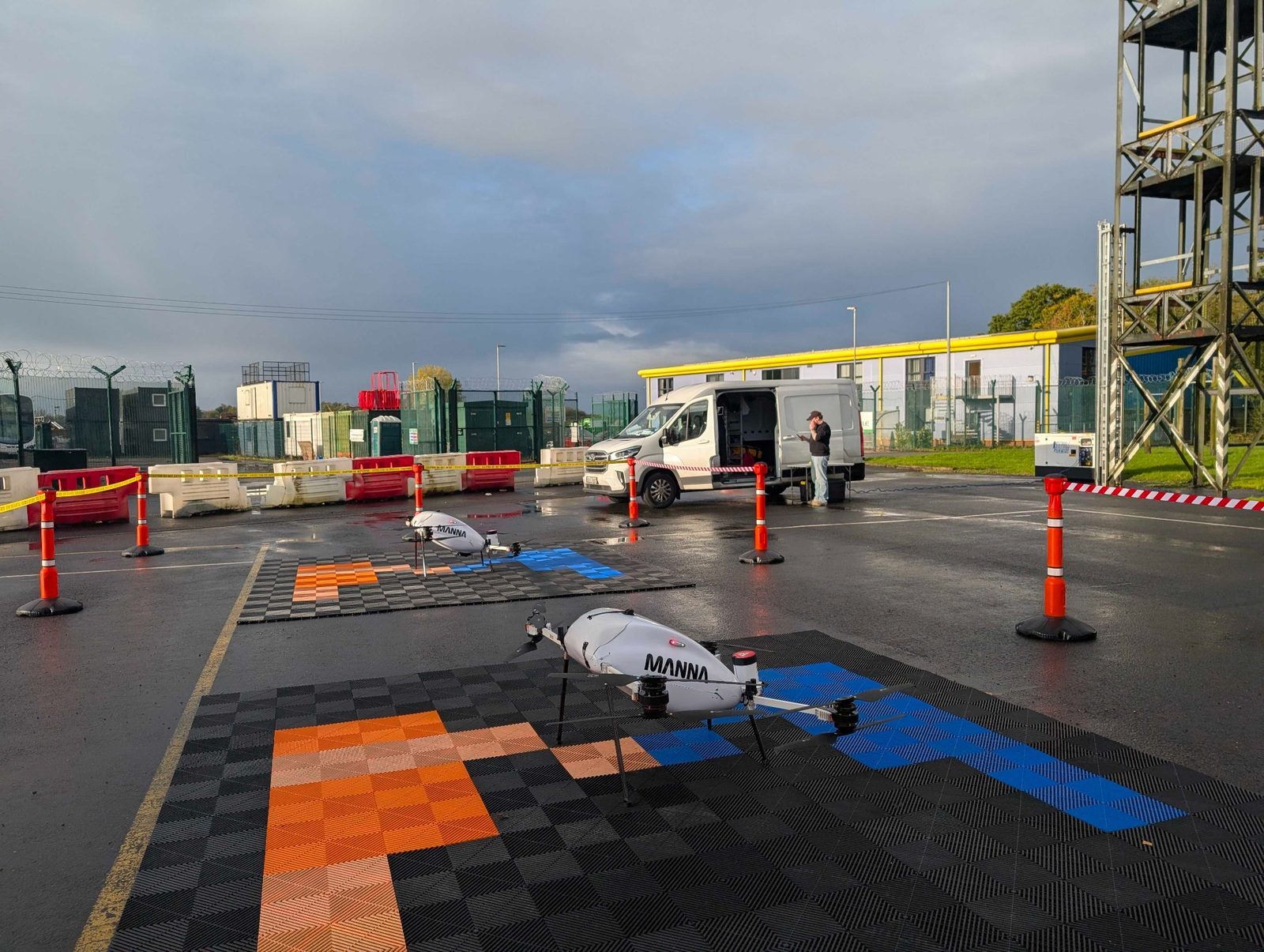
A demonstration approved by the CAA in Chorley
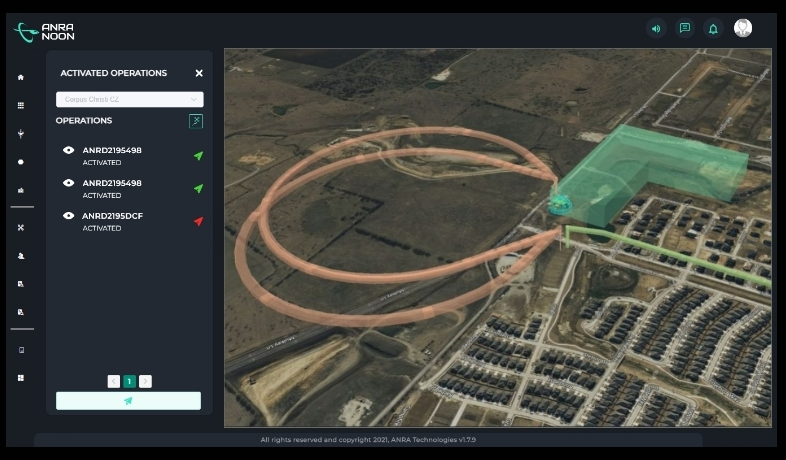
The Shared Airspace project brought together delivery drones and emergency-response drones in the same temporary danger area in Chorley, Lancashire. The demonstration took place with the agreement of the Civil Aviation Authority (CAA), the UK civil aviation regulator.
ANRA Technologies, Wing and Manna took part alongside Lancashire firefighters.
Chorley is about thirty kilometres from Manchester. A temporary danger area is published by NOTAM and activated for a limited period. It isolates the trial from surrounding traffic. The ANRA consortium obtained a CAA grant to conduct this trial, presented as the first of its kind in the United Kingdom.
Wing, an Alphabet subsidiary, has been delivering groceries by drone in the United Kingdom since 2021, notably in Milton Keynes with Tesco. Manna, an Irish company founded in 2018 by Bobby Healy, operates drone delivery services in Ireland.
ANRA Technologies, an American company, provides uncrewed traffic management software. The three companies flew different aircraft, for different customers, in the same volume.
The CAA issues flight authorisations, operator certificates and remote pilot licences. For a beyond-visual-line-of-sight flight, the operator must demonstrate that it detects and avoids other aircraft.
The Chorley trial falls within this framework: the organisers flew both types of aircraft in the same volume, with delivery and emergency-response scenarios.
Separate traffic management systems
The partners did not work on a common platform. Separate traffic management systems were used for the same demonstration, each attached to an operator. Coordination between these systems determines whether delivery and emergency-response flights can operate in the same place at the same time.
An uncrewed traffic management (UTM) system allocates slots, altitudes and trajectories. Each operator can use its own service provider. The providers then exchange the positions and flight intentions of their aircraft.
The CAA regulates these operations through CAP 722, the reference document for drones in the United Kingdom. The text sets out the operating conditions. The priority rules between a parcel and an emergency response fall to the operators and the authority.
UTM does not replace air traffic control. It organises low-altitude flights, below the corridors used by commercial aviation. Service providers exchange data through standardised interfaces, which operators must configure.
Exchanging technical data is not enough. A delivery operator plans its rounds in advance. An emergency service takes off when the alert comes in. The two activities have neither the same pace nor the same margins.
Priority rules between emergency response and delivery
A regular delivery service and an emergency service have neither the same priorities nor the same time constraints. Giving priority to an emergency flight over a commercial delivery requires written rules.
A technical protocol between platforms does not resolve the conflict.
Lancashire firefighters usually request the closure of an airspace for a fire. With a delivery drone in the same volume, the request changes form. The operator must be identified, its trajectory known and its agreement obtained to free the corridor.
These exchanges take time when no text sets the order of priority.
UK fire services use drones for reconnaissance and mapping. Priority is defined by the mission: reconnaissance, dropping, evacuation. A delivery drone carrying a parcel does not have the same urgency as a drone searching for a hot spot.
The CAA has opened a regulatory sandbox for drone trials. Participants test procedures there before applying for an operating authorisation. Shared Airspace falls under this type of arrangement.
The Chorley flights produce data on conflicts, release times and communications between operators.
An experimental framework, with no timetable
Shared Airspace remains an experimental project. It has yet to produce a concept of operations and UK governance rules. No implementation date has been announced.
The concept of operations describes the procedures, responsibilities and means of communication between the parties. The governance rules specify who decides in the event of a conflict, how an emergency flight obtains priority and what data operators share.
The Chorley flights will serve as material for this drafting work, which has not been publicly initiated at this stage.
As it stands, the project does not lead to any permanent authorisation for shared flights in the United Kingdom. The CAA continues to issue authorisations on a case-by-case basis for drone operations, including deliveries.
A regular delivery and emergency-response service in the same volume of airspace would require a national rule. A local exemption covers only the duration of the trial.
← Back to home · Search · Suggest a topic · Lire en français / Read in French