
Incidents — US
An Amazon MK30 ends up on a garage roof in Michigan
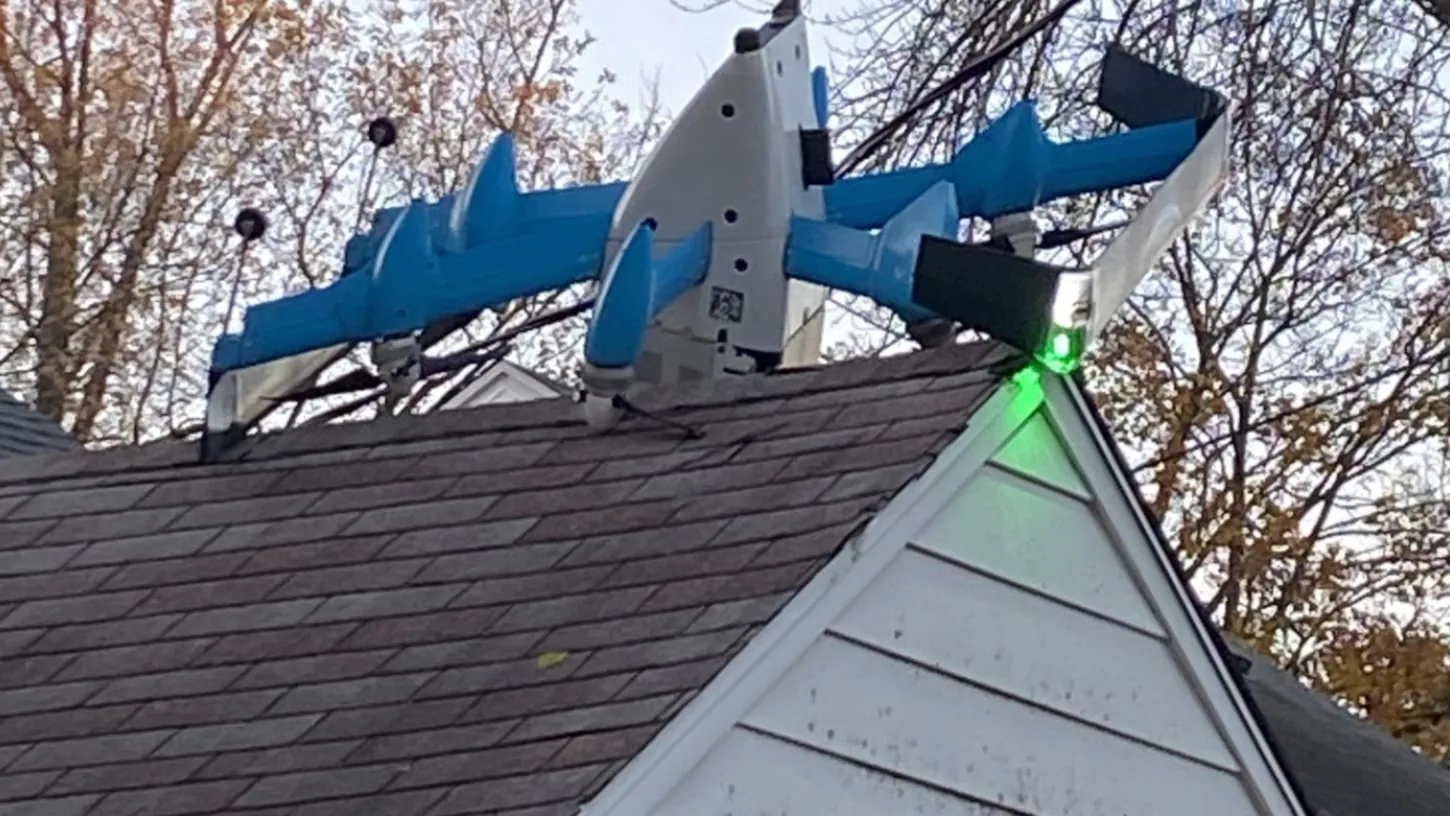
The customer's account, from the fibre line to the neighbour's roof
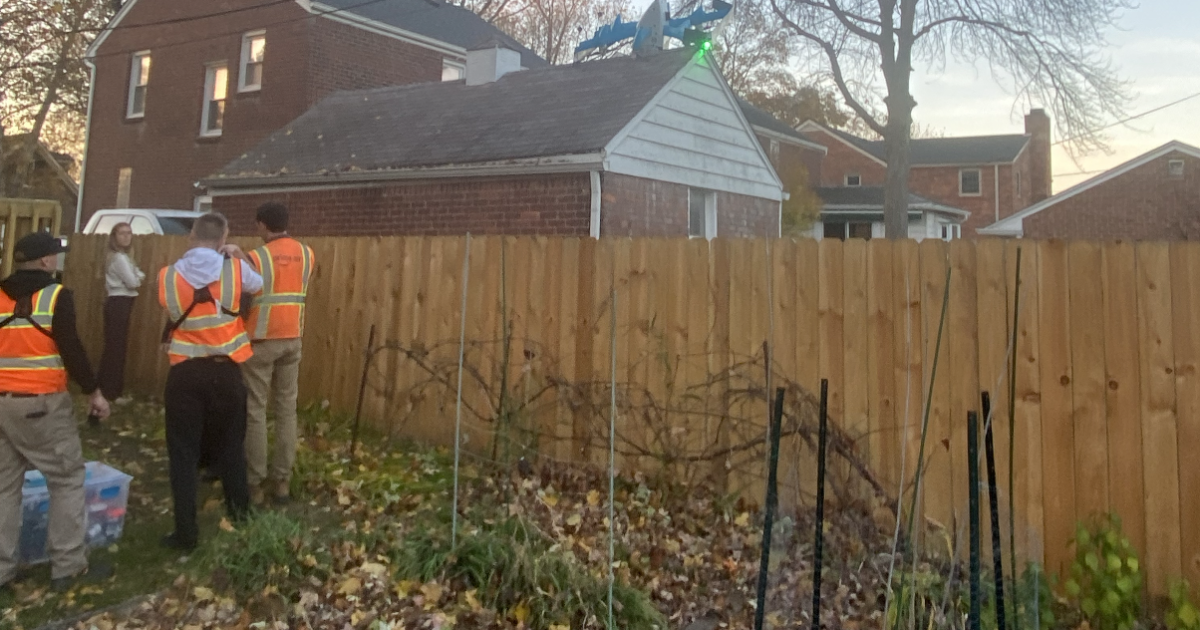
On Friday 20 November 2026, shortly before 4.30 pm, a Prime Air MK30 dropped a parcel in Jim Brennan's back garden, on Wyoming, in Huntington Woods, Michigan. The order, a shampoo, was the couple's first drone delivery; a notification announced arrival in seven minutes.
Amazon confirmed to WXYZ that the flight originated from its Hazel Park hub, about 6 kilometres to the east.
According to the customer, the aircraft began its climb beneath a fibre-optic line, struck it, lost a propeller and fell onto the neighbouring garage, owned by Logan Coomes.
The drone ended up stuck between the roof and a power cable, which led DTE to intervene. An Amazon team was on site within ten minutes; the aircraft left the roof at around 7.30 pm, almost three hours later, with the help of the electricity distributor.
Shingles were lifted and a corner of the ridge would let rain through, according to the owner, to whom Amazon gave a 100-dollar gift card while announcing that the damage would be covered.
No one was injured. As a precaution, Brennan had his house registered on a no-drone list.
The aircraft is a six-motor MK30, given as 35 kg empty and 37.7 kg maximum take-off mass with a 2.3 kg payload, for a range of 12 km.
Relative to its payload, the machine is among the heaviest delivery drones in the United States: about 15.6 pounds of aircraft per pound delivered.
A precedent in Texas and two incident files
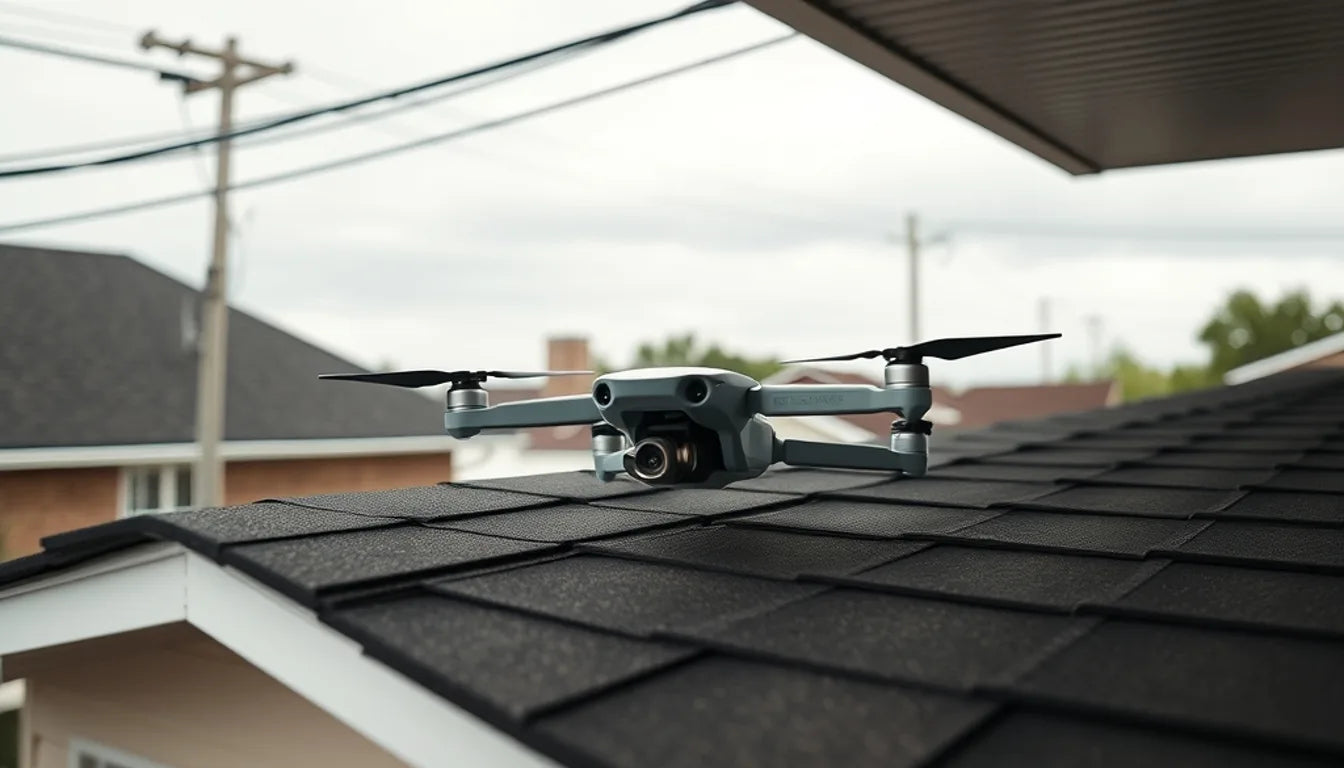
A year and two days earlier, on 18 November 2025, an MK30 climbing after a delivery in Waco, Texas, severed an internet cable with one of its propellers. The similarity lies in the flight phase: in both cases, the aircraft leaves the vertical above the drop point and climbs again at the level of low lines.
Two incident files appear in the NTSB register under the references WPR26LA001 and WPR26LA002. No investigation conclusion has been published on the cause of the Huntington Woods flight.
Professional drones also strike low obstacles outside delivery missions. An aircraft that ends up on a tower crane on a building site belongs to the same risk family: a low obstacle, mapped or not, on an otherwise authorised trajectory, as in Manchester, where a drone crashed onto a crane.
Amazon's version mentions neither cable nor propeller
Amazon does not take up the customer's account. Spokesman Jack Stelzner told WXYZ that a Prime Air drone "landed on a resident's garden shed during a delivery".
The wording mentions neither cable nor lost propeller, and refers to a garden shed where the customer's photos show the aircraft resting on the ridge of a garage, a green light still on at one wing tip.
The company also states that no one was injured.
The statement commits the operator. It says nothing about the condition of the aircraft before contact, nor about the height of the line, nor about the motor speed at the moment the machine changed trajectory.
The MK30's spec sheet stops at the characteristics of the machine: six motors, 37.7 kg at take-off, 12 km range.
Preparing a delivery point above the rooftops
The two cases taken together outline a precise sequence: a vertical climb just after the drop, at the altitude where the drone moves from roof height to its cruise trajectory. That is where fibre lines and service cables cross: thin, often unsigned, poorly detected by onboard sensors when the light varies.
A residential plot adds ridges, antenna drops and trees.
To prepare a delivery point in a dense area, the risk analysis must describe this sequence in addition to the cruise corridor: height of the lowest line above the plot, position of the drop point relative to the cables, free volume above the climb point, and emergency landing zone if the nominal trajectory is interrupted.
A snagged cable costs a propeller, sometimes an aircraft, and triggers a route suspension for the duration of the inspection. Add to that third-party damage, its handling and the relationship with the owner of the building affected.
The volumes targeted by delivery operators multiply these transition points above the rooftops. The authorisation requests filed with the FAA, such as Zipline's for 130,000 daily deliveries in Arizona, give the scale.
Amazon has not indicated any trajectory correction after the Huntington Woods incident.
← Back to home · Search · Suggest a topic · Lire en français / Read in French