
Incidents — FR
Three Saint-Malo detainees sentenced for drone deliveries
A conviction handed down at first instance
Three inmates at Saint-Malo prison have been convicted of receiving drugs, a SIM card and a mobile phone by drone. The judgment concerns deliveries directed at the prison establishment.
The length of the sentences is not known at this stage.
The decision was handed down at first instance. It becomes final only on expiry of the appeal deadlines, unless the parties waive them. A judgment may be overturned on appeal, both as to the classification of the facts and as to the sentence.
The rule applies here as elsewhere: an accusation is not a conviction, and a conviction that is not final does not close the case.
The three men were in custody at the time of the facts. The judgment says nothing, as things stand, about the situation of the persons who remained outside the establishment: the one who piloted the device, the one who supplied the goods, the one who placed the order.
A conviction of inmates for receiving illicit parcels does not settle these questions.
Drugs, SIM card and telephone: three objects and three uses
The judgment identifies three deliveries that are distinct in nature. Narcotics enter the establishment to be consumed or resold there. The SIM card and the telephone serve to restore communication with the outside world, which detention prohibits.
This second use is the one targeted by the "Zéro portable en prison" plan, launched in November 2025 by the Minister of Justice, Gérald Darmanin. According to a press release from the Prison Administration, €1.05 million was immediately mobilised to strengthen the means of combating drones.
The same press release, cited on Wednesday, states that more than 70 of the 186 establishments in mainland France are equipped with electronic anti-drone devices. The Elsau prison in Strasbourg has had them since July 2025, at a cost of €350,000.
The scale of the phenomenon is documented. The prison administration recorded almost 5,000 attempted drone overflights across the country in 2025. It counted 4,736 in 2022. The drone is not a marginal vector: it is a means of delivery that crosses a perimeter without going through a door, and without a vehicle being required.
Seventy of 186 establishments equipped with anti-drone devices
For an operator of an enclosed site, the sequence is always the same: a device arrives from outside, drops a payload in a yard, and leaves. Detection requires sensors, alert processing and an intervention capability.
The three stages do not come under the same budget or the same operator.
The figures provided give the measure of the gap between equipment and need: 70 establishments covered out of 186, and initial funding of €1.05 million announced in November 2025. The cost of a single equipped site, that of the Elsau, reaches €350,000.
Extending this to the entire prison estate therefore comes up against a question of resources as much as of doctrine.
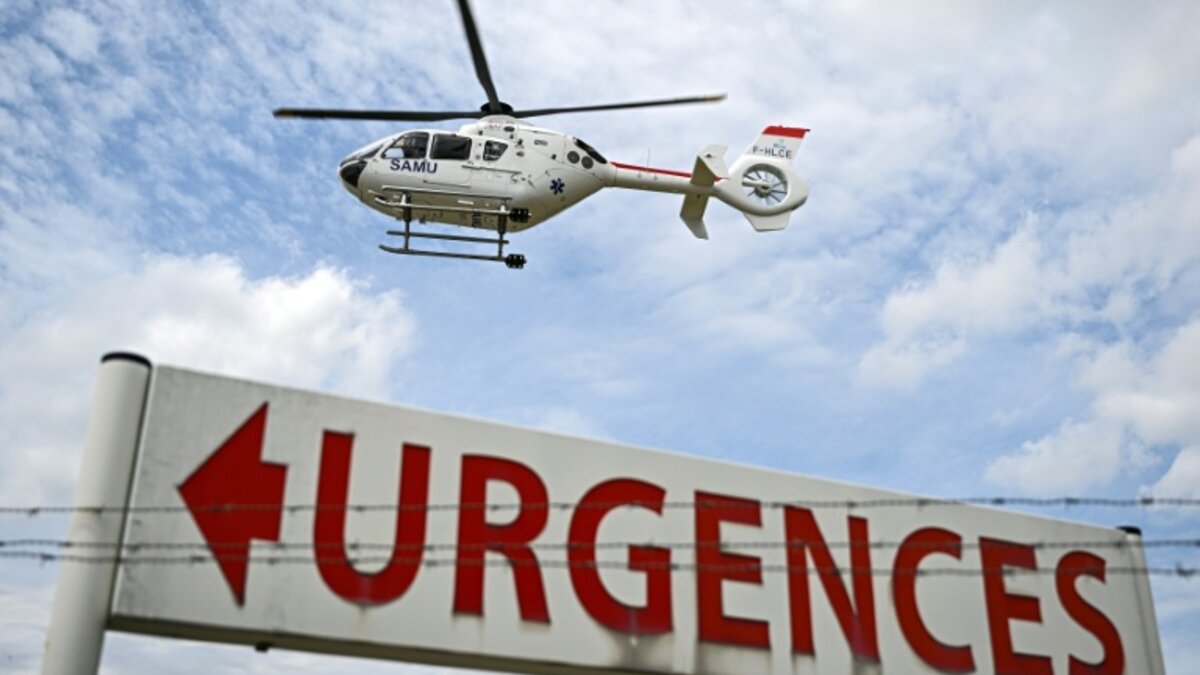
The consequences of an uncontrolled overflight do not stop at the perimeter concerned. In Strasbourg, the helicopters of the Sécurité civile and the Samu have no longer been landing at night at the Hautepierre hospital for around three weeks, because of drone flights intended for the Elsau remand centre, just over 4 kilometres away.
The aircraft are falling back on the helipad of the Nouvel hôpital civil, in the city centre, with a delay of 30 to 40 minutes in transporting patients, according to CHU officials. Professor Julien Pottecher, head of the anaesthesia and intensive care department at Hautepierre, said that "in haemorrhage situations, 30 minutes can change things".
Between 320 and 330 patients are transported by helicopter to Hautepierre each year from the Grand Est, Germany or Luxembourg, around forty of them at night.
For professional remote pilots, these cases outline areas to be treated as de facto no-fly zones, including outside the immediate prison perimeter. The question that remains open concerns the means of detection and enforcement that will be deployed around sensitive sites, and the timetable for that deployment.
In Strasbourg, night landings at Hautepierre have been suspended for around three weeks.
← Back to home · Search · Suggest a topic · Lire en français / Read in French