
Regulation — Europe
STS-03: EASA prepares a standard scenario for agricultural drones up to 750 kg
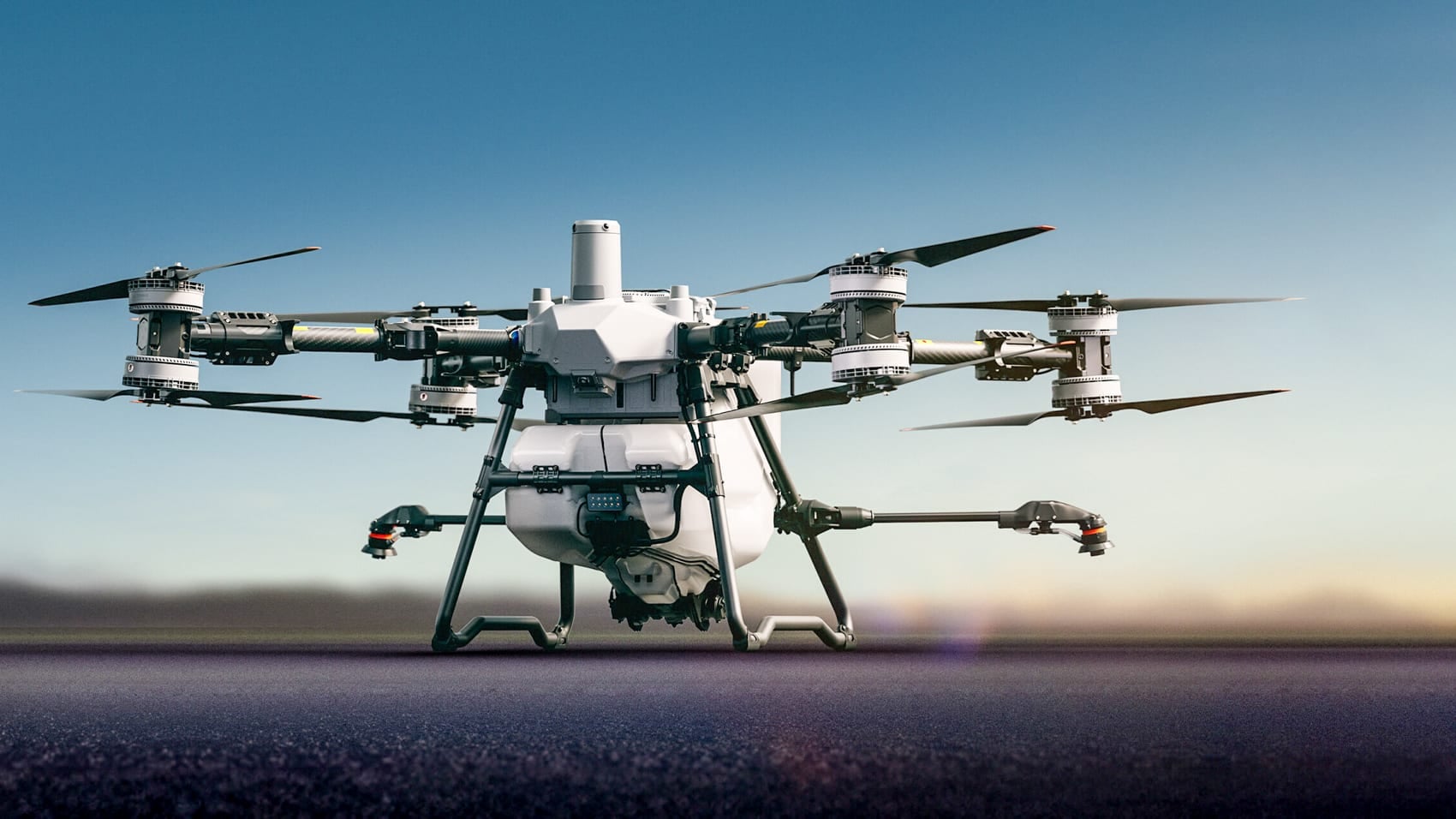
A third standard scenario, tailor-made for agriculture
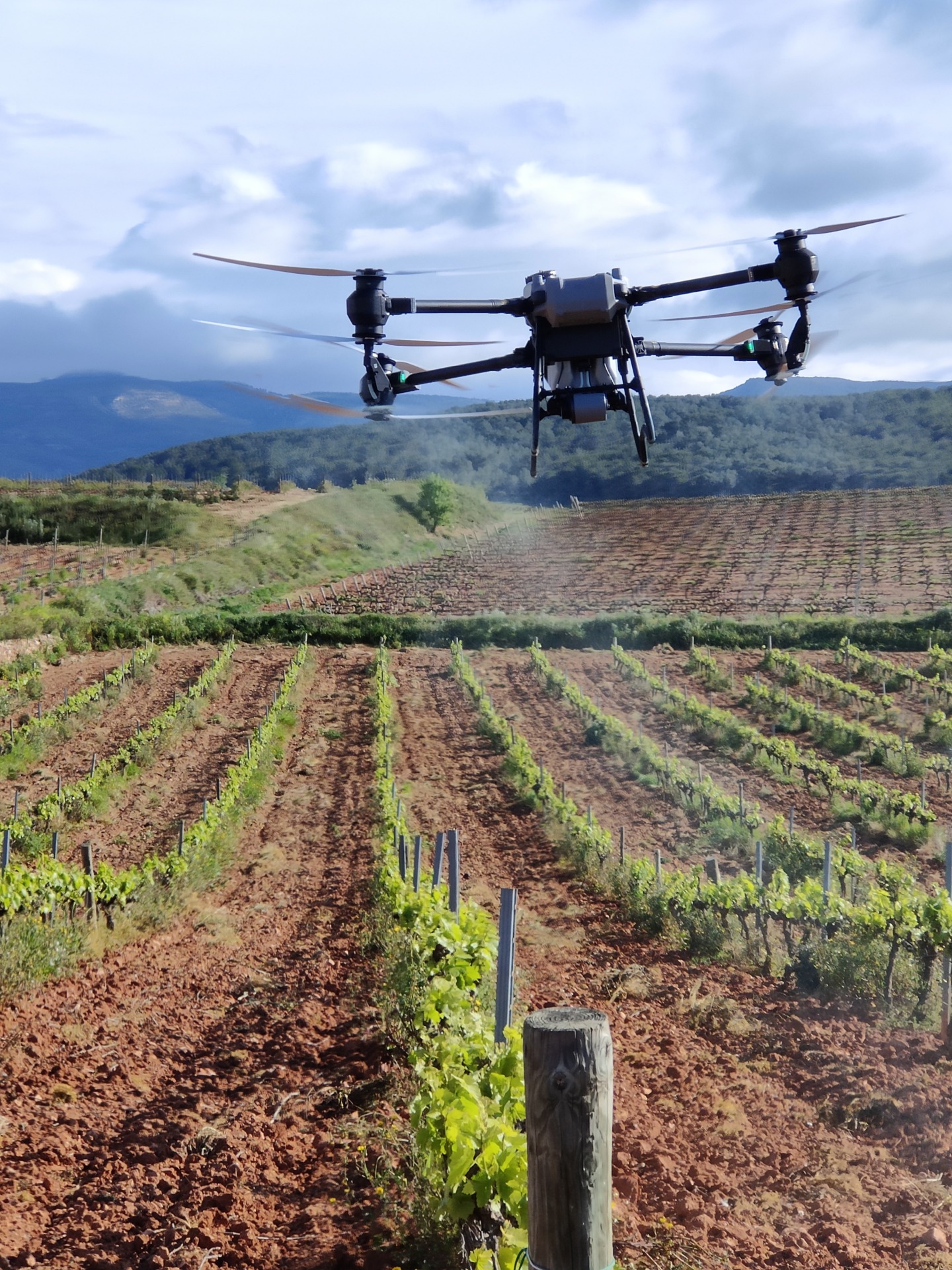
Since 2024, the "specific" category has rested on two European standard scenarios: STS-01 (flight in visual line of sight, above a controlled ground area, in a populated environment) and STS-02 (flight beyond visual line of sight with airspace observers, in a sparsely populated area). Neither really covers agricultural work: spraying, seeding, spreading or treating plots, often carried out with machines weighing more than 25 kg. These operations currently require an individual authorisation, case by case, on the basis of a SORA analysis or a PDRA.
On 18 May 2026, EASA published NPA 2026-103, a draft revision of Regulations (EU) 2019/945 and (EU) 2019/947. The text reorganises the standard scenarios — STS-01 and STS-02 would become UAS.STS.020 and UAS.STS.021 — and adds a third scenario, STS-03, reserved for operations above agricultural, horticultural and forestry surfaces. The Agency's stated objective: to shift as many low-risk operations as possible to the declaration regime, without going through prior authorisation.
Note: this is a draft, not law in force.
The NPA is open for comments until 8 June 2026; it will be followed by a comment-response document, an EASA opinion, and then a European Commission act.
The flight conditions of STS-03
The scenario is deliberately narrow, to remain within the low-risk register:
- Height: 20 metres maximum above ground level, or 20 metres above an obstacle.
- Visibility: flight in direct visual line of sight (VLOS) at all times, without exception.
- Aircraft: classes C6 or C7 (class C7 is created by the same NPA).
- Area: only surfaces for agricultural, horticultural or forestry use.
- People: no uninvolved person must be overflown.
- Equipment: remote identification (Remote ID) and geo-awareness active and up to date.
- Flight geography: an active system must prevent exiting the defined area.
In other words, STS-03 does not legalise overflight of local residents or agricultural BVLOS: it frames the treatment of plots, at low height, with heavy but restricted machines.
Class C7: 750 kg drones above the plots
This is the centrepiece of the text. Class C7 is designed for large sprayers, currently outside the scope of classes C5 and C6:
- characteristic dimension up to 5 metres;
- maximum speed of 15 m/s;
- maximum take-off mass up to 750 kg;
- altitude limitation built into the system, capped at 20 metres;
- basic requirements taken from class C3.
For manufacturers, this amounts to treating heavy agricultural drones as a product category in their own right, with design requirements (altitude limitation, identification, geo-awareness) rather than as derogating aircraft. For operators, it is the announced end of the SORA file for each new model.
Timeline: application in 2027, full regime in 2028
The NPA provides for entry into application on 30 June 2027, with a transitional period:
- some provisions, including the new remote pilot certificates (theory, VLOS-STS and BVLOS-STS), will apply only one year later, i.e. on 30 June 2028;
- the scenarios will therefore be fully usable only on that date, when remote identification, geo-awareness and the half-yearly activity report are required;
- operators already under declaration or authorisation may continue until 30 June 2031 without Remote ID or geo-awareness, provided they do not change aircraft model;
- from 1 July 2031, these two pieces of equipment will become mandatory for all drones over 900 g.
The DGAC, for its part, recalls that under current law only STS-01 and STS-02 exist, with class C5 and C6 drones, and that the former national scenarios S-1 to S-3 have disappeared since 1 January 2026. Nothing will therefore change in France before the European act is published.
Why this scenario now
Three drivers converge.
Administrative burden.
Authorities process thousands of applications for low-risk operations. The NPA quantifies the overall saving of the scheme at around 39% of costs avoided for authorities, operators, manufacturers and training organisations. The logic changes: more declarations, fewer authorisations, and safety thresholds that shift back towards the manufacturer's instructions rather than the regulation.
Agricultural demand.
Drone spraying remains blocked in several Member States by Directive 2009/128/EC on the sustainable use of pesticides, which prohibits aerial application by default. This question is dealt with separately by the "Food & Feed Safety Omnibus" package published in December 2025, which introduces a specific derogation for drones. STS-03 therefore removes the aeronautical lock, not the plant-protection lock: even if adopted, it will not be enough to authorise a treatment until the products are authorised for drone application.
The overhaul of population thresholds.
The NPA removes the notion of "controlled ground area" in favour of population density thresholds taken from the manufacturer's instructions, with an adjacent ground area calculated on three minutes of flight at maximum speed (between 5 and 35 km). For STS-03, this logic matters less: the constraint is the plot, not the town.
What it changes, and for whom
- Agricultural operators and contracting companies: access to a declaration framework for heavy machines, without an individual file; but an obligation to comply with the manufacturer's instructions and to document the treated areas.
- Manufacturers: class C7 becomes a mandatory step for sprayers over 25 kg sold in Europe; the density values and limitation functions they declare determine the actual use of their machines.
- Remote pilots: a new set of certificates (theory, then VLOS-STS, then BVLOS-STS), with a hierarchy in which BVLOS covers all three scenarios.
- Member States: fewer authorisations to process, but new conformity checks and a half-yearly activity report to organise.
What remains open
The text may still change on several points: the exact fate of the density thresholds, the date of application of the certificates, the fate of drones already in service and the interaction with plant protection product regulations. Discussions are continuing at Member State and Commission level, with adoption expected in autumn 2026 for application in 2027.
For an operator, the right question is therefore not "when will I be able to spray?" but "which model, with which declared functions, and under which regime?". The answer will depend as much on the manufacturer's instructions as on the European text.
Regulatory information verified on: 17 October 2026.
← Back to home · Search · Suggest a topic · Lire en français / Read in French