
Regulation — EU
The Parrot ANAFI UKR GOV obtains C2 class and moves to A2
What class C2 permits in subcategory A2
The Parrot ANAFI UKR GOV holds a European class C2 certification issued by EU Drone Port, a notified conformity assessment body. This marking places the device in subcategory A2 of the open category under the European drone regulation. It allows flights without prior operational authorisation, which the regulation requires for any device of the same class without C2 marking, placed in subcategory A3 with greater separation distances from uninvolved people and from residential, commercial or industrial areas.
The A2 rules apply as they stand. The remote pilot normally maintains a horizontal distance of at least 30 metres from people not involved in the operation. This distance may be reduced to 5 metres when the device is flying in low-speed mode, subject to the applicable conditions and a risk assessment. Overflight of uninvolved people remains prohibited. Flights must be conducted within visual line of sight, and the maximum altitude is generally 120 metres above ground level.
Two administrative prerequisites govern these flights: registration of the operator and the A2 certificate of competency for the remote pilot.
The exact configuration covered by the certificate
The certificate bears the number EUDP-CERT-1030-2025. It covers the configuration tested with firmware 8.5.0, the Parrot Skycontroller UKR radio controller and FreeFlight 8 software, batteries included. EU Drone Port assessed the device against Delegated Regulation (EU) 2019/945: mechanical safety, protection against injury, security of the command and control link, direct remote identification, geofencing and behaviour in the event of loss of link.
Changes were made during the procedure. Low-speed mode now caps speed at 3 metres per second, and the lighting pattern has been revised to improve night visibility.
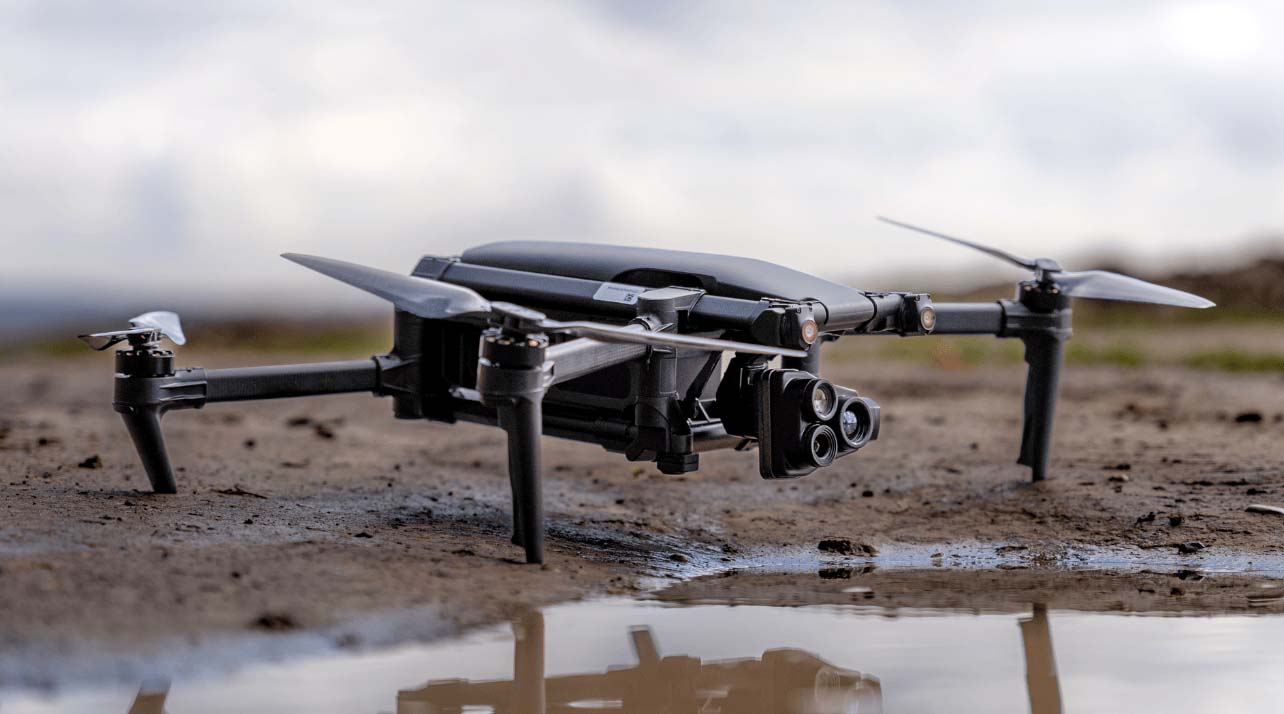
The device weighs about one kilogram with its standard battery, with a maximum take-off mass of 1,450 grams. Its imaging system combines two RGB cameras offering up to 35x digital zoom and a 640-pixel thermal camera mounted on a three-axis gimbal. Parrot claims up to 38 minutes of flight with the standard battery and up to 70 minutes with the optional XLR battery. Connectivity relies on Wi-Fi, 4G/5G and a LoRa backup link, with navigation functions intended for environments without GNSS signal. Parrot, headquartered in Paris, has been listed on Euronext Paris since 2006 (FR0004038263 – PARRO).
Steps to take before entry into service
The operator registers its activity in accordance with the applicable national requirements, then verifies that each remote pilot assigned to the model holds the A2 certificate of competency. Operations manuals must incorporate the 30-metre distance, the 5-metre rule in low-speed mode and the prohibition on overflight of third parties, which does not depend on the class marking.
Reducing the distance to 5 metres requires a documented risk assessment specific to the area and the mission. The on-board documents and the manufacturer's user manual, in the version corresponding to the certified firmware, accompany the device. Any operation outside the open category framework, in particular flight beyond visual line of sight, falls under the specific category and requires an operational authorisation.
Certificate validity and limits in populated areas
According to EU Drone Port, the certificate remains valid until 21 October 2036. This expiry applies to the tested configuration: a firmware update or a change of radio controller or battery falls outside the covered scope and causes the device to fall back under the general regime for its class.
In densely populated areas, C2 marking therefore removes neither the prohibition on overflight of uninvolved people, nor the visual line of sight obligation, nor the 120-metre ceiling. The operational benefit is limited to the exemption from prior authorisation and the possibility of reducing the distance to 5 metres in low-speed mode, subject to a risk assessment that the operator must produce and take responsibility for. On this point, the actual margin will depend on how each national authority reviews the files.
← Back to home · Search · Suggest a topic · Lire en français / Read in French