
Professional applications — PL
In Poland, Tatra rescuers test a drone that takes off without a pilot
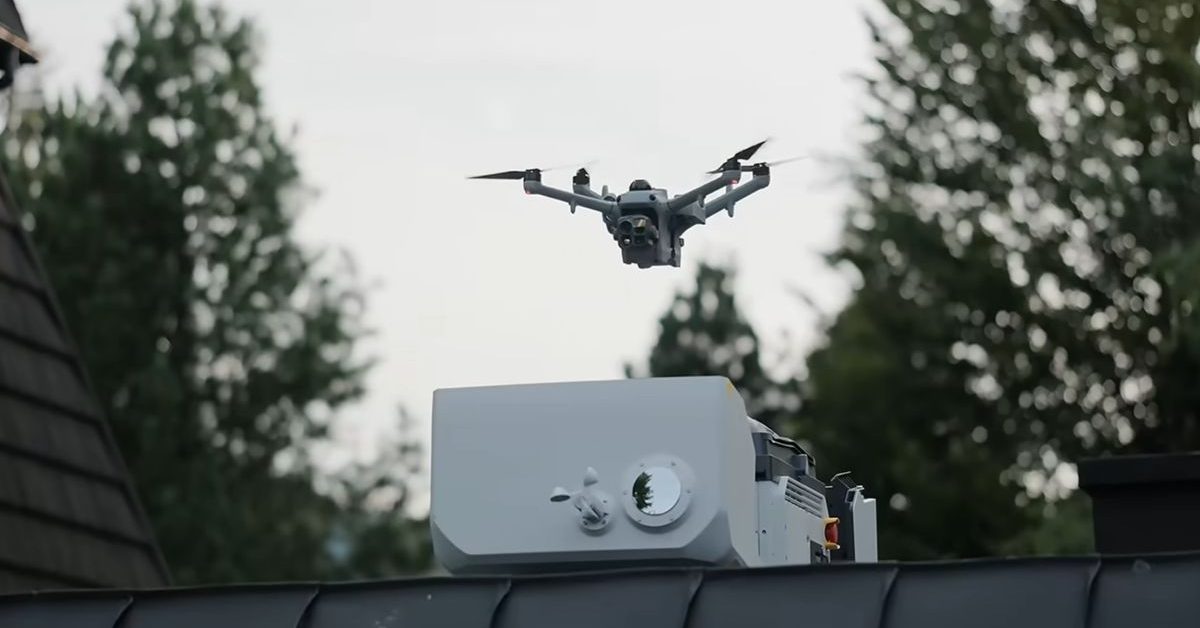
An automatic dock at the start of operations in the Tatras
The TOPR voluntary rescue service (Tatrzańskie Ochotnicze Pogotowie Ratunkowe) is equipping its teams with DJI Enterprise equipment. The DJI Dock 3 is already in service in the Tatras. The service is now testing the DJI Dock 4 as part of a pilot programme presented on 3 November 2026. The principle can be summed up in one sentence: a dock installed on a roof launches a drone as soon as an alert is received, without a remote pilot having to go to the site.
The drone sent ahead as a scout is a DJI Matrice 5TD. It heads to the accident zone while the rescuers gather their equipment. Marcin Józefowicz, a TOPR rescuer and head of Cybertech, identifies the initial constraint: assembling a team and reaching a trailhead on foot can take up to two hours. Some points in the massif cannot be reached by car, bicycle or snowmobile in winter.
Summit relays and thermal vision at night
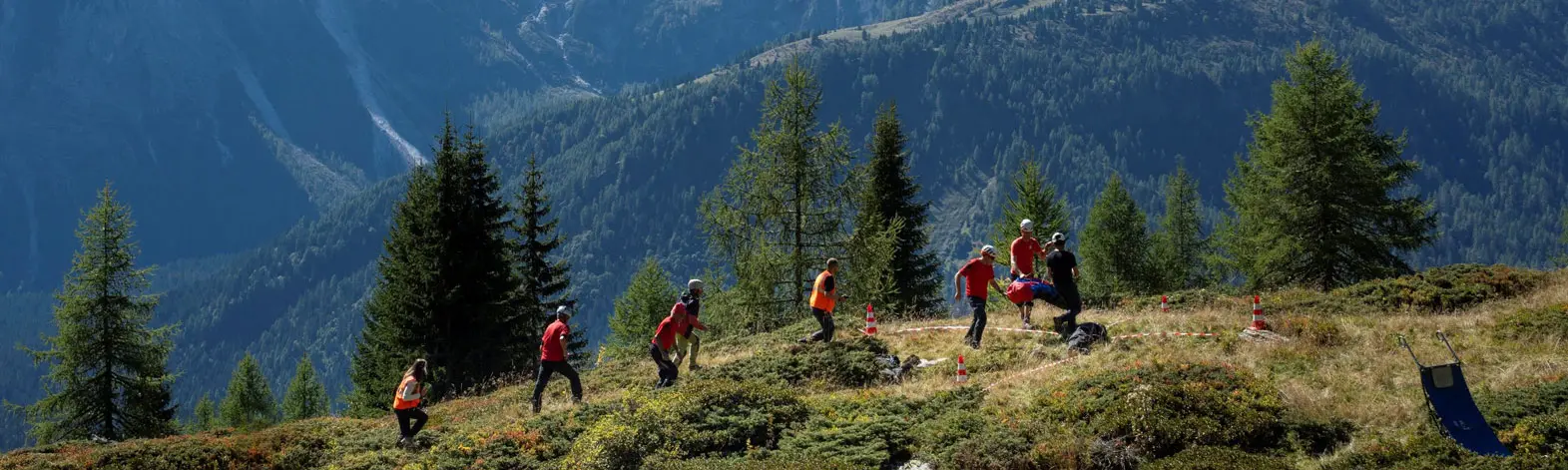
The mountains cut off communications. Ridges and deep valleys block video transmission and reduce the distance between the drone and its control station. TOPR has installed a network of DJI O4 ground stations on observation towers and remote summits. The drone switches from one station to another. This mesh extends flights towards neighbouring valleys, again according to Józefowicz.
Two items of equipment have a bearing on night work and on contact with the stranded person. The thermal fusion of the Matrice 5TD overlays the thermal image and the visible image: operators spot hikers' headlamps and read the terrain around them. The onboard loudspeaker is used to give instructions and ask whether the person needs help; the person replies with gestures. On the Dock 4, battery swapping is automated and takes 25 seconds.
What setting off on foot did not provide
Previously, the team set off without knowing. The video feed moves the decision upstream: duty officers establish whether someone actually needs to be rescued, how many volunteers to send and with what equipment. Unnecessary departures are avoided, and teams do not go up without the appropriate resources.
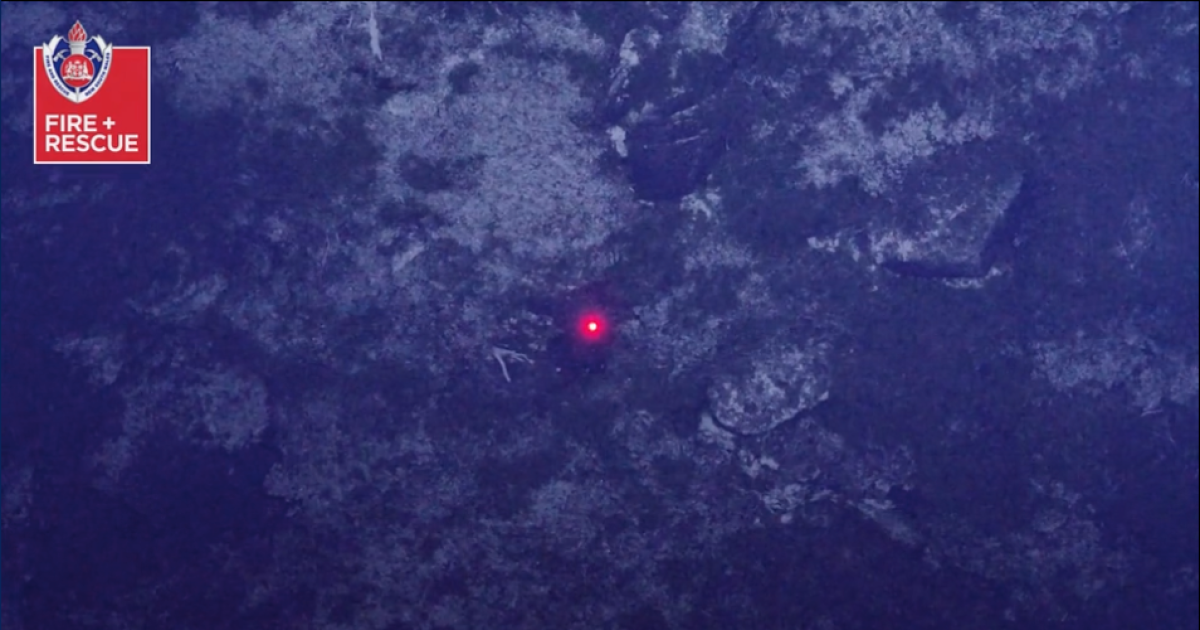
The Italian case illustrates the scale of the time lost. Nicola Ivaldo, a 66-year-old orthopaedic surgeon, set off alone on a Sunday in September 2024 without indicating his destination. His car was found at Castello di Pontechianale, in the Valle Varaita. Rescuers assumed he had headed for Monviso, at 3,841 m, or its neighbour Visolotto, at 3,348 m. More than fifty rescuers combed the area on foot for almost a week, with helicopter rotations. The first snows of late September caused the search to be abandoned. In July 2025, the thaw made it possible to resume. Two drones flew for five hours and covered 183 hectares, with more than 2,600 high-resolution photos analysed by software the same day. Three days after the resumption, the body was found in a couloir on the north face of Monviso, at around 3,150 m, at a point flagged by AI: a red helmet. The search was for a body, not a living person. The Polish drone, for its part, intervenes during the alert.
This is not Poland's first use. In 2021, software developed by a company spun out of the University of Wrocław helped find a 65-year-old man who had disappeared in the Beskid Niski, in the south-east of the country.
What transfers from one massif to another

Two principles travel: sending an aircraft before the team, and accepting that the first look is not human. The relay mesh does not copy well, because it depends on the towers and summits available in each massif. The dock requires a roof, a power supply and access.
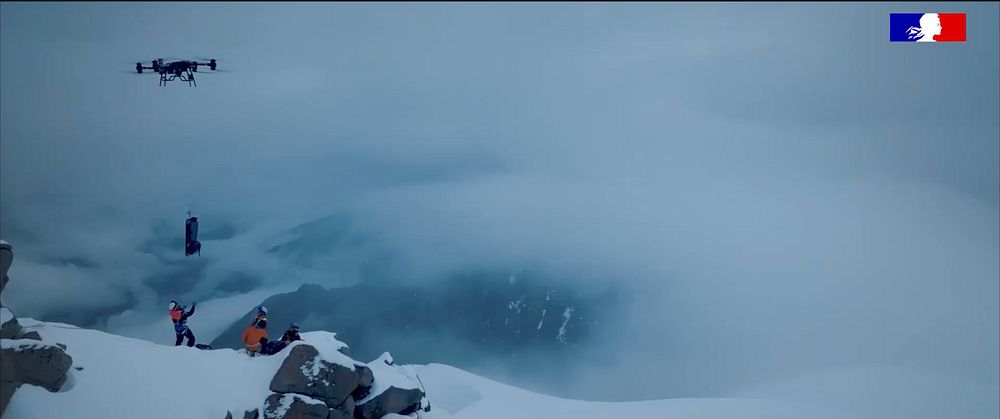
The rest of Europe is working on other building blocks. The START2 Living Lab project, funded by Interreg VI-A Italy-Austria, has a total budget of EUR 1,235,497, of which EUR 882,734 is co-financed by the European Regional Development Fund. It runs from January 2026 to December 2028 and has tested cargo drones for evacuation in the Dolomites: times reduced by up to threefold, vibration constraints on the patient up to ten times lower than ground transport, and a loading procedure while the aircraft remains hovering. The regulatory framework for transporting people is still evolving; that for transporting equipment is operational.
On beyond-visual-line-of-sight flight, the question remains open. A dock that sends a drone towards a valley without a remote pilot on site falls under BVLOS. The Polish system is presented as a pilot. In Poland, as of 4 November 2026, no recurring beyond-visual-line-of-sight authorisation has been announced for this programme.
← Back to home · Search · Suggest a topic · Lire en français / Read in French