
Drones & accessories — France
C1 and C2 thermal camera drones: the 2026 comparison, from Mavic 3T Advanced to Matrice 4T
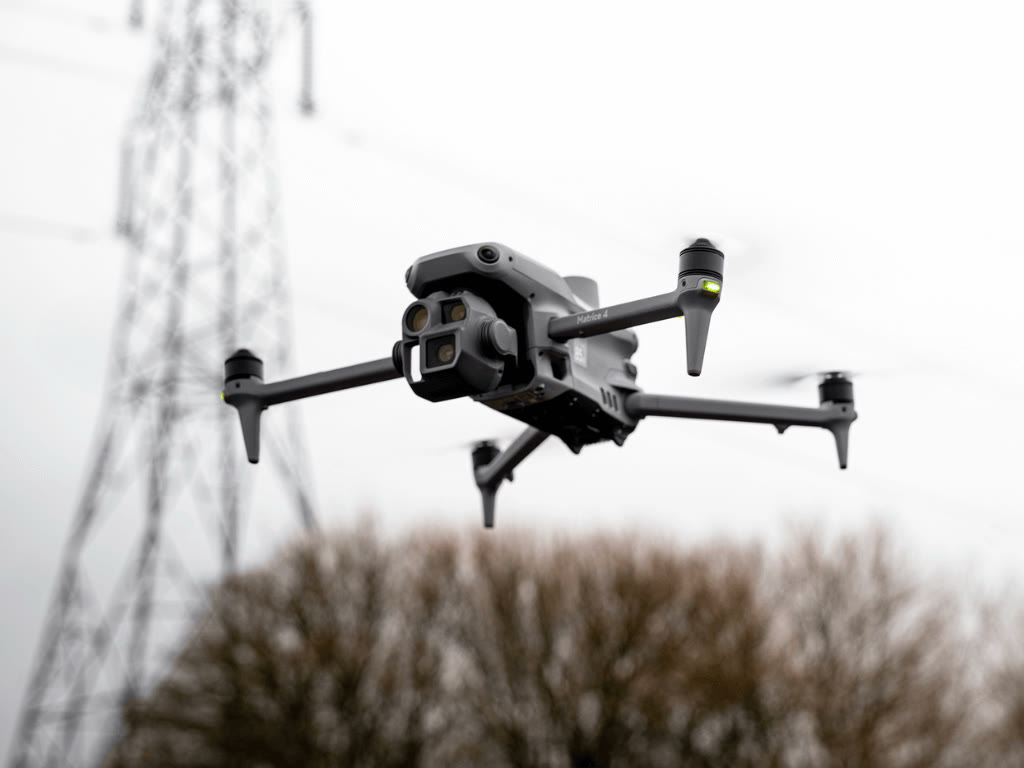
A professional thermal drone now sells for between €2,500 and €15,000. Budget alone is not enough to decide: the drone's European class determines what the operator is allowed to do, and on this point the market changed in 2025. In the EASA list consulted, only two models carry a C1 marking with an integrated thermal camera. All the others remain in C2, with the A2 exam and the 30-metre distance that comes with it.
C1 and C2: what the class changes on the ground
A C1 drone weighs less than 900 grams at take-off, including battery and memory card. It is flown in subcategory A1: the A1/A3 certificate is enough, and overflight of isolated people is tolerated, never that of a crowd. C2 class goes up to 4 kg, requires the A2 exam (the BAPD in France) and a horizontal distance of 30 metres from people not involved in the mission, reduced to 5 metres in low-speed mode.
The distinction is not administrative. A roof inspection in a city centre, a façade check above a busy street or a survey on an occupied site are prepared very differently depending on the class. In C2, you need either the A2 certificate and strict discipline on distances, or a specific-category application.
Watch out for versions. DJI offers the Mavic 3T in C2 (standard battery), C1 (EU-C1 lightweight battery plus low-noise propellers) and Universal Edition, which carries no marking. A C1 battery fitted to a C2 airframe does not make the combination compliant: what counts is the exact approved configuration, and the model name is displayed in DJI Pilot 2. The Mavic 3T Advanced Universal Edition sold by some resellers has neither C1 nor C2.
The only two C1 thermal drones on the market
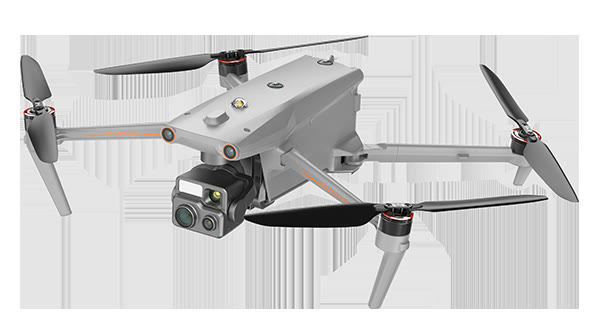
The DJI Mavic 3T Advanced (M3TA) is the C1 variant of the Mavic 3T. Same airframe, same visible cameras (48 MP wide-angle, telephoto, 56× hybrid zoom), same RC Pro Enterprise remote controller. The thermal sensor, however, has been revised: 640 × 512 pixels, 8 µm pitch instead of 12 µm, 41.2° field of view instead of 61°, equivalent to 60 mm. The narrower field places more pixels on a target at the same distance, which improves measurement precision and long-range identification. On the other hand, a wider sweep is needed to cover the same area, and sensitivity benefits from the large pixels of the standard 3T.
C1 class comes at the cost of endurance: 36 minutes with the lightweight battery, versus 45 minutes in the C2 version. Expect €4,959 excluding VAT from a French distributor (€5,950.80 including VAT), and between €5,400 and €5,520 including VAT elsewhere in Europe.
The Autel EVO Lite 640T Enterprise is the other C1 option, and the cheapest in the comparison. 866 grams, 640 × 512 thermal (9.1 mm lens, f/1.0, 61° field of view, 16× digital), 48 MP visible sensor, claimed 40 minutes of flight, SkyLink link quoted at 8 km in Europe. Autel claims the first C1 marking on a thermal drone. Its limitations lie elsewhere: no RTK, no laser rangefinder, measurement accuracy of ±3 °C or ±3% of reading, and obstacle avoidance in only three directions, without the lateral and upward sensors found on DJI drones. Prices observed between €2,500 and €3,300 excluding VAT depending on the remote controller pack.
Matrice 4T: the most complete C2
The DJI Matrice 4T stacks six modules in a single gimbal: 48 MP wide-angle, 48 MP medium telephoto (70 mm equivalent), 48 MP telephoto (168 mm, up to 112× hybrid), 640 × 512 thermal camera with 1280 × 1024 super-resolution, near-infrared illumination reaching 100 metres and a laser rangefinder up to 1,800 metres. The thermal camera operates at a 45° field of view (53 mm equivalent), with a measurement range of -20 to 150 °C in high gain and 0 to 550 °C in low gain.
Claimed endurance reaches 49 minutes, obstacle detection is omnidirectional, and DJI has added an ambient temperature sensor as well as a high-resolution thermal view mode for low-contrast scenes. Two caveats: no ingress protection rating is claimed for the 4T — the 4TD is IP55 and goes up to 54 minutes — and its 1,219 grams rule out C1 class. Price observed: €6,899 including VAT, or about €5,700 excluding VAT.
Mavic 3T and EVO II Dual 640T V3: the entry-level C2s
The Mavic 3T remains the most widespread thermal drone among emergency services, for a simple reason: it fits in a backpack and takes off in about fifteen seconds. 640 × 512 thermal camera with 61° field of view (40 mm equivalent), 45 minutes of flight, 56× hybrid zoom, O3 Enterprise transmission at 8 km in Europe, measurement from -20 to 150 °C and up to 500 °C in low gain. It is available at €5,702.40 including VAT with two years of DJI Care, or €7,094 in a pack with RTK module and additional batteries.
The Autel EVO II Dual 640T V3 plays the price card: €4,899 from a European reseller, for a 640 × 512 with 13 mm lens, a visible sensor capable of 8K output, 38 minutes of flight and a declaration of conformity that classifies it as C2 (83 dB(A)). Its weak point is the ecosystem: fewer thermal analysis tools than DJI, a rougher Autel Explorer app, and lower resale value.
EVO Max 4T: endurance and anti-jamming, at the cost of weight
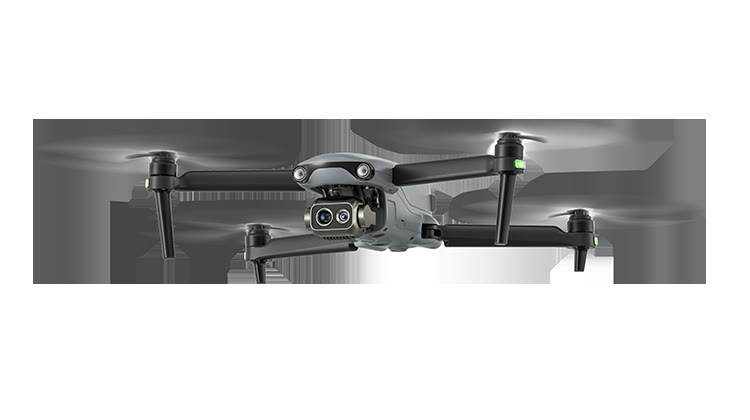
The Autel EVO Max 4T V2 targets missions where the link must hold. Six antennas, four bands, AES-256 encryption, A-Mesh mesh network, navigation in GNSS-denied environments, millimetre-wave radar as a complement to stereo vision. The Fusion 4T gimbal combines a 50 MP wide-angle, 10× optical zoom (160× hybrid), 640 × 512 thermal at 9.1 mm and a laser rangefinder from 5 to 1,200 metres. Claimed endurance: 42 minutes, IP43.
C2 certification is obtained with a take-off mass reduced to 1,890 grams, versus 1,999 grams outside the European configuration. On the scales, it is one and a half times a Matrice 4T, and the drone is noticeably bulkier. Prices vary by a factor of two depending on the channel: from €5,399 to €6,899 at an EU online reseller, €9,950 including VAT at an integrator.
ANAFI UKR: C2, but outside the civil channel
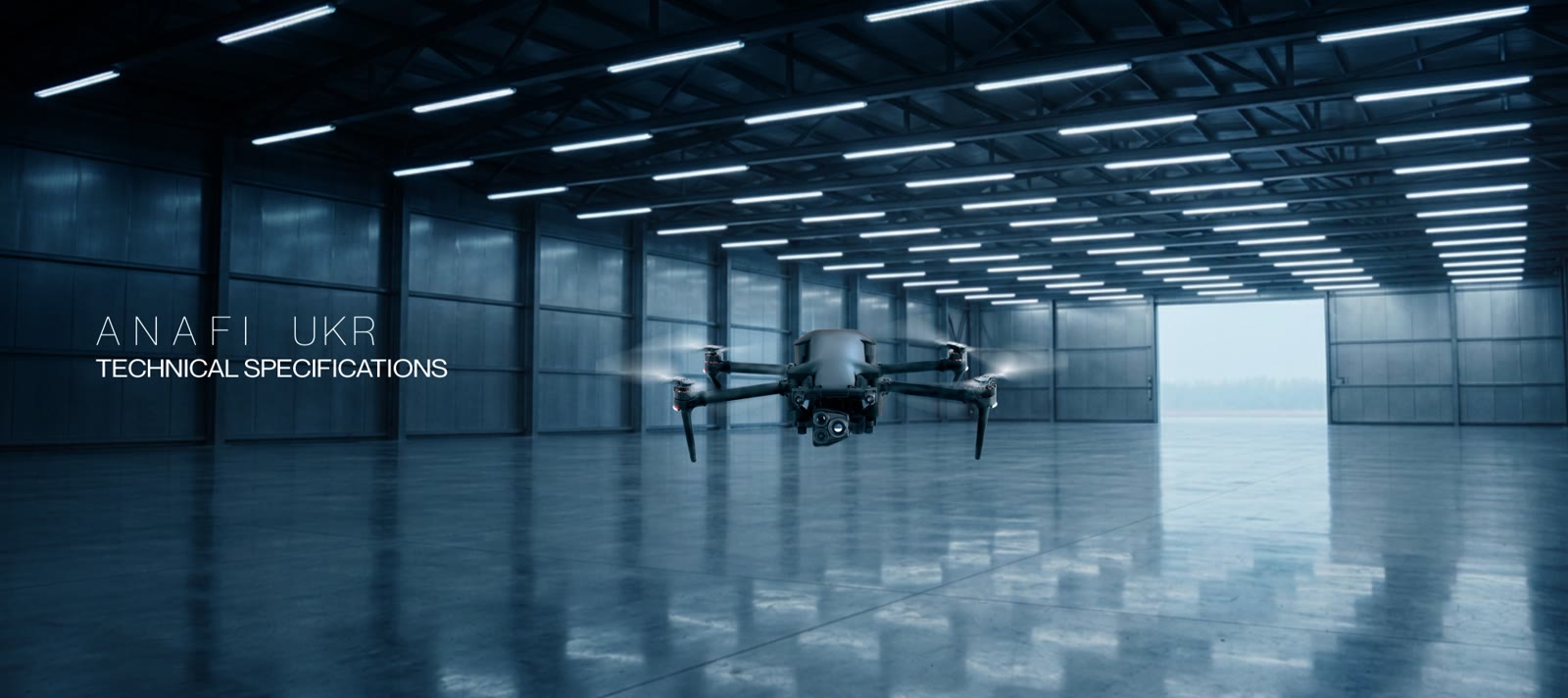
The Parrot ANAFI UKR appears in the EASA list of approved drones, under the C2 designation with low-speed mode. Its specifications are out of the ordinary: 1,450 grams maximum mass, 640-pixel infrared chain at 60 mK, stabilised turret pointing from -90° to +90°, IP53, operation from -36 to +50 °C, 75 dB(A) guaranteed, and a redundant radio architecture (5G, Wi-Fi, MARS, LoRa) designed to withstand jamming. Parrot claims 38 minutes with the standard battery and up to 70 minutes with the XLR.
Two points prevent it from being treated as an off-the-shelf product. First, it was developed for the needs of the Ukrainian armed forces: Parrot places it in its defence, public safety and government agency range, and the starting price cited by specialist press is around €15,000, with no public price list. Second, it cannot be ordered from a shop: sales go through public procurement or integrators. For a civil operator, it is a technical benchmark, not a purchase option.
Comparison table
| Model | Class | MTOM | Thermal | Endurance | Price (observed 11/2026) | Strengths | Limitations |
|---|---|---|---|---|---|---|---|
| DJI Mavic 3T Advanced | C1 | 899 g | 640×512, 41.2°, 60 mm equiv. | 36 min | ≈ €5,950 incl. VAT | A1 flight, tighter thermal, 56× hybrid | Reduced endurance, class price |
| Autel EVO Lite 640T Enterprise | C1 | 866 g | 640×512, 61°, 9.1 mm | 40 min | ≈ €2,500–3,300 excl. VAT | Cheapest, lightweight, 40 min | No RTK or laser, ±3 °C, 3-axis avoidance |
| DJI Matrice 4T | C2 | 1,219 g | 640×512 (1280×1024 SR), 45°, 53 mm equiv. | 49 min | €6,899 incl. VAT | Six modules, 1,800 m laser, NIR, AI | No IP rating, 1.2 kg |
| DJI Mavic 3T | C2 | 920 g (1,050 g MTOM) | 640×512, 61°, 40 mm equiv. | 45 min | €5,702 incl. VAT | Compact, proven, DJI ecosystem | A2 exam mandatory, no IP |
| Autel EVO II Dual 640T V3 | C2 | 1,150 g | 640×512, 33°×26°, 13 mm | 38 min | €4,899 | Price, 8K visual, optional RTK | Limited analysis tools, app can be improved |
| Autel EVO Max 4T V2 | C2 | 1,890 g (C2 config.) | 640×512, 61°, 9.1 mm | 42 min | €5,399–9,950 | Anti-jamming, A-Mesh, 1,200 m laser, IP43 | Heavy, bulky, erratic pricing |
| Parrot ANAFI UKR | C2 | 1,450 g | 640 px, ≤ 60 mK | 38 min (70 min XLR) | ≈ €15,000, no price list | Redundant radio, IP53, -36 °C, 75 dB(A) | Defence range, no civil sale |
What the available tests say
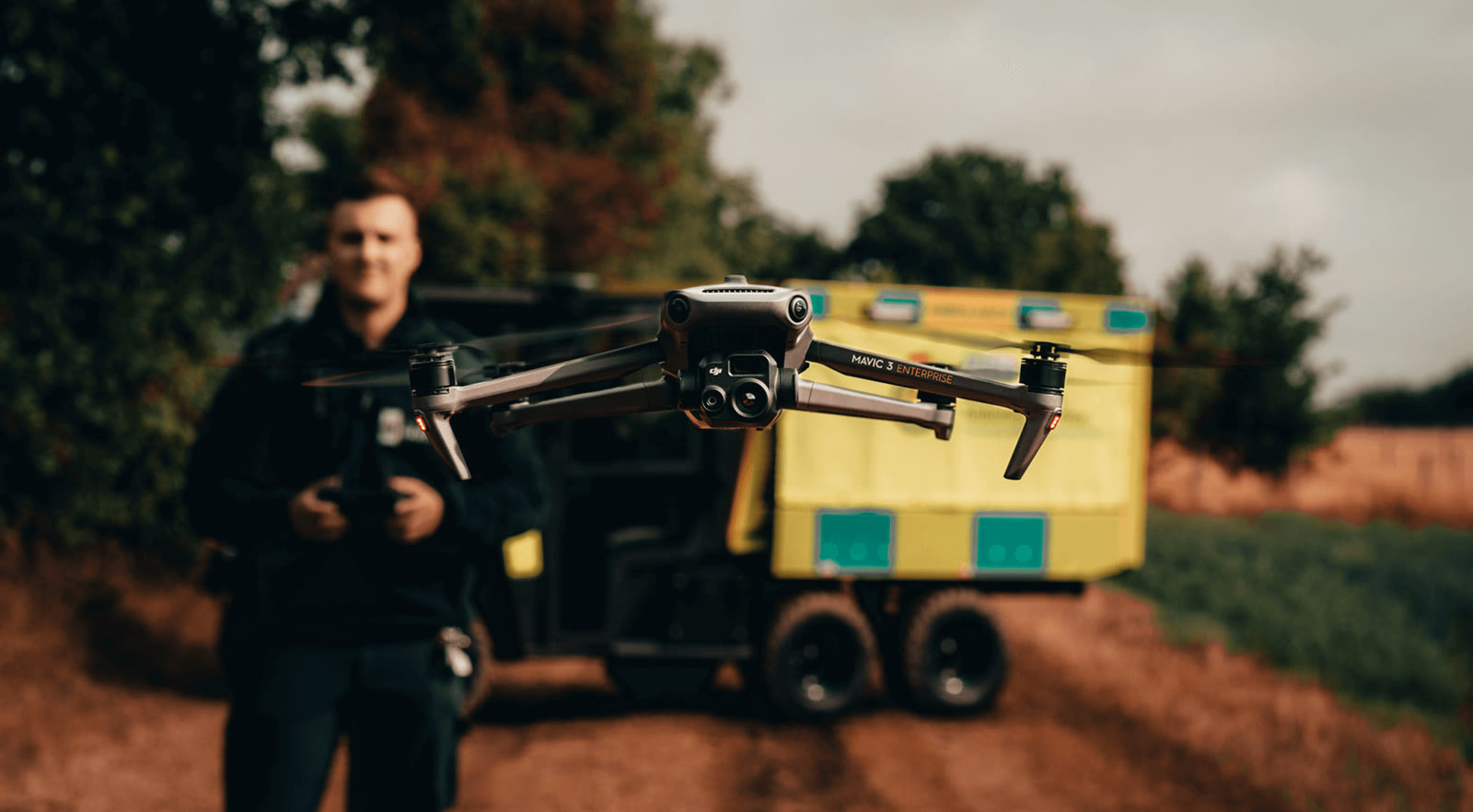
No independent laboratory publishes a comparative bench test of these seven machines. The usable sources are specialist resellers, photogrammetry blogs and a few YouTube channels, to be read while keeping their business model in mind.
- Matrice 4T — Haye Kesteloo (DroneXL) first look, Aeromotus review, detailed heliguy page.
- Mavic 3T — Digital Camera World review (search for people, real endurance), Pixpro image measurements.
- Mavic 3T Advanced — heliguy comparison of the two thermal sensors.
- EVO Max 4T — full video review, MavicPilots user feedback.
- EVO Lite 640T — Quadricottero article, Autelpilot page and price.
- ANAFI UKR — EDR Magazine article.
Prices: a dated survey
The prices cited were observed on 5 November 2026, in euros including VAT for France when the reseller displays them, excluding VAT otherwise. They move quickly: the Matrice 4T fell below €6,900 after its first year, the EVO Max 4T trades at €4,149 at some German merchants versus €9,950 at an integrator, and DJI Care packs change the total by several hundred euros. A dated quote remains the only serious basis for deciding.
Three checks before ordering
First, the class marking on the packaging and in the flight app: a Universal Edition is no substitute for an EU-C1 version. Next, the exact contents of the pack, including battery and propellers, since these determine the take-off mass. Finally, crash cover: on these machines, a gimbal repair costs the price of a consumer drone.
← Back to home · Search · Suggest a topic · Lire en français / Read in French