
Incidents — UK
In Jersey, illegal drones disrupt seven flights and trigger a detection reinforcement
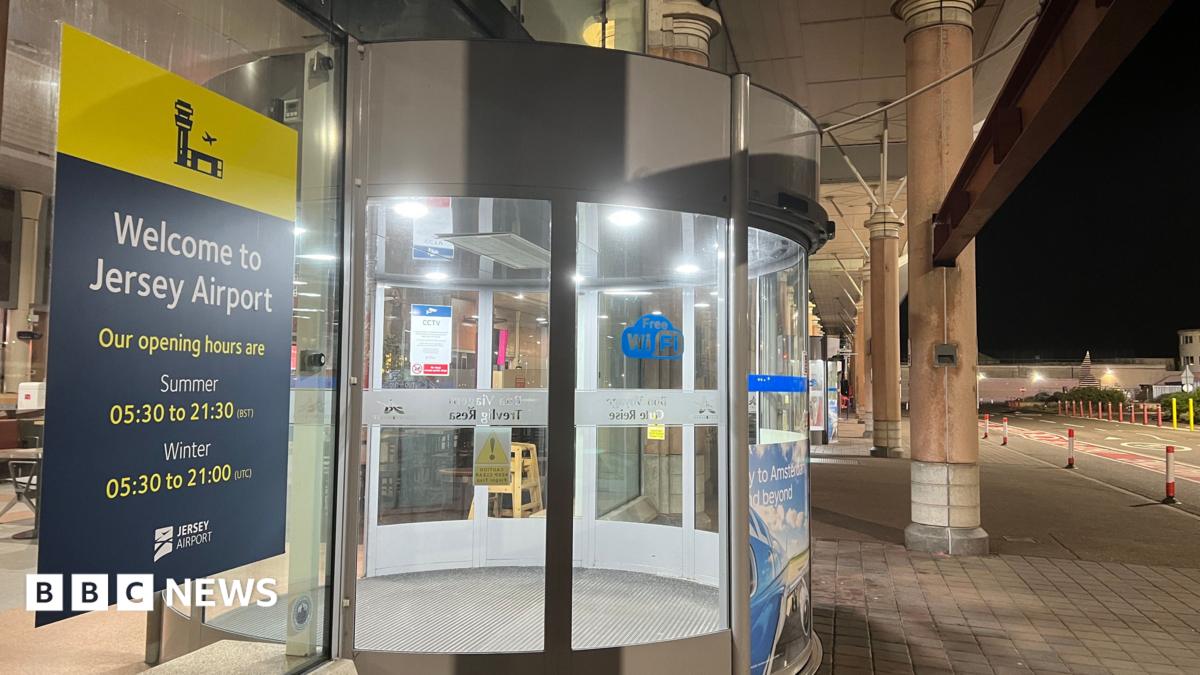
Two evenings of suspended arrivals
Jersey authorities reported unauthorised drones near the airport on Friday 30 and Saturday 31 October 2026. The first alert came at around 20:20 on the Friday and the suspension of arrivals lasted until about 22:30.
Three inbound flights were affected that evening. A Loganair from Southampton turned back to its departure airport, a British Airways from London Heathrow was cancelled, and an easyJet from London Gatwick waited in flight before landing at 23:43.
The airport had extended its opening hours to allow this landing.
Activity resumed on the Saturday shortly after 20:05, with several drones identified near the airfield. Four arrivals did not complete: flights from Heathrow, Southampton and Gatwick were cancelled, and a charter from Madeira was diverted to Paris Charles-de-Gaulle.
The tally for the two evenings was seven disrupted flights, operated by easyJet, Loganair and British Airways, across five departure airports.
The Government of Jersey said the episode had consequences beyond air traffic. Patients receiving treatment in England were unable to return, nine scheduled clinical procedures were cancelled and a non-urgent air ambulance transfer was abandoned.
An investigation opened, with no perpetrator identified

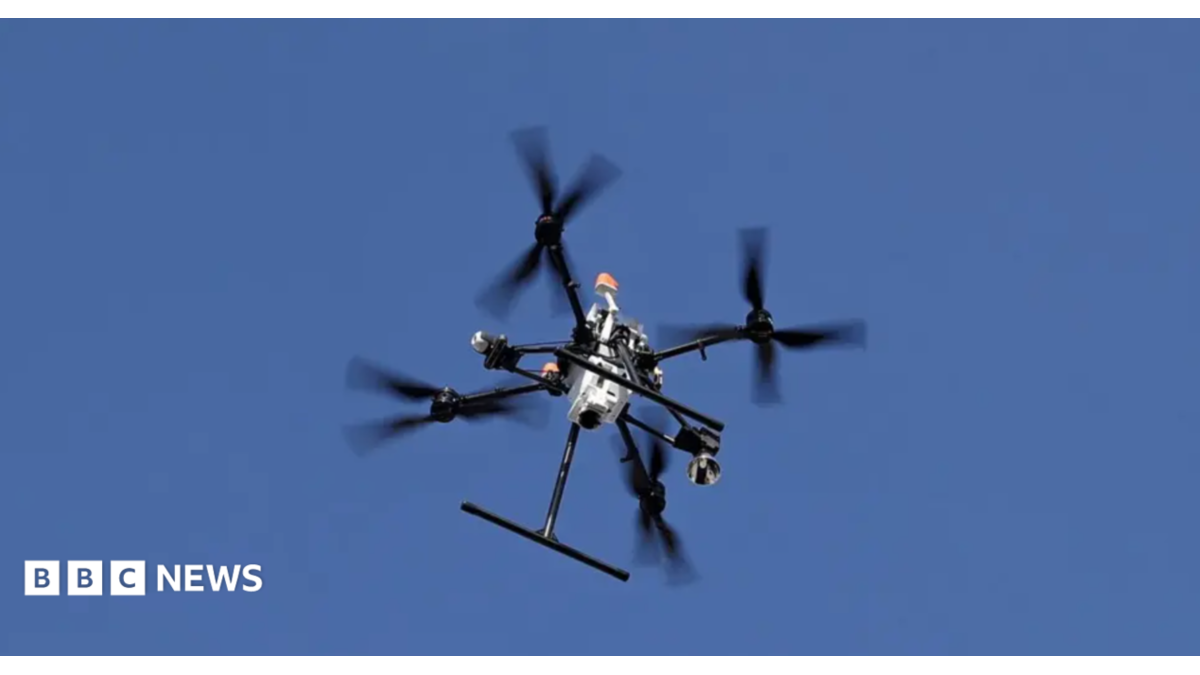
The States of Jersey Police believe that two or three drones entered restricted airspace. They have for now ruled out a terrorist lead. Searches covered the parishes of the west of the island, in particular Saint Peter, Jubilee Hill and La Pulente, with the honorary police, Ports of Jersey personnel and the Channel Islands Air Search service.
No remote pilot was located.
The authorities have not established who was flying these aircraft, nor from where, nor with what equipment. The investigation is ongoing and police are asking for any witness information to be passed to them, whatever its apparent significance.
The government announced that additional measures had been taken, without specifying their nature for operational reasons. A meeting was held on Sunday 1 November to review the management of the incident and reduce the risk of recurrence.
The Health Minister, Tom Binet, described the intrusion as “absolutely disgusting”, citing the health consequences as much as the disruption to flights.
On compensation, AirHelp says that financial compensation is unlikely, as the disruption was linked to a safety reason outside the airlines’ control. Rights to re-routing, reimbursement and assistance remain depending on the traveller’s situation.
The detection system deployed and announced
A request for military assistance to the civil authorities (MACA) led the UK Ministry of Defence to authorise the deployment of Royal Air Force assets. An A400 landed in Jersey on the Sunday evening with specialist personnel and the ORCUS anti-drone system, designed to jam control frequencies and force an unauthorised aircraft to land.
Jersey police confirmed that the presence of this aircraft was linked to the threat.
On 3 November, the BBC reported that the authorities had new equipment to detect, assess and respond to future drone reports. The details of these capabilities were not made public.
The Chief Minister, Lyndon Farnham, described the incursions as a deliberate attack on an essential lifeline for the island, and confirmed work with the UK transport and defence authorities to establish a permanent detection and neutralisation network around the airport perimeter.
The Minister for Justice and Home Affairs, Helen Miles, placed public safety and the island’s connectivity among the priorities.
For a regional airport, this type of sequence places anti-drone preparedness among business continuity issues: closing an island airport cuts health as well as commercial links.
What the local framework requires of remote pilots
The framework applicable in Jersey is neither that of the United Kingdom nor that of the European Union. The Channel Islands are subject to separate aviation legislation. Flying drones there is prohibited within a radius of two nautical miles, approximately 3.7 km, around the airports of Jersey, Guernsey and Alderney, unless authorised by the Office of the Director of Civil Aviation and by local air traffic control.
This rule applies to all professional activity, including filming, photography and light shows, uses that the BBC notes are growing and that remain subject to strict air and maritime safety rules.
An operator planning a mission near one of these airports must therefore obtain authorisation before the flight, and not rely on an informal buffer zone.
The Jersey precedent also shows that an intrusion, even limited to two or three aircraft, is enough to close an airspace for more than two hours and divert a charter to Paris.
The ability to document one’s flight, to respect a prohibited zone and to identify coordination channels with air traffic control becomes a verifiable compliance element, particularly for providers operating near critical infrastructure.
← Back to home · Search · Suggest a topic · Lire en français / Read in French