
Incidents — UK
Jersey: three flights diverted and two cancelled after drone intrusion
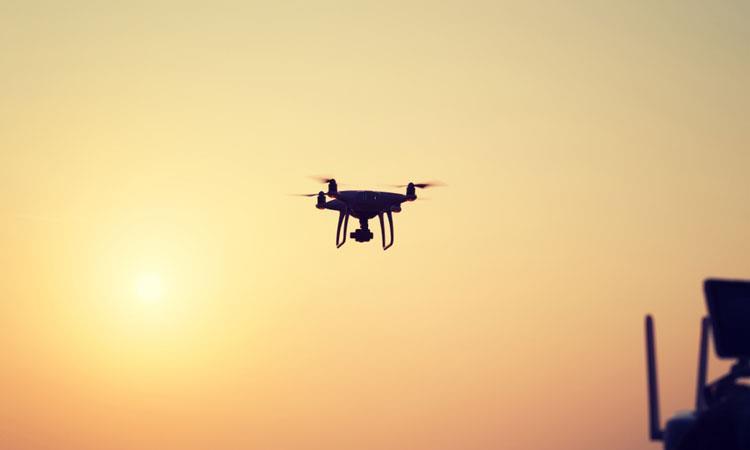
Three flights diverted, two cancelled in one evening at Jersey

Three flights were diverted and two cancelled at Jersey Airport after reports of drones in the airport's restricted airspace on a Friday evening. The States of Jersey Police received the first report at around 20:20. The reported activity continued until about 22:30.
Inspector Rob McCallum believes that “two or three” drones entered this zone. No remote pilot has been identified and searches are ongoing. The aircraft expected from London Gatwick, London Heathrow and Southampton were all diverted. The one from Gatwick, operated according to the information available by easyJet, eventually landed at around 23:45. The other two flights were cancelled.
The response mobilised States police officers, the honorary police, Channel Islands Air Search, Jersey government officials and Ports of Jersey staff. Searches were carried out in several areas of the west of the island. McCallum specified that the incident is not considered terrorism-related. He added that a drone in restricted airspace poses a risk to pilots, passengers and crews, and severely disrupts air transport.
The sequence gives a measure of the delay: first report at 20:20, landing of the diverted flight at 23:45. Around three and a half hours during which the airport operated in a degraded mode.
From Russian figures to European closures
The most documented tally does not concern Jersey but Russia. According to the Russian federal civil aviation agency, Rosaviatsia, flight restrictions have been imposed at least 489 times since the start of 2025, affecting 43 airports. On 19 and 20 July, 134 aircraft were diverted to alternate airfields over two days. The Moscow hubs of Sheremetyevo and Vnukovo absorbed 78 and 45 of them.
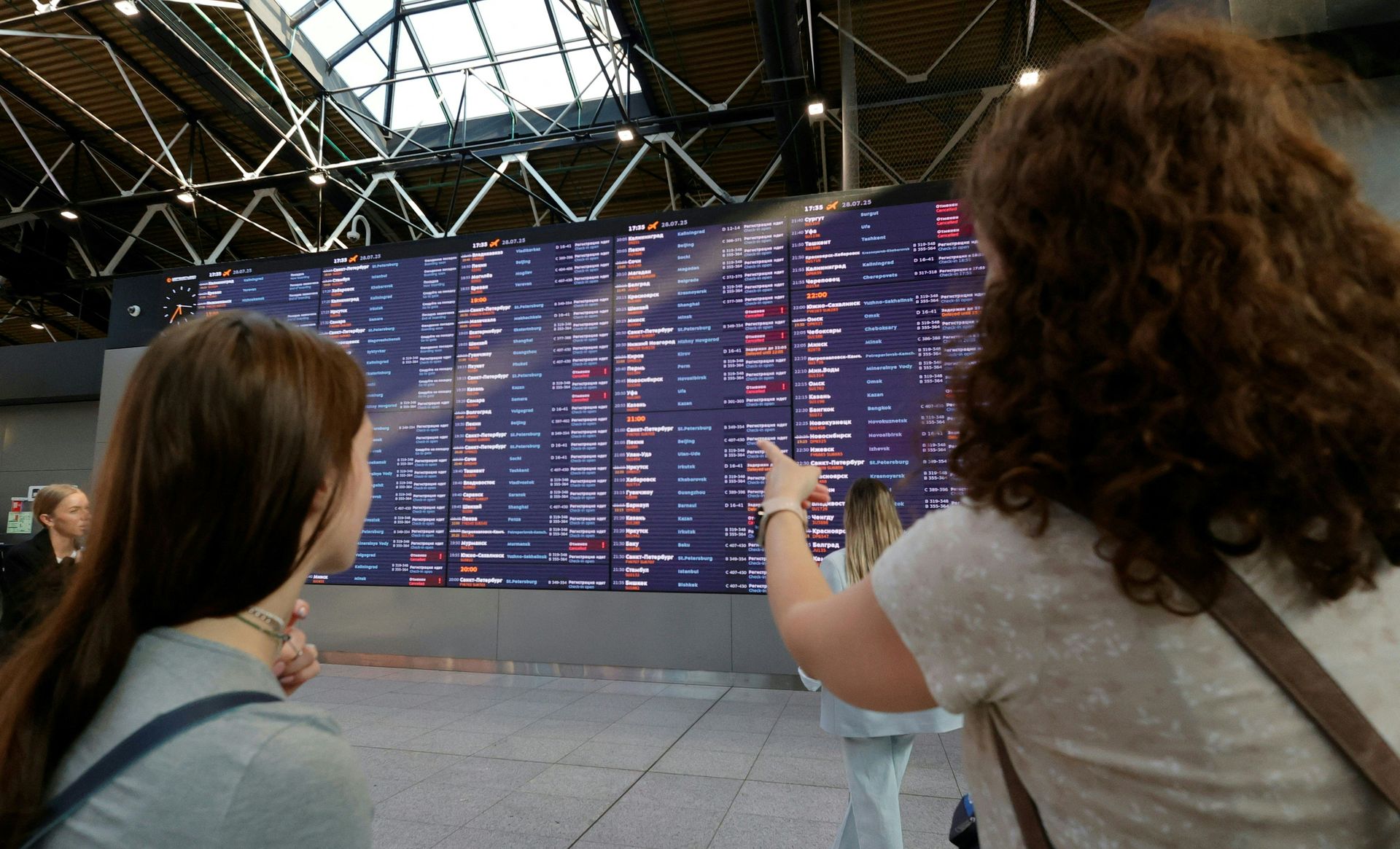
Ivan Stupak, a military commentator and former officer of the Ukrainian security service, describes a method: drone trajectories would be plotted to pass 100 or 150 kilometres from major airports, forcing Russian air traffic controllers to trigger emergency protocols. Passengers waited for their flights at Sheremetyevo on 28 July 2025, the date on which the flight of Kremlin spokesman Dmitry Peskov to Saint Petersburg was grounded for several hours.
In Europe, the series is shorter but regular. Copenhagen closed for nearly four hours on 22 September 2025. Oslo closed its airspace for about three hours the same day. Aalborg closed temporarily on 24 and 25 September. Munich suspended operations for an entire night on 2 October. Alicante-Elche Miguel Hernández interrupted its activity for nearly two hours on 27 October. Brussels and Liège suffered night-time disruptions on 7 November, Deurne on 1 November.
These series do not indicate the cost of an hour of closure, nor the number of detections confirmed by a sensor rather than by a witness, nor the false alarm rates. None of these three values is quantified for the European incidents.
Ground detection and political characterisation of the threat
The technical question is that of detection. European airports close on the basis of reports. At Jersey, the response consisted of ground searches, without any neutralisation means being described. The closure is a matter of risk management, not interception.
Politicians characterise the nature of the flights. Danish Defence Minister Troels Lund Poulsen referred at a press conference to a “professional actor” and a “hybrid attack using different types of drones”, adding that the technology is constantly evolving. His Belgian counterpart, Theo Francken, said that the drones come to spy on F-16s and ammunition stocks.
Ourania Georgoutsakou, director general of Airlines for Europe, believes that the proliferation of incidents must accelerate the implementation of protocols in a European airspace that she describes as overloaded and fragmented. Anti-drone protection is on the programme of the International Airport Summit 2025 in Berlin on 20 November, in a round table sponsored by DroneShield and OSL.
What is missing to assess an anti-drone system
Three elements prevent a conclusion on the effectiveness of the systems in place. The first is price: the cost of a detection system deployed at a regional airport is not known. The second is availability: installation and commissioning times at an airport the size of Jersey are not documented. The third is field feedback: no operator has been identified at Jersey, and the investigation continues. A system that results in no identification leaves open the question of its actual detection rate.
The Jersey case does, however, provide a usable data point: the time between the first report and the return to normal of a diverted flight. As things stand, it says nothing about the number of drones actually present or their type.
← Back to home · Search · Suggest a topic · Lire en français / Read in French